
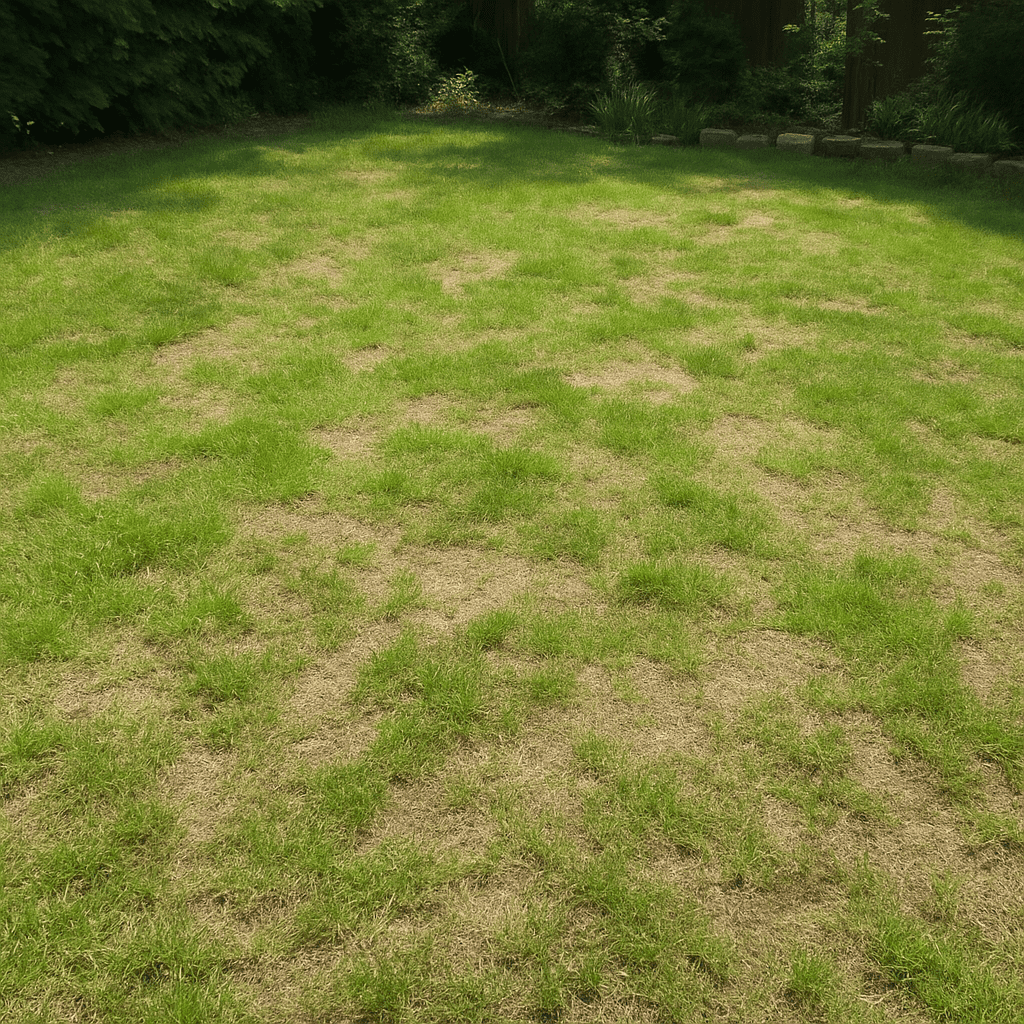
A lush, deep green, and uniform carpet – that's the dream of many garden owners. But after winter or during hot summers, the reality often looks different: the lawn is patchy, grows at different rates, or has unsightly bare spots. If your lawn is also growing unevenly, here's what you can do to get it back in shape. In this comprehensive guide, you'll learn about the causes behind uneven growth and what targeted measures you can take to transform your home greenery back into a showpiece.
Root Cause Analysis: Why Does My Lawn Have Light and Dark Patches?
Before you begin with extensive care measures, you should get to the bottom of the cause. The most common question from desperate garden enthusiasts is: Why does my lawn have light and dark patches? The answer is rarely one-dimensional. An uneven appearance is usually triggered by an interplay of several factors:
- Soil conditions Different soil layers, sand or clay veins in the garden lead to uneven water and nutrient storage.
- Lighting conditions: Trees, hedges, or buildings cast shadows. A lawn in the sun grows completely differently than one in partial shade.
- Fertilizing errors Those who apply fertilizer by hand instead of with a spreader quickly cause over- or under-fertilization.
- Condensations: Areas that are frequently walked on (paths to the compost, children's play areas) become compacted and no longer absorb water.
Understanding the Soil: The Foundation for Healthy Greenery
Successful lawn care always begins deep at the roots. Only healthy soil provides the basis for vigorous growth. When turfgrass struggles, you must first identify any potential nutrient deficiencies in the soil. The best and most reliable way to do this is by using a soil testing kit for your garden. You can use these kits conveniently at home or send the samples to a specialized laboratory. They will provide you with detailed information about the levels of nitrogen, phosphorus, and potassium.
The soil’s acid-base balance is equally important. If the analysis shows that the soil is too acidic, you’ll need to adjust its pH level. This is usually done by applying garden lime. If the soil structure is generally very lifeless or extremely sandy, it is also worth using humus or a special soil activator to improve the soil. This reactivates soil life, promotes earthworms and microorganisms, and ensures that the roots can better access important nutrients again.
Targeted use of nutrients: Proper fertilization
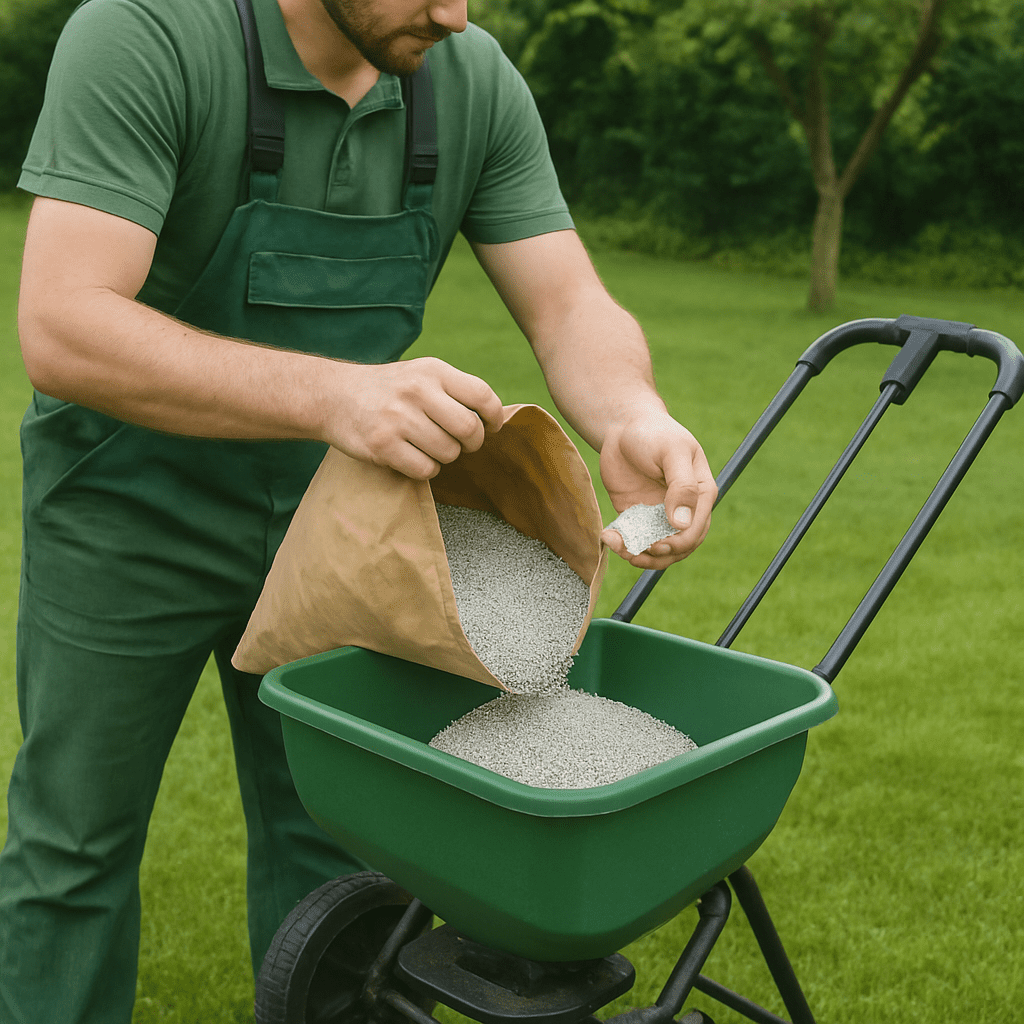
One of the main reasons for patchy growth is uneven nutrient distribution. If you want to fertilize your lawn, you should therefore definitely use a spreader or a precise hand spreader. This prevents the grass from „burning“ due to an excess of nutrients in one spot while starving 20 centimeters away.
But how often should you fertilize your lawn? Experts recommend three to four applications per year:
- Spring (March/April): To start the season, focus on nitrogen.
- Early Summer (June): To strengthen the grasses for the hot months.
- Fall (September/October): A special autumn fertilizer with high potassium content strengthens frost resistance.
To prevent sudden growth spurts, a slow-release organic fertilizer designed for dense growth is the ideal choice. It releases its nutrients slowly and continuously, depending on temperature and moisture levels. When inspecting your lawn, also look for specific signs of nutrient deficiency. For example, if you notice yellow blades of grass (often accompanied by an overall pale appearance), this is a strong indication of iron deficiency. Yellow blades caused by iron deficiency can be quickly remedied with special iron fertilizers, which will restore the grass’s deep green color.
Air and Water: Let the Soil Breathe
A healthy lawn needs oxygen at the roots. If the soil has become hard as concrete from frequent treading, the plant suffers. In such cases, you must remedy soil compaction by aerating. A special tool punches deep holes in the soil, which are often then filled with quartz sand. This loosens the structure and helps the soil to breathe. At the same time, you can avoid dangerous waterlogging in the garden, because rainwater flows quickly into the soil through the sand channels instead of rotting on the surface.
In addition to deep loosening, surface maintenance is next. A short guide to scarifying and aerating your lawn will help you remove thatch:
- Preparation: Mow the lawn relatively short (about 2–3 cm).
- Device setting Adjust the dethatcher blades so they score the turf a maximum of 2 to 3 millimeters deep.
- Technology: Move the device lengthwise across the surface once, and then crosswise (checkerboard pattern).
- Conclusion: Carefully rake out the dissolved, often mossy material.
If you do this in the spring, you can effectively eliminate moss and weeds from your lawn, as these unwanted plants are literally deprived of their soil.
Seed: The Right Choice for Gaps and New Plantings
Sometimes, the problem of uneven growth also lies in the wrong choice of grasses. A comparison between shade lawn and play lawn shows clear differences: Play and sport lawns (often perennial ryegrass and Kentucky bluegrass) love direct sunlight and are incredibly hard-wearing. Shade lawn mixtures, on the other hand, contain grasses like creeping foxtail, which can cope with less light but are less durable. The wrong seed in the wrong place inevitably leads to bare patches.
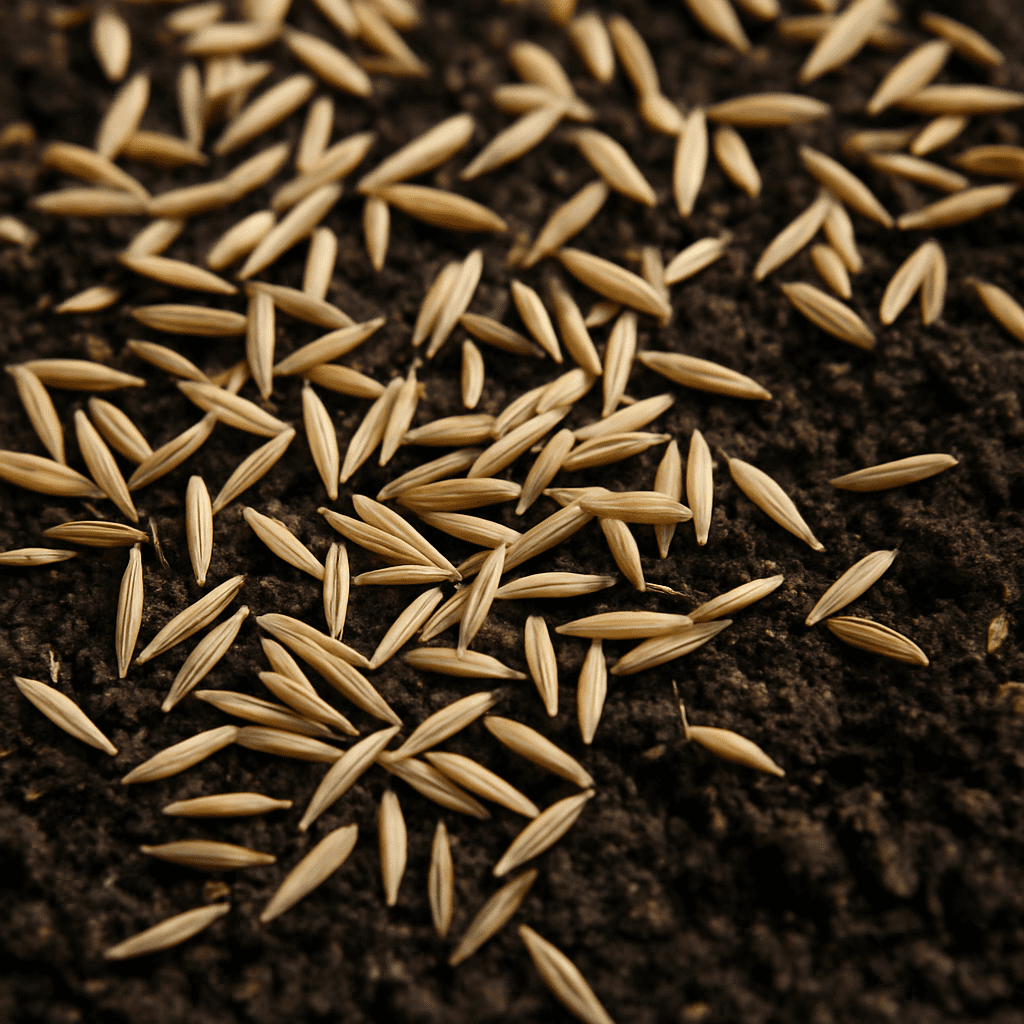
If bare patches have appeared after scarifying, you must quickly reseed the lawn in the bare spots. Use high-quality overseeding grass that germinates quickly and fills in gaps before weed seeds can fly in from the air and take root.
When planning a complete redesign of the area, you face a fundamental decision. A cost-benefit comparison of sod vs. seed will help with this. While sod is more expensive to purchase and more labor-intensive to lay, it provides an immediate perfect, weed-free, and uniform result. Classic seeding is significantly cheaper but requires very meticulous care and constant moisture over several weeks to ensure even growth.
Regular Care: The Perfect Cut
The basis for a uniform appearance is and remains regular lawn mowing. If you let the grass grow wild first and then cut it back drastically, you weaken the plants enormously and provoke sunburn.
Always follow the „one-third rule“: never cut off more than one-third of the current blade length. A steady, gentle cut encourages tillering. The grasses branch out sideways instead of just growing upwards, leading to a wonderfully dense turf in the long run. Absolutely ensure that your lawnmower blades are sharp. Dull blades tear the stalks instead of cutting them. The frayed tips dry out whitish, making the entire lawn appear dull and patchy from a distance.
Conclusion
Uneven lawn appearance doesn't have to be permanent. Always start with a soil analysis to fertilize effectively and adjust the water and air supply to the roots. Use the right seeds for your specific light conditions and mow more frequently, but less drastically. With patience, the right technique, and high-quality care products, your patchy problem child will soon be a uniformly lush green carpet of lawn again.
