
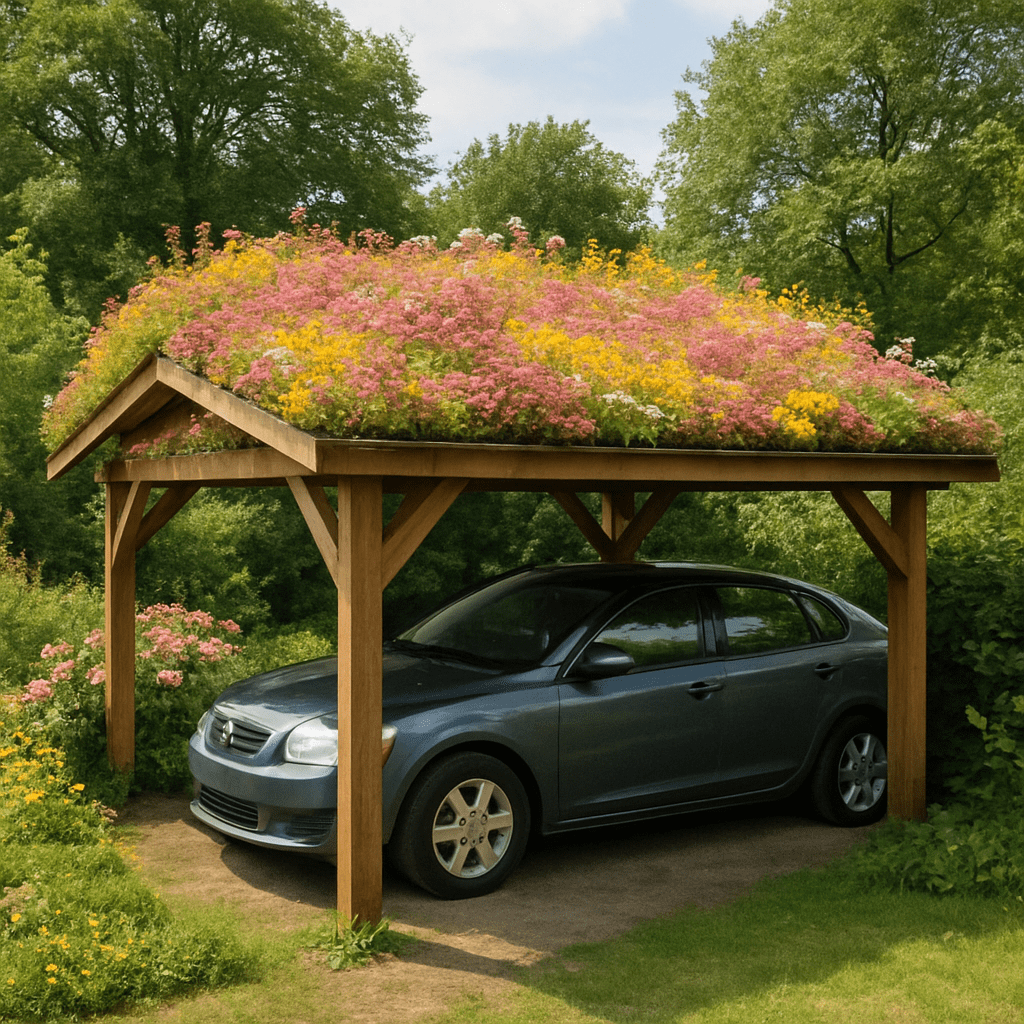
A gray, unused flat roof over a car is wasted space and often not a pretty sight. Those who want to combine nature and architecture instead can turn the carport into a blooming oasis. A planted roof not only blends harmoniously into the so-called garden carport ein, but it also offers enormous ecological benefits. The project „Carport Roof Greening: Sustainable Plant Selection and Costs“However, this initially raises a few questions for many homeowners. From structural engineering to plant selection to financial support – this guide will lead you safely and clearly through all the planning steps.
Why a green roof for your carport is worth it
A roof garden not only looks modern, it is an active contribution to climate protection and improves the microclimate around your home. Considering the Green Roof vs. Green Roof: An Ecological Comparison, the result is clear: while gravel roofs store heat and heat up the surrounding air, vegetation acts as a natural air conditioner.
Particularly noteworthy is the enormous Cooling effect of green roofs in summer. The plants and the damp layer of soil absorb UV radiation and evaporate water. This keeps it noticeably cooler under the carport – an invaluable advantage that protects your car's paint and reduces interior heat. At the same time, you can local Promoting biodiversity with insect-friendly roof plants. With the right planting, you can create a valuable alternative habitat for bees, butterflies, and other pollinators, who are finding less and less food in our paved-over cities.
Stability and Water Drainage: Requirements for Your Project
Before you begin the actual Carport roof greening Before starting, safety must be clarified. Earth, plants, and stored water are heavy.
Check the load capacity
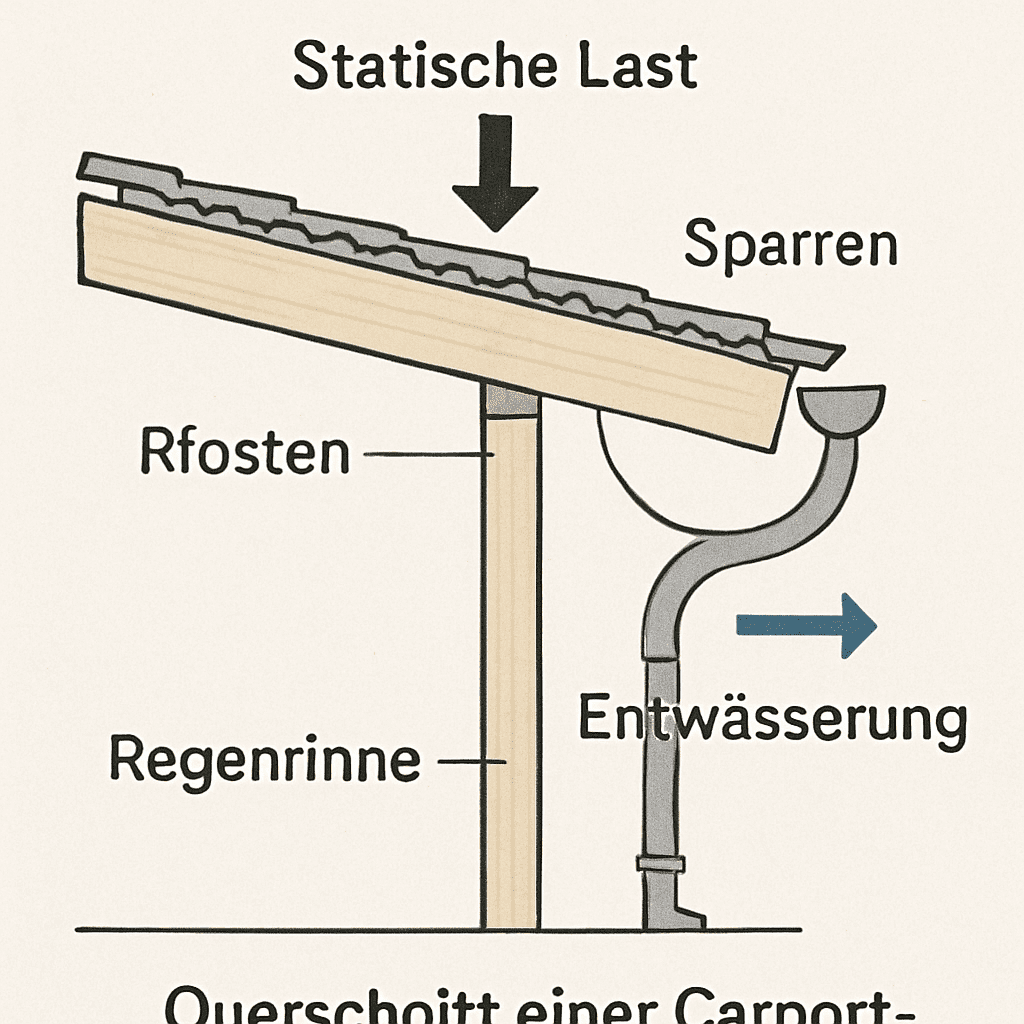
You must urgently the Calculate roof load for a green roof carport is not a lightweight, after all. A common mistake is to only assume dry soil. However, for the static calculation, the Weight of water-saturated green roof substrate decisive. After heavy rainfall, the material soaks up water like a sponge. With a standard green roof, you must expect a surface load of approximately 60 to 120 kilograms per square meter. In winter, snow loads may also need to be considered. If in doubt, always consult a structural engineer or the carport manufacturer.
Properly drain rainwater
Although green roofs can retain up to 70 percent of rainwater, excess must drain safely during heavy rainfall. You must have a functional Ensure drainage system for green carport roofs. Usually, a slight slope (approx. 2 percent) and an intact roof drain or a gutter at the lowest point of the flat roof are sufficient.
The Right Method: Which Type of Greening Fits?
Anyone who delves into the topic quickly encounters technical terms. The Extensive vs. Intensive Green Roof Differences are important for laypeople to understand, because they determine feasibility and effort:
- Intensive green roof This corresponds to a real roof garden with thick soil, lawn, shrubs, and in some cases, small trees. The weight is enormous (often over 300 kg/m²), and the plants must be regularly watered and mowed. This is usually structurally impossible for a normal carport.
- Extensive Green Roof This is a naturalistic, low-profile planting (build-up height approx. 6 to 15 cm). It is lightweight, robust, and largely self-regenerating.
For a conventional carport green roof is the extensive option the only sensible and safe choice. The Maintenance requirements for drought-resistant roof sedums is negligible with this system. After the establishment phase, you generally won't need to water or fertilize; it's enough to remove weeds or unwanted tree seedlings once or twice a year.
Plant Selection: What grows at the very top?
Extreme conditions prevail on a carport roof: blazing sun, wind, frost, and occasional drought. Normal garden soil and typical balcony plants would quickly give up here.
Which plants are suitable for a green roof?
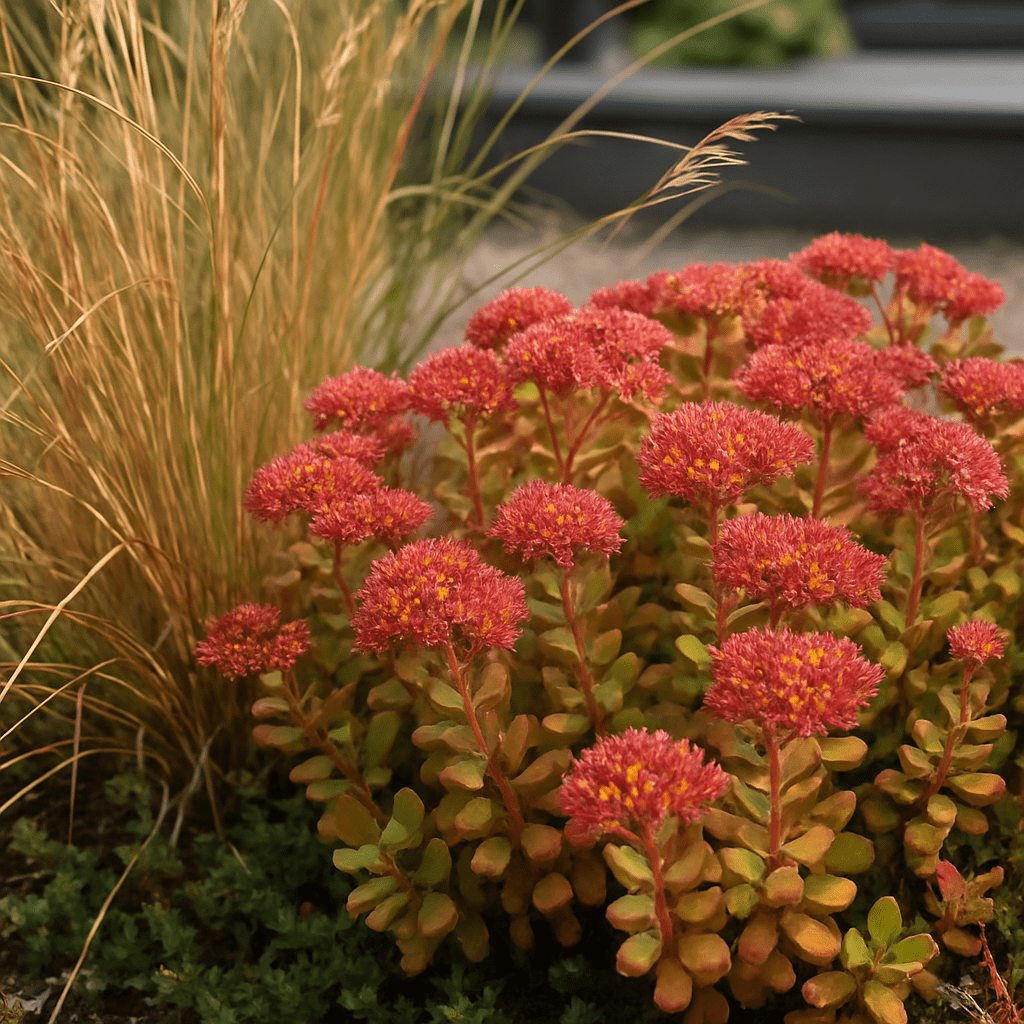
- Sedum (stonecrop): The absolute classic. These succulents store water in their leaves and can survive months of drought.
- Sempervivum (Houseleek): Extremely frost-hardy and robust, forms beautiful rosettes.
- Dried grasses Blue fescue or quaking grass bring movement and structure to plantings.
- Wild Herbs: Chives, thyme, or savory smell wonderful and magically attract insects.
In practice: Step-by-step guide to greening a carport roof
Once the structural calculations have been verified, you can implement the project yourself with some DIY skills. This is particularly straightforward with a pre-fabricated set. A Complete Green Roof Package for DIYers often already contains all layers perfectly matched and calculated in the right amount.
Here is our Step-by-step guide: Green roof for a carport:
- Seal and clean the roof: Sweep the roof until it is free of debris. The roof membrane (usually bitumen or EPDM membrane) must be 100% waterproof.
- Install root barrier: Even small perennials have strong roots that can destroy bitumen membranes in the long term. You must therefore use a special Installing root protection fleece for carports correctly. Unroll the membrane without wrinkles and allow the webs to overlap by at least 1.5 meters (or weld/glue them together) so that no roots can find a way through.
- Lay out protective fleece A thick fleece protects the root protection membrane from mechanical damage and stores initial water.
- Install drainage: The Drainage layer construction flat roof carport is essential against waterlogging. Structured plastic solid elements (similar to egg cartons) are often used here. They capture water in small hollows for dry days, while excess water flows downwards through small holes to the drain.
- Apply filter fleece: This thin fabric is laid directly on the drainage layer. It allows water to pass through, but prevents soil or fine substrate particles from being washed into the drainage and clogging it.
- Spread substrate: Now fill in the green roof substrate (at least 6 to 8 cm high). Do not use potting soil! Special roof substrate consists of pumice, lava, expanded clay, and only a small amount of compost. It remains light and does not compact.
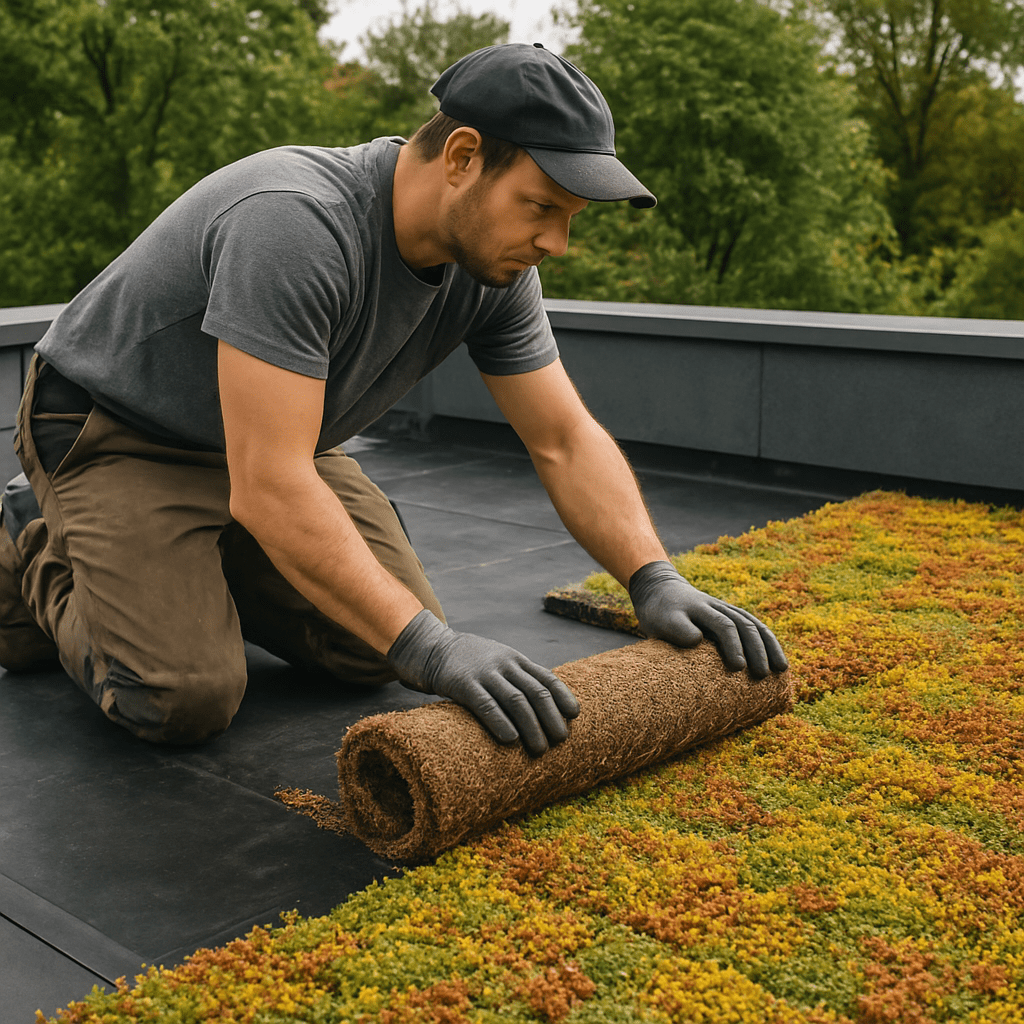
- Planting cuttings: Now you can plant small plug plants, sow sedum cuttings, or unroll ready-made vegetation mats. Afterwards, water the roof well for the next few weeks until the plants are deeply rooted.
How much does the green thumb on the roof cost?
The costs vary greatly depending on how much you do yourself and how quickly you want it to be green. Seeding sprouts is the cheapest option, but requires 1 to 2 years of patience until the area is densely grown.
Anyone who wants an immediate result opts for pre-made vegetation mats, which are laid like sod. The pure Sedum mats cost per square meter usually amount to about 25 to 40 euros. In addition, there are expenses for films, fleeces, and substrate. For a typical DIY project, you should expect total material costs of between 50 and 90 euros per square meter.
Significant savings potential: Be sure to inform yourself about funding programs before you start! More and more cities and municipalities are offering Government subsidies for green roofs. These grants often cover up to 50 percent of material or labor costs. Additionally, in many municipalities, you save real money permanently on the stormwater fee (sewage fee) because your green roof is considered a sealing measure and relieves the sewer network.
Conclusion
A green carport roof is a worthwhile investment in the future. It transforms sealed, barren areas into vibrant habitats, improves the local microclimate, protects your roof waterproofing from UV radiation, and thus extremely extends its lifespan. With careful planning of roof loads, the correct layer build-up, and site-appropriate, drought-resistant plants, you can create a small natural paradise right outside your door with little maintenance. Those who also use municipal subsidies can even save their own household budget during construction.
