
Do you have proverbial garden gold lying around in your chicken coop and don't even know it? Instead of disposing of this waste, you can turn it into a real secret weapon. Compared to expensive synthetic preparations, this material is free and much more environmentally friendly.
According to agricultural studies, the nutrient density of poultry manure significantly surpasses that of conventional cow or horse manure. As a powerful organic fertilizer, it provides your beds with valuable nitrogen for lush leaf growth and high yields. However, such a potent natural fertilizer absolutely requires proper preparation.
When used fresh, this manure is far too „hot“ and will inevitably burn delicate plant roots. To ensure your harvest grows safely and healthily instead, learn here how to use this valuable resource in your home garden without harm and with high effectiveness.
Caution, ‚Spicy!‘ Why you should never put fresh chicken manure directly on the roots
Those who fertilize with good intentions often discover withered, brown tomato leaves with horror the next day. This is the dreaded nutrient burn. Fresh manure is considered extremely „hot stuff“ among gardeners. It contains so much concentrated energy that it can literally burn away delicate plant roots. Therefore, anyone who wants to avoid fatal over-fertilization with chicken manure must never put it directly into the garden bed.
Another reason for patience is the safety of the vegetable harvest. Untreated excrement always carries the risk of bacterial contamination. Only through approximately six months of composting is natural heat generated, which can reliably neutralize all pathogens in fresh chicken manure. Only in this way does the raw material transform into a gentle, safe organic fertilizer.
Going forward, watch out for yellowish leaf edges on your plants as a warning sign of overdoses. However, if the manure is properly composted and matured, it provides a perfect nutrient combination of nitrogen, phosphorus, and potassium – a real fuel mix for your plants, which we will examine more closely now.
Nitrogen, Phosphorus, Potassium: The Fuel Mix for Your Plants Made Simple
When you buy fertilizer at the garden center, you'll often see three letters: N-P-K. This NPK ratio in organic fertilizer stands for the basic plant nutrients: Nitrogen for green leaves, Phosphorus for strong roots, and Potassium for magnificent fruits. The extremely high nitrogen content of poultry manure makes it true garden gold. Because chickens excrete liquid and solid waste together, their manure is packed with nitrogen – like a double espresso for your tomato plants' leaf growth.
Unlike artificial fertilizer granules, which are quickly washed away by heavy rain, this natural product works long-term. As soon as the matured manure enters the soil, a profound soil improvement begins through microorganisms. These tiny helpers in the garden bed awaken, gently decompose the material, and steadily feed your plants over many weeks. For this process to be optimal, proper preparation is crucial – for example, through targeted composting.
Option 1: Chicken manure as the ultimate compost turbo for nutrient-rich soil
A sluggish compost pile that seems to take forever to decompose into nutrient-rich soil can be effectively activated with the garden gold from the chicken coop. If you Using chicken manure as a compost accelerator., This really gets the natural microorganisms going. The high nitrogen content shortens the ripening time by several weeks, producing a nutrient-rich super-soil for your next gardening season in what's practically a speed run.
However, the secret to good compost lies in the balance between moist nitrogen (the „green“ materials) and dry carbon (the „brown“ materials). To achieve the Minimizing odor from chicken manure storage The relationship is crucial to be able to. If you Composting and storing chicken manure correctly would like to, use this proven layering method:
- Brown base Start with a thick layer of dry autumn leaves, mulch, or straw.
- Thin layer of mist: Only sprinkle fresh chicken manure sparingly over it.
- Moisture and Air: Lightly moisten the pile and turn it occasionally to allow oxygen to reach the material.
After this multi-month „cooking process,“ the fertilizer is mild enough and will no longer burn fine roots. For heavily feeding plants that require an immediate energy boost without a waiting period, the liquid version is a good alternative.
Option 2: The 1:10 chicken manure slurry as liquid fertilizer for tomatoes and cucumbers
Do your tomato plant leaves suddenly appear yellow and tired, they need an immediate energy boost. Unlike solid compost, which releases its nutrients slowly, a liquid fertilizer acts like a quick espresso for your plants. If your hungry Fertilize heavy feeders with chicken manure When desired, traditional liquid manure is ideal because the dissolved nutrients are directly available to the roots without detours.
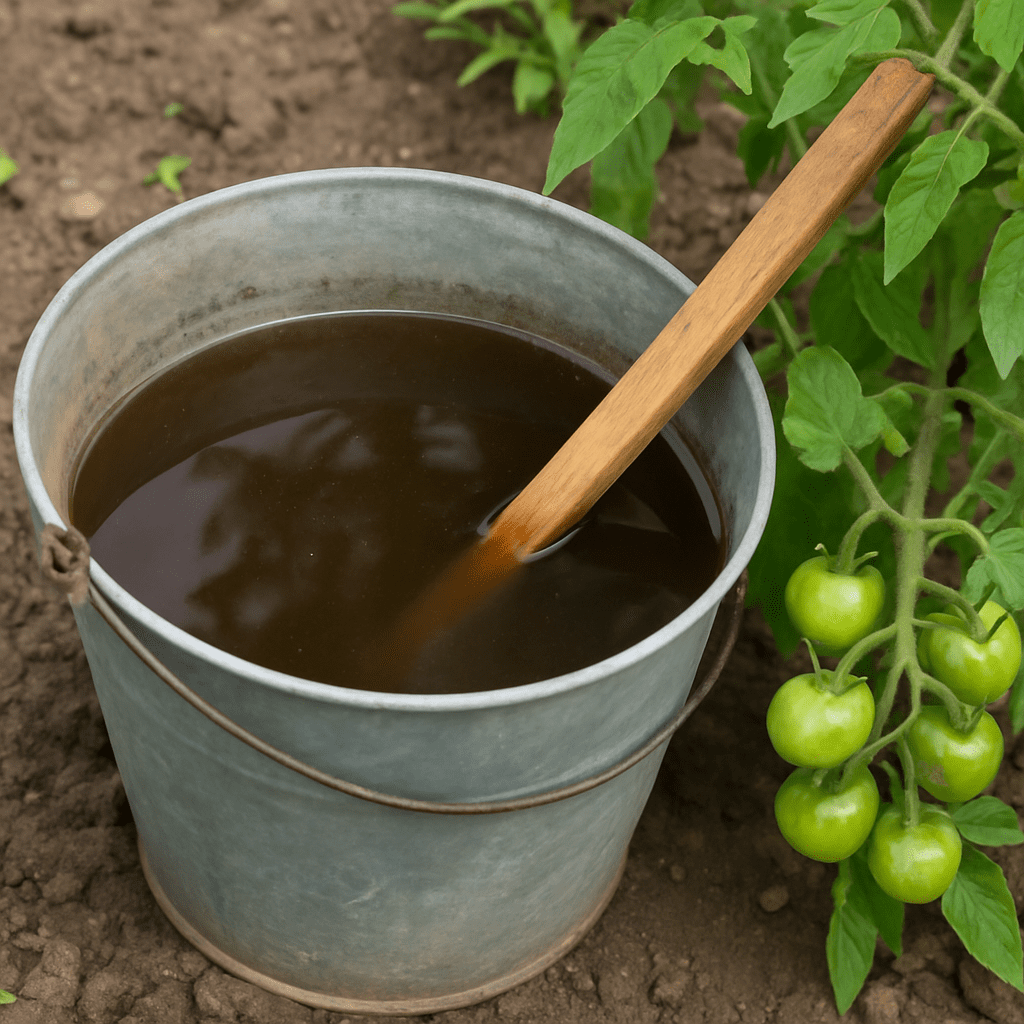
To a strong Chicken manure slurry for tomatoes to be able to, mix one part aged manure with ten parts water in a bucket. Let this brew steep for about two weeks, stirring daily. A simple neighborly trick helps with the strong odor: simply sprinkle some rock flour on the surface. This natural rock flour reliably binds the odors and simultaneously provides your plants with valuable trace elements.
Pour this „liquid gold“ directly onto the root zone every two weeks during the growth phase. Be extremely careful to avoid the delicate leaves to prevent burning. While this turbo fertilizer works wonders for vegetable plants, it is often too strong for ornamental plants. For more sensitive ornamental plants like roses, a gentler, cleaner alternative is recommended.
Option 3: Dried chicken manure pellets for odorless fertilizing in the flower bed
Those who don't have their own chickens or shy away from the smell of fresh manure ideally opt for dried pellets for a clean garden. Dried chicken manure pellets application is completely odorless and acts as a gentle nutrient reservoir. Unlike fast-acting liquid manure, they release their power to the soil only drop by drop. This makes them extremely safe for sensitive flowers, as there is no risk of dreaded root burn.
In spring, simply scatter a handful of the pellets into your raised bed and lightly work them into the top layer of soil. As soon as you water, the pellets will swell and start the valuable Long-term effects of organic poultry manure. Your roses and perennials are optimally cared for for months. But it's not just flowers that benefit from this nutrient source – your lawn can also be sustainably strengthened with it.
Option 4: How much chicken manure can your lawn tolerate? The correct dosage per square meter
After winter, a tired, pale lawn particularly craves nitrogen. This is precisely where organic poultry manure proves its strengths, as it helps the grass to displace unwanted moss and develop a rich green color. When is the best time for chicken manureSpring is absolutely ideal, as the stalks now need the most energy for new growth.
But beware: too much of a good thing will inevitably lead to yellow burn marks. To prevent this, the crucial question arises: How much chicken manure per square meter of lawn Is it really safe? Keep this simple rule of thumb in mind:
- Composted manure: 1 to 2 liters per m²
- Dried pellets: 100 to 150 grams per m²
It's best to apply fertilizer shortly before a predicted rain shower. This important „watering rule“ gently washes the nutrients down to the grass roots and activates them immediately.

Option 5: Feed for Zucchini and Cabbage – Targeted Soil Improvement for Heavy Feeders
Some zucchini grow impressively large, while others practically wither in the garden. The secret lies in the massive energy requirements of these plants. If you have classic Fertilize heavy feeders with chicken manure, the nitrogen contained acts like a natural growth turbo for lush fruits. At the same time, the organic material ensures sustainable soil improvement through microorganisms, which keep the soil loose and alive.
However, to protect sensitive roots from nutrient burn, this hole fertilization requires some lead time. It's best to dig the hole two weeks before planting out the young plants and mix a handful of composted manure deep into the soil. This way, the fertilizer loses its „sharpness“ before the plant is set in. To completely save this waiting time in spring, the soil can be perfectly prepared during the cooler season.
Option 6: Preparing the Soil in Winter – Chicken Manure as a Long-Term Fertilizer in Autumn
As your garden quiets down in the fall, the most important preparation begins underground. For many beds, fall is the absolute best time for application. Simply spread the aged manure after harvest and let the frost do the heavy lifting. The winter soil rest gently removes the last of the fertilizer's sharpness without you having to intervene.
So that the constant winter rain doesn't wash away dissolved nutrients unused into deeper soil layers, cover the worked area protectively with some autumn leaves. This is how you ensure the valuable long-term effect of organic poultry manure, which is readily available in spring as a perfect starter boost. A direct comparison of the most popular natural fertilizers will show whether this powerhouse is truly ideal for every project.
Chicken Manure vs. Horse Manure: Which Organic Fertilizer Fits Your Garden Plans?
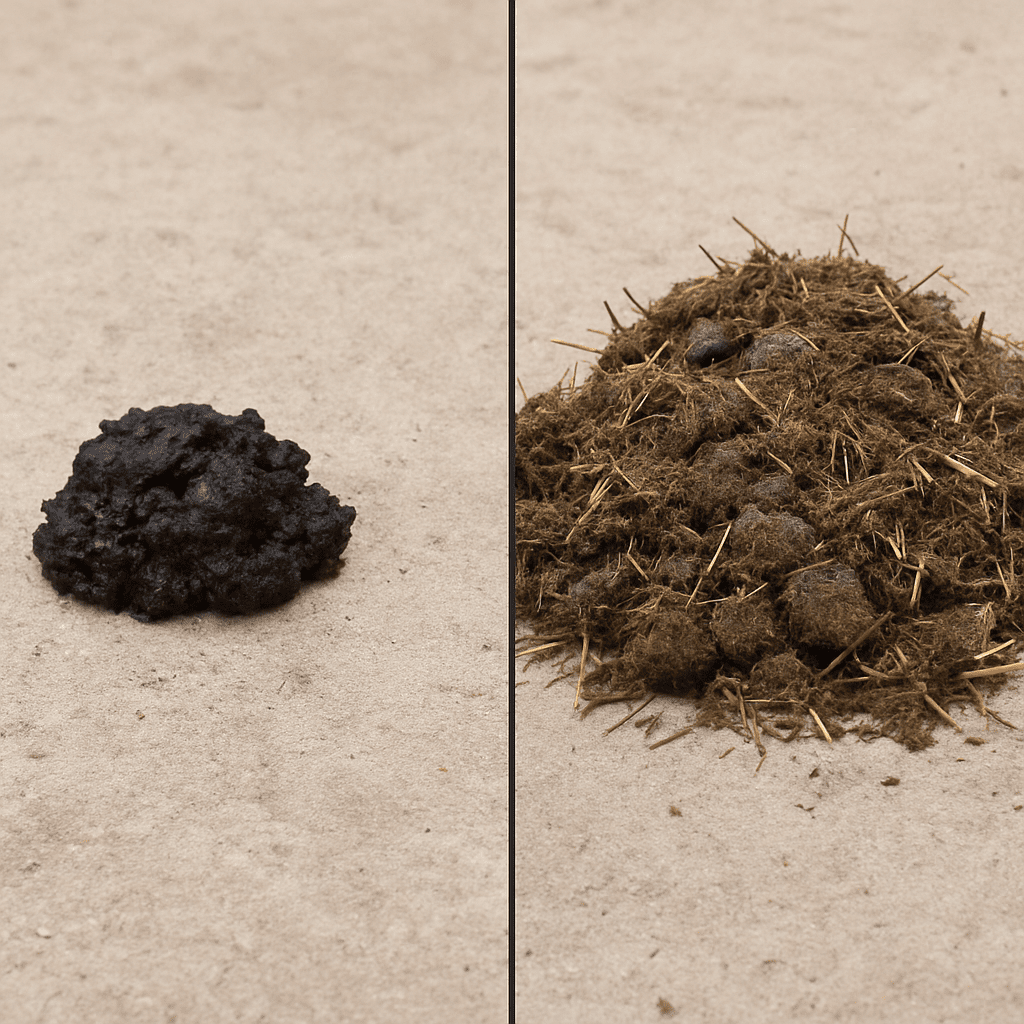
If you're choosing between these garden classics, the current condition of your beds will decide. Chicken manure is an extremely „hot“ fertilizer that acts like a highly concentrated espresso on your plants. Horse manure, on the other hand, is significantly milder, which is why it won't burn delicate roots even in larger quantities.
The Chicken manure vs. horse manure comparison shows the true difference for the practice. If your vegetable plants after the strong NPK ratio of organic fertilizer When it comes to hunger, poultry is unbeatable. However, if your hard, clay soil urgently needs more looseness, horse manure with a high straw content works wonders for the overall soil structure.
When switching between the two natural products, be sure to adjust your usual dosage. While you should only use mature poultry manure in sparing handfuls, you can confidently spread horse manure by the wheelbarrow full. Once you have chosen the right fertilizer for your needs, nothing will stand in the way of implementing it in your own green oasis.
Your plan for a green oasis: How to start fertilizing organically today
Simple stable manure has now become pure garden gold. If you cleverly integrate this powerful natural fertilizer into your daily gardening routine, you will transform your flower bed into a sustainable, chemical-free oasis. A purely natural fertilizer works wonders, as long as you store it dry and use it consistently and mindfully. For immediate success without burnt leaves, use this final checklist:
- Maturity exam Use only well-rotted or composted manure.
- Plant selection: First, identify if your plant can tolerate this strong nutrient boost.
- Dosage: Calculate the right amount – when in doubt, always start with less.
- Application Work the fertilizer into the surface and water thoroughly afterward.
Simply mix your first bucket of manure into the compost or supply your roses with a handful of pellets to let nature's power work directly in your garden.
