
Every garden owner knows the phenomenon: You turn your back on the flowerbed for just a few weeks, and suddenly green giants sprout from the ground that you definitely didn't plant there. Weeds in the garden are a constant companion, but especially Tall-growing plants can quickly become a problem. They not only take water and nutrients away from our hard-cultivated ornamental and useful plants, but above all the vital light.
If you 13 fast-growing weeds to identify and want to understand how to deal with them, you've come to the right place. In this comprehensive guide, you'll not only learn how to identify tall weeds, but also how to regulate them in an ecologically sound way, draw valuable conclusions about your soil, and distinguish edible from poisonous specimens.

Why does weeds grow so fast?
Before we delve into the specifics, a fundamental question arises: Why does weeds grow so fast? The answer lies in the remarkable adaptability of these wild plants. Weeds are nature's pioneers. They specialize in colonizing open ground in record time to protect the soil from erosion and retain moisture in the earth.
They owe their enormous growth rate primarily to three factors:
- High seed production Many of these plants produce tens of thousands of seeds per year, which remain viable in the soil for years (the so-called soil seed bank).
- Aggressive root systems Root weeds form underground runners (rhizomes) or deep taproots that draw nutrients from deep soil layers.
- Modesty They often thrive excellently precisely where sensitive cultivated plants give up.
Growth cycles of annual wild plants
To intervene effectively, one must Growth cycles of annual wild plants Understand. Annual weeds (like many goosefoot species) germinate in spring, grow rapidly, flower in mid-summer, shed their seeds, and die in the fall. Their sole purpose in life is rapid reproduction. If you remove these plants before they flower, or at the latest before they set seed, you break the cycle and drastically reduce weed pressure the following year.
Perennial wild herbs, on the other hand, store energy in their roots and sprout anew and more vigorously each year. Therefore, simply cutting them at the surface is not enough.
Easily Identify Large Wild Herbs: The Basics
Anyone who wants to tidy up the garden needs to know what they're dealing with. Safely identify large wild herbs To be able to do so, one needs to take a close look at the plant's anatomy.
Determine leaf shapes and inflorescences
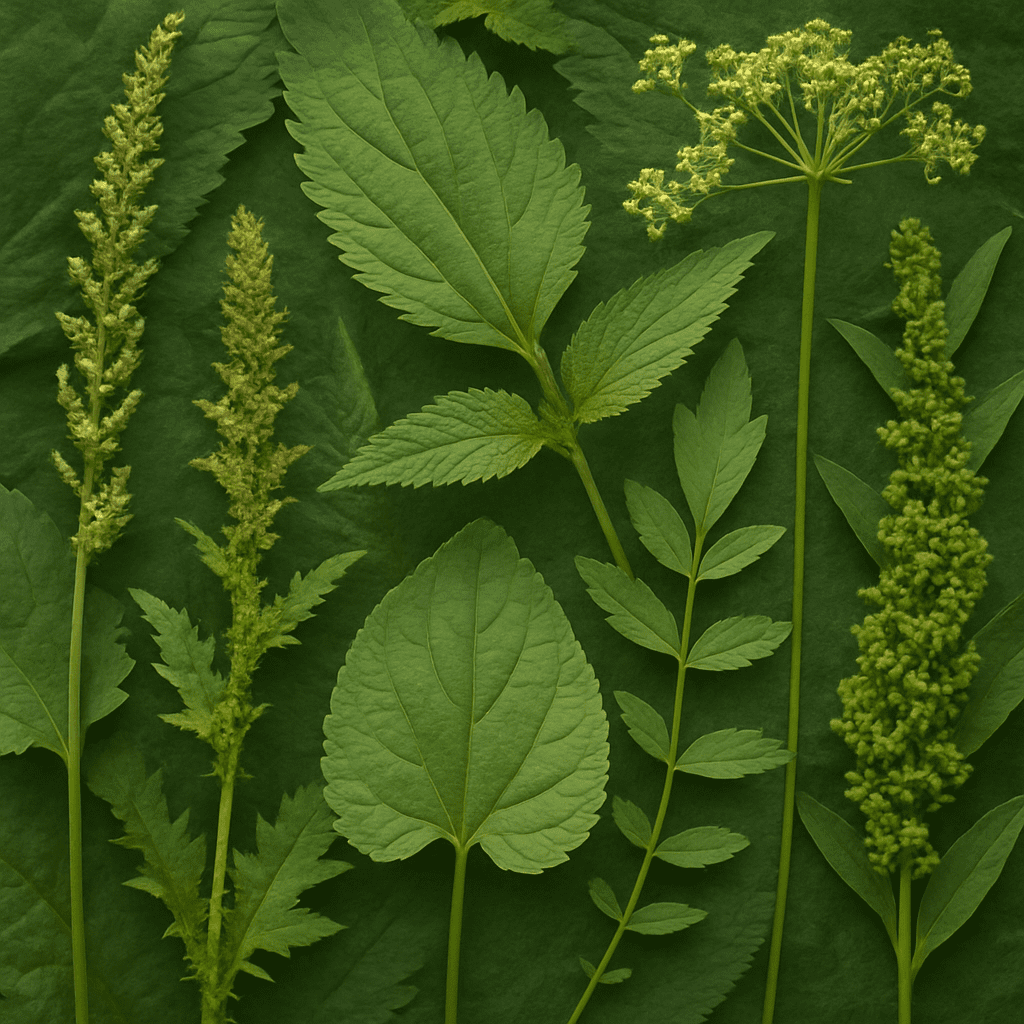
The most important tool for any gardener is the ability to observe. In order to Determine leaf shapes and inflorescences to be able to, pay attention to the following features:
- Leaf edge Is it smooth, serrated, saw-toothed, or lobed?
- Leaf arrangement: Are the leaves directly opposite each other on the stem (opposite) or alternating (alternate)?
- Flower shape: Are they umbels (like umbrellas), panicles, spikes, or capitula?
- Stem Is the stem hairy, smooth, round, angular, or tinged with red?
Indicator plants for soil conditions
Weeds are not just a nuisance, they are also excellent diagnosticians. By Indicator plants for soil conditions, You can learn a lot about your garden without having to perform an expensive soil analysis.
- Nitrogen-rich soil Common nettle, ground elder, cleavers.
- Compacted soil Plantain, Field thistle.
- Acidic soil Sorrel, bracken.
- Dry, sandy soil Wild Carrot, Lamb's Quarters.
If you improve the soil accordingly (e.g., loosen compacted soils), the corresponding weeds often disappear on their own.
13 Tall-Growing Weeds: The Comprehensive Guide
Here it is, the detailed overview with which you 13 fast-growing weeds to identify can. We'll highlight their distinguishing features, quirks, and the best ways to handle these green giants.
Giant hogweed
Giant hogweedGiant hogweedis probably the most imposing and dangerous tall-growing weed in our latitudes. It can reach gigantic heights of up to 4 meters.
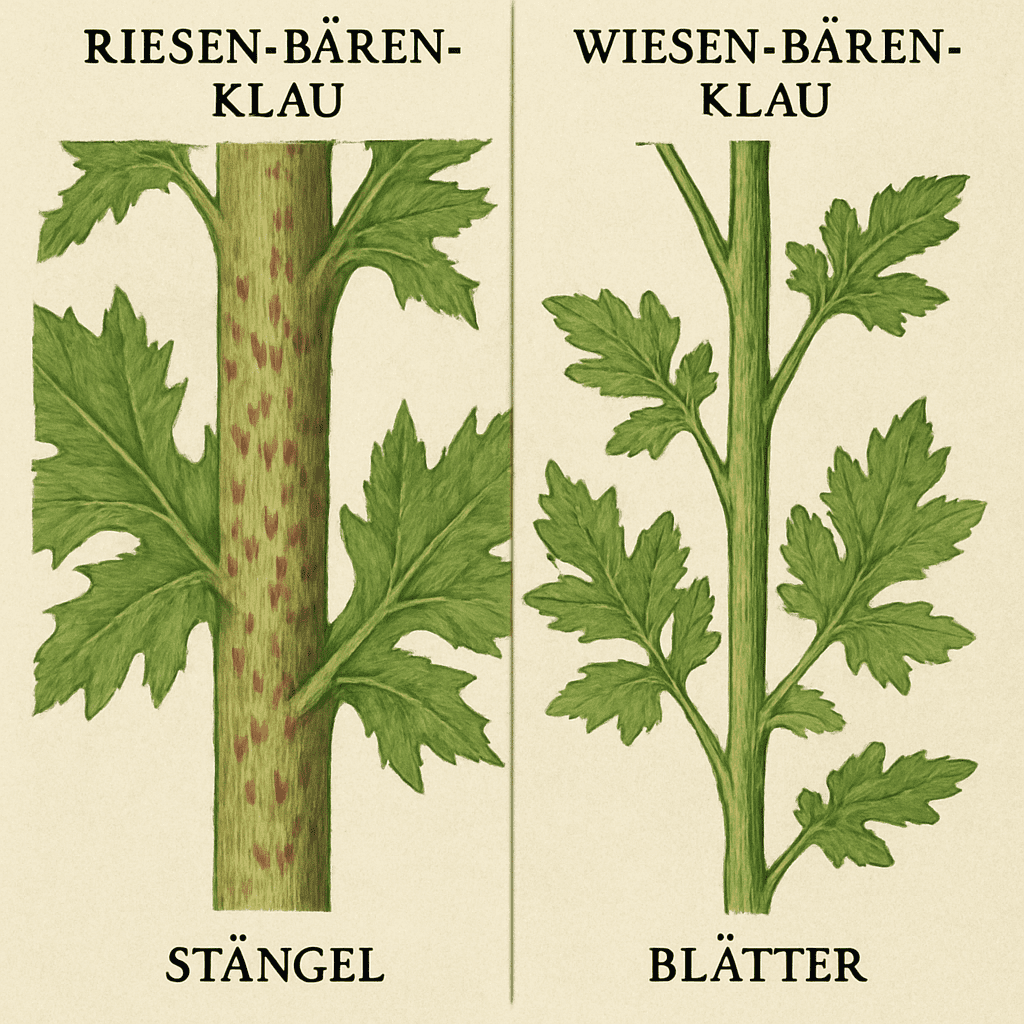
- Identifying features: The stem is thick, hollow, reddish-spotted, and densely hairy. The leaves can reach over a meter in length and are deeply lobed. The white umbel flowers are often the diameter of an umbrella (up to 50 cm).
- Danger The plant sap is phototoxic. In combination with sunlight, it causes severe burns on the skin (phytophotodermatitis).
- Combat Removal only in protective clothing (gloves, long sleeves, safety glasses) and preferably on cloudy days. The deep taproot must be pierced at least 15 cm below the surface of the ground.
Giant hogweed and meadow hogweed
It is essential to Giant hogweed and meadow hogweed to know, since the latter (Hogweed) is harmless and even edible.
- Size: Meadow hogweed grows to a maximum of 1.5 meters high.
- Stem The stem of the common hogweed is angularly furrowed and usually pure green or only slightly tinged with red, but not distinctly red-spotted like giant hogweed.
- Leaves The leaves of meadow hogweed are broader, softer, and less pointed and sharply incised.
2. Canadian Goldenrod
The Canadian Goldenrod (Canada goldenrod) glows bright yellow in late summer. It was once introduced as an ornamental plant and is now spreading uncontrollably. It often grows up to 2 meters tall.
How to recognize a Canada goldenrod?
To answer the question „How to recognize a Canada goldenrod?“to answer precisely:
- Blossoms From August, it forms large, pyramid-shaped, bright yellow panicles. The individual flower heads are very small but grow close together.
- Stem The stem grows upright, is finely hairy in the upper part, and often tinged with red.
- Leaves The leaves are narrow, lanceolate, hairy on the underside, and have a serrated margin. They are arranged alternately on the stem.
- Growth It grows extremely densely in large groups, as it spreads through extensive underground rhizomes.
Japanese knotweed
If we talk about Invasive neophytes in your own garden speak, Japanese knotweed (Japanese knotweedat the very top of the list. This extremely vigorous exotic can grow up to 3 meters tall and its roots can even break through asphalt.
- Identifying features: The stalks are hollow, bamboo-like, reddish-speckled, and grow in a zigzag pattern. The leaves are large, spade- or heart-shaped with a straight base. In late summer, small, white panicles form.
- Combat Extremely difficult. Every tiny piece of root (rhizome) in the soil will sprout again. Continuous pulling for years or deep soil removal by professional companies is necessary. Never dispose of plant parts in compost, but in household waste!
4. Indian Balsam
Another pretty but invasive giant. The Indian balsam (Impatiens glanduliferagrows up to 2.5 meters high, prefers moist locations such as riverbanks or damp forest edges, but can also be found in garden beds.
- Identifying features: Striking, helmet-like flowers in shades of pink to purple (sometimes white) that have a sweet scent. The stem is thick, fleshy, often reddish, and hollow. The lance-shaped leaves have a serrated edge.
- Special feature The name comes from the seed pods. When ripe, they burst open explosively at the slightest touch, scattering seeds up to 7 meters away.
- Combat As it is an annual plant, it can easily be pulled out of the ground, roots and all, before it flowers.
5. Common Wormwood
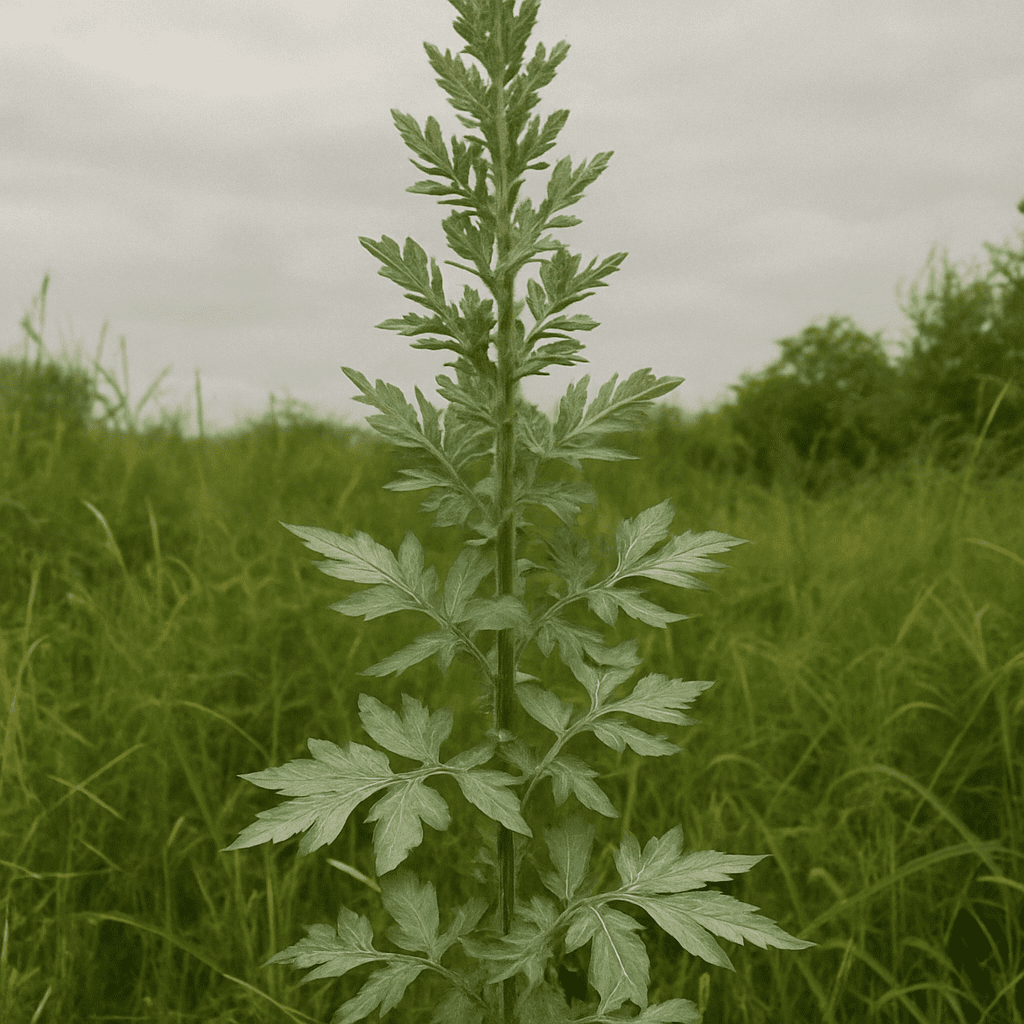
Common wormwoodMugwortis an undemanding, tall-growing plant that can reach up to 2 meters in height. It is often found along roadsides or on rubble sites.
- Identifying features: The stem is often reddish-brown and grooved. The most striking feature is the pinnately divided leaves, which are dark green on the upper side and conspicuously silvery-gray and downy-hairy on the underside. The flowers are rather inconspicuous, small, and yellowish-brown.
- Usage Mugwort is a classic spice for fatty foods (e.g., roast goose) because its bitter compounds stimulate digestion.
6. Stinging Nettle
The Stinging NettleStinging nettlecan easily reach heights of 1.5 to 2 meters in good, nitrogen-rich locations.
- Identifying features: Opposite, coarsely toothed leaves, covered with stinging hairs. The stem is square.
- Ecological Value Even though it's painful, the stinging nettle should be given a corner in a natural garden. It's the food plant for the caterpillars of numerous butterfly species (e.g., Peacock butterfly, Red Admiral).
- Use It is excellent for making nettle liquid, one of the best organic nitrogen fertilizers for tomatoes and heavy feeders.
7. Field Scabious
Thistles in the garden can drive gardeners to despair. The field thistle (Field thistlegrows up to 1.5 meters high and forms tenacious, deep-reaching root systems.
- Identifying features: The leaves are wavy, sinuately lobed, and covered with stiff spines. The small, purple to pink flower heads grow in loose panicles at the tips of branched stems.
- Roots: It sends out horizontal and vertical roots (up to 3 meters deep!), which is why hoeing often causes new plants to grow from every severed root piece. Careful, deep digging is required here.
White Goosefoot (Lambsquarters)
White goosefootLambsquartersis one of the most common arable and garden weeds worldwide. In favorable locations, it can grow to a height of 1.5 to 2 meters.
- Identifying features: The leaves are goose-foot shaped (rhombic). A sure sign is the whitish, powdery bloom, especially on the underside of young leaves and on the stem.
- Use This is an annual plant that produces an extremely large number of seeds. By the way, young goosefoot can be prepared excellently like spinach – it tastes mild and is very healthy.
9. Goosegrass
The cleavers (CleaversWhile not naturally self-supporting, it grows quickly as a climbing plant on other plants, fences, or shrubs, reaching up to 1.5 meters high.
- Identifying features: The square stem and the leaves arranged in whorls (usually 6-8) are covered with fine, barbed bristles. This makes the plant practically „stick“ to clothing or animal fur.
- Combat Since goosegrass has shallow roots and is an annual, it can be very easily and widely pulled from garden beds before it forms its round seeds.
10. Wild Child
The Wild TeaselCommon teaselis an imposing, thistle-like plant that grows biennially and reaches up to 2 meters in height in its second year.
- Identifying features: The egg-shaped flower heads (often blooming in the center, forming a purple ring) are surrounded by long, spiky bracts. A special characteristic: the leaves on the stem are fused in pairs at the base, forming a small basin that collects rainwater (so-called Venus's-basin).
- Value Goldfinches (Stieglitze) love thistle seeds in the winter. Therefore, leave dried thistles standing as winter food!
11. Burdock
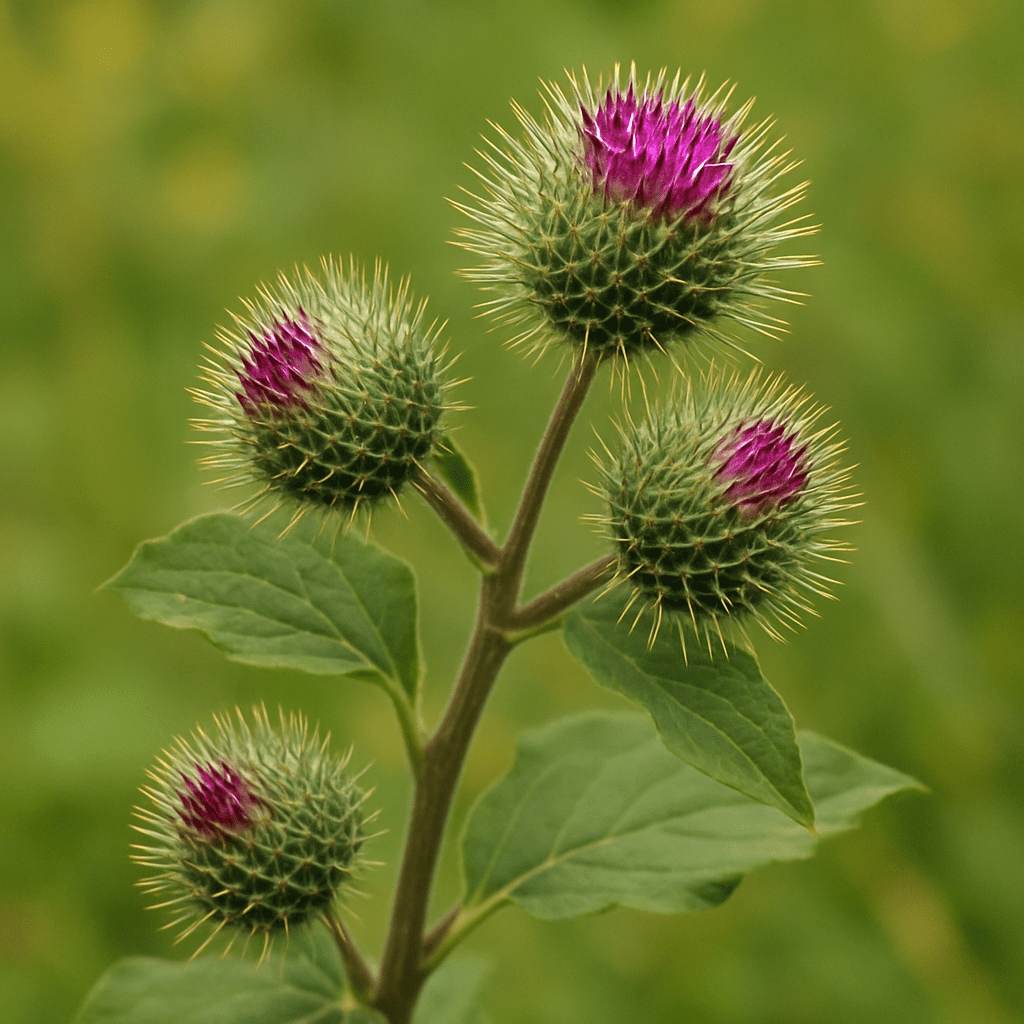
The Greater BurdockGreat burdock) is a biennial plant characterized by its spreading leaves and a growth height of up to 1.5 meters (sometimes taller).
- Identifying features: In the first year, it forms a huge basal rosette of giant, rhubarb-like leaves (up to 50 cm tall), which are gray-felted on the underside. In the second year, the stem shoots upwards. The flower heads have burr-like, barbed bracts, with reddish-violet corollas protruding at the top.
- Root: It has an extremely thick and deep taproot, which can even be eaten in the first year (before flowering) (known as Gobo in Asian cuisine).
12. Common Chicory
Common chicoryCichorium intybusthrives in mid-summer, often adorning dry roadsides and embankments with its bright blue flowers, but can also establish itself in the garden and grow up to 1.2 meters tall.
- Identifying features: The plant often looks somewhat spindly and tough. The sky-blue, star-shaped ray florets usually open only in the morning. The lower leaves resemble those of a dandelion.
- Special feature Chicory is the wild form of endive and radicchio. Here too, an extremely tough taproot extends deep into the soil.
13. Meadow Hogweed
Giant hogweedHogweed) we already briefly met above as a doppelganger of the giant hogweed. It grows on nutrient-rich meadow edges and in the garden up to 1.5 meters tall.
- Identifying features: Rough, angular stems, large, pinnate leaves (but not as extremely pointed as Giant Hogweed) and white (sometimes greenish or reddish-tinged) umbel flowers.
- Security Its sap can also cause mild skin irritation in sensitive people with strong sun exposure, but it is by no means as dangerous as its giant relative. Young leaves can be cooked and eaten.
Identifying Poisonous Look-Alikes in the Garden
Anyone who gets a taste for weeding and wants to collect wild herbs for the kitchen must Distinguishing edible wild herbs from poisonous plants can. There are some tricky points of confusion.
Um Identifying poisonous look-alikes in the garden As a general rule for umbellifers (Apiaceae): If you're not 100% sure, stay away from them!
- Wild Carrot (edible) vs. Poison Hemlock (deadly poisonous): Both have white umbels and fine, fern-like leaves. However, poison hemlock has a hairless stem that is conspicuously spotted with red-violet in the lower part. Additionally, hemlock smells unpleasantly of mouse urine when the leaves are rubbed, while chervil has an aromatic scent.
- Wild garlic (edible) vs. Autumn crocus/Lily of the valley (highly poisonous): Wild garlic doesn't grow tall, but mistaking it is the classic spring mistake. Wild garlic leaves smell like garlic when rubbed, unlike poisonous plants.
Collect only what you have clearly identified. A good magnifying glass and a detailed identification guide (or reputable apps) are essential.
Weed control in the garden: prevention and removal
Now that we have identified the 13 high-growth candidates, the question of regulation arises. Modern and sustainable garden maintenance relies on Ecological weed control in the natural garden. Toxic herbicides (weed killers) like glyphosate have no place in home and small gardens – they harm soil biology, insects, and ultimately ourselves.
Permanently remove tall-growing root weeds
The biggest problem with tall plants is their roots. In order permanently remove tall-growing root weeds To do so, you must distinguish between plants with rhizomes (underground creeping roots like goutweed or Japanese knotweed) and those with taproots (like thistles or burdock).
For rhizomatous weeds, digging is the way to go. Use a digging fork instead of a spade! A spade cuts the delicate roots, and each fragment can grow into a new plant. The digging fork loosens the soil, allowing you to pull out the root system in one piece.
Instructions for removing deep taproots
Plants like the burdock or the field thistle resist simple pulling. Here's a step-by-step Instructions for removing deep taproots:
- Choosing the right time: Wait for a day after a heavy downpour. Damp soil is softer, the root will come loose more easily and won't break off as quickly.
- The right tool: Get a dandelion weeder (taproot weeder). This tool is long, narrow, and V-shaped.
- Puncture Place the weed puller vertically and directly next to the stem base. Press it deep into the soil.
- Loosen Gently rock the tool back and forth to loosen the soil around the root. Do not pry immediately, or the root will break.
- Pull Grasp the plant at the very base near the root crown (when dealing with thistles, be sure to wear thick leather gloves!) and pull upwards with steady, slow force, while continuing to help from below with the weed puller.
- Control Check the hole. If the thick root has broken off cleanly, try to dig out the remaining piece as well.
Home remedies for fast-growing garden weeds
A wonder cure is often sought on the internet. Many resort to salt or vinegar. Attention: The use of salt and vinegar essence as herbicides on paved surfaces is prohibited by law, as these substances enter groundwater unfiltered. They also severely damage the soil's microbiome in garden beds.
Effective, harmless Home remedies for fast-growing garden weeds are
- Boiling water When you boil potatoes or pasta, simply pour the hot (unsalted) water directly over the root base of the unwanted weeds. The heat destroys the plant's cell walls. The leaves will wilt, and with repeated applications, even stubborn taproots will die.
- Mulching A thick layer of grass clippings, bark mulch, or leaves inhibits the germination of seeds and smothers young weeds by blocking out light.
Weed barrier vs. ground cover comparison
When you're creating a new flower bed and want to proactively prevent tall-growing weeds from getting a chance in the first place, you usually have two methods to choose from. Here is the Weed barrier vs. ground cover comparison:
| Criterion | Weed fabric | Ground cover | | :— | :— | :— | | Effect Immediate protection, blocks light completely. | Takes 1-2 years to grow dense, then very effective suppression. | | Optics Unnatural, must be covered with mulch or gravel. | Beautiful, flowering, blends naturally into the garden. | Ecology Minimally prevents natural gas exchange in the soil. Often made of plastic (microplastic risk upon decomposition). | Provides habitat, nectar for insects (e.g., geranium, periwinkle, thyme) and promotes healthy soil life. | Care Over the years, bark mulch decomposes into soil, allowing new weeds on grows into the fleece, its roots getting tangled in the fabric. | They need to be watered and cared for at the beginning, sometimes they overgrow the edges of the beds, but they can be trimmed well. | | Costs One-time purchase costs for fleece and top layer. | Costs for many small plants that need to spread out first. |
Conclusion of the comparison: For the ecological natural garden, dense ground cover plants (such as Balkan Geranium, Lungwort, or Barren Strawberry) are the clearly better, more beautiful, and more sustainable solution in the long run to protect the soil from windblown weed seeds.
Conclusion: Managing Wildness in the Garden Correctly
Nature is constantly changing, and a completely weed-free zone simply doesn't exist in a living garden. If you 13 fast-growing weeds to identify can, but you have already taken the biggest step towards a relaxed gardening practice. You now know that you can simply pull Indian Balsam as you walk by, while the Creeping Thistle requires focused work with a weeding tool. You have learned to, Identifying poisonous look-alikes in the garden to be able to and now know the importance of distinguishing between giant hogweed and common hogweed.
Weeds don't always have to be the enemy. If you Indicator plants for soil conditions, will the wild herb become a helpful advisor. And if you give nettles space in a secluded corner of the garden, you actively promote butterfly diversity. Observe, identify, and act strategically – with this knowledge, you'll maintain control over the green giants in your garden and create a healthy, harmonious balance between ornamental plants and the fascinating power of wild herbs.
