
Vertical gardens and planted walls are much more than just a fleeting design trend. They are an expression of a modern, nature-connected way of life, also known as „biophilic design.“ Whether in the home living room, the open-plan office, or on the exterior facade – plant walls bring a piece of nature back into our everyday lives and enhance any environment both visually and functionally.
If you're considering transforming your walls into a green oasis, there are a few things to keep in mind beforehand. To ensure your project goes smoothly from the start, we've put together this guide 10 Tips for Vertical Greening compiled for you. These valuable Wall greening tips help you avoid planning mistakes and enjoy your vertical garden for a long time.
1. Determine the exact location and light requirements
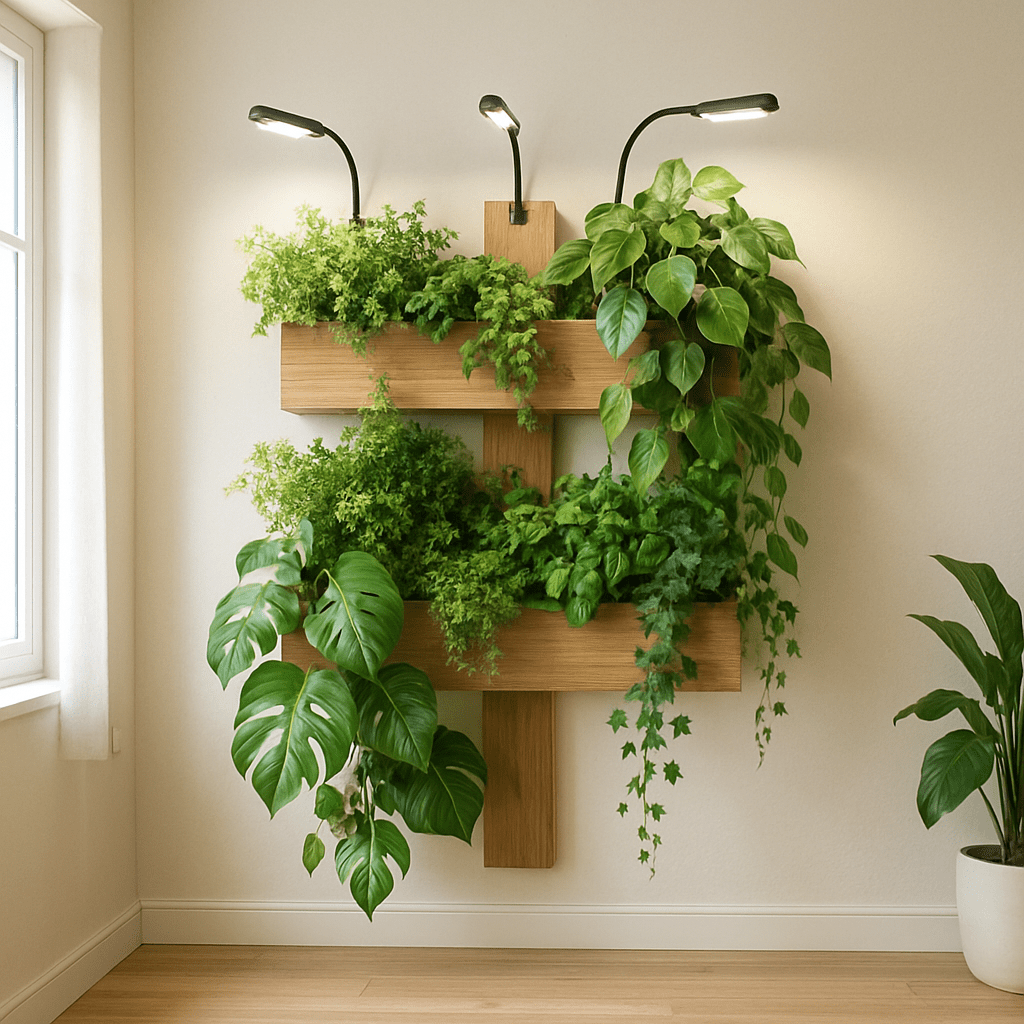
The success of a plant wall stands and falls with the lighting conditions. However How much light does a vertical garden need? Actually? As a rough rule of thumb, even shade-loving plants need at least 1,000 to 1,500 lux to grow healthily. Tropical plants often demand double that. Therefore, check with a lux meter beforehand how bright your wall really is. Have you chosen a darker hallway corner or a north-facing room? Don't worry. LED grow lights for dark locations today offer the full light spectrum, create a cozy atmosphere with their warm white light, and provide your plants with the optimal energy they need.
2. Select the appropriate mounting system
The market offers countless solutions for building a green wall. For those who are handy and can DIY vertical garden for your apartment wants to, can use simple constructions made of wooden pallets, pipes, or special planting bags made of recycled felt. However, for a clean, professional result, it is recommended Modular wall systems for interiors. These usually consist of plug-in plastic cassettes that can be flexibly adapted to any wall size. They often have integrated drainage channels, which significantly simplifies care and watering.
3. The agony of choice when it comes to plants
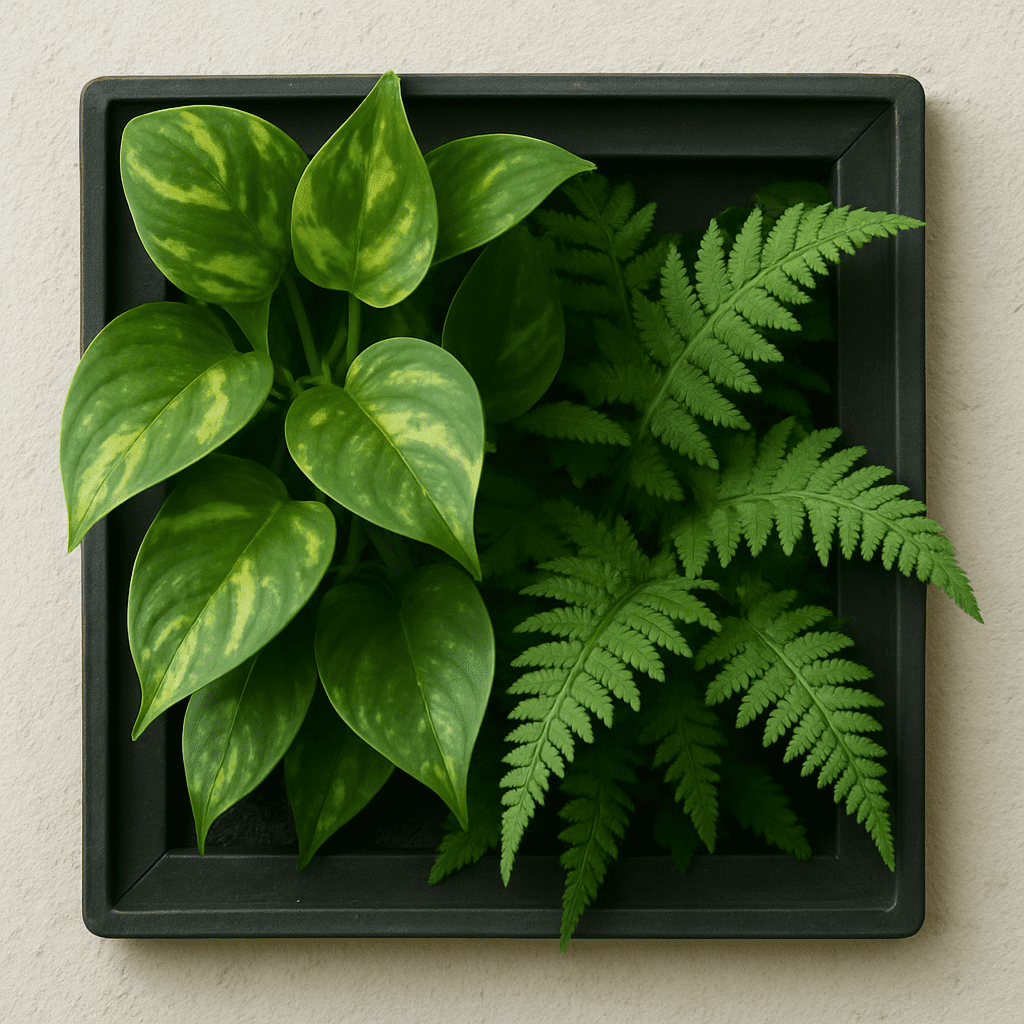
Probably the most common question plant lovers ask themselves is: What plants are suitable for a green wallBasically you need Plants for walls, which tend to have shallow roots and a drooping or bushy growth habit. Also, make sure that the species have similar water and light requirements.
Especially low-maintenance plants for indoor use are:
- Pothos (Epipremnum): Grows quickly and forgives minor care mistakes.
- Peace Lily (Spathiphyllum): Sets elegant, white floral accents.
- Sword Fern (Nephrolepis): Provides lush, jungle-like volume.
- Philodendron Available in many leaf shapes and extremely robust.
4. Weighing alternatives: Moss or living green?
Those who don't have a green thumb should get themselves the Moss art vs. living plant walls comparison to look at. Preserved moss walls require absolutely no water, no sunlight, and do not continue to grow – they remain intensely green for years. Another massive advantage is the excellent Sound insulation in the office with moss walls. The soft, uneven structure is excellent at absorbing noise in the room. Living plant walls, on the other hand, score points with active air purification and oxygen production.
Hydroponics as a clever alternative to soil
If you want to avoid using conventional potting soil in living or work spaces (for example, due to fungus gnats or dirt), then Substrate-free hydroponic systems for plant walls a state-of-the-art solution. In this method, the plants grow bare-rooted in mineral substrates, lava rock, or special fleece mats. The supply is provided directly via a circulating nutrient solution. This drastically reduces the weight of the installation and ensures an extremely clean environment.
6. Pouring is yesterday: Automate your water supply
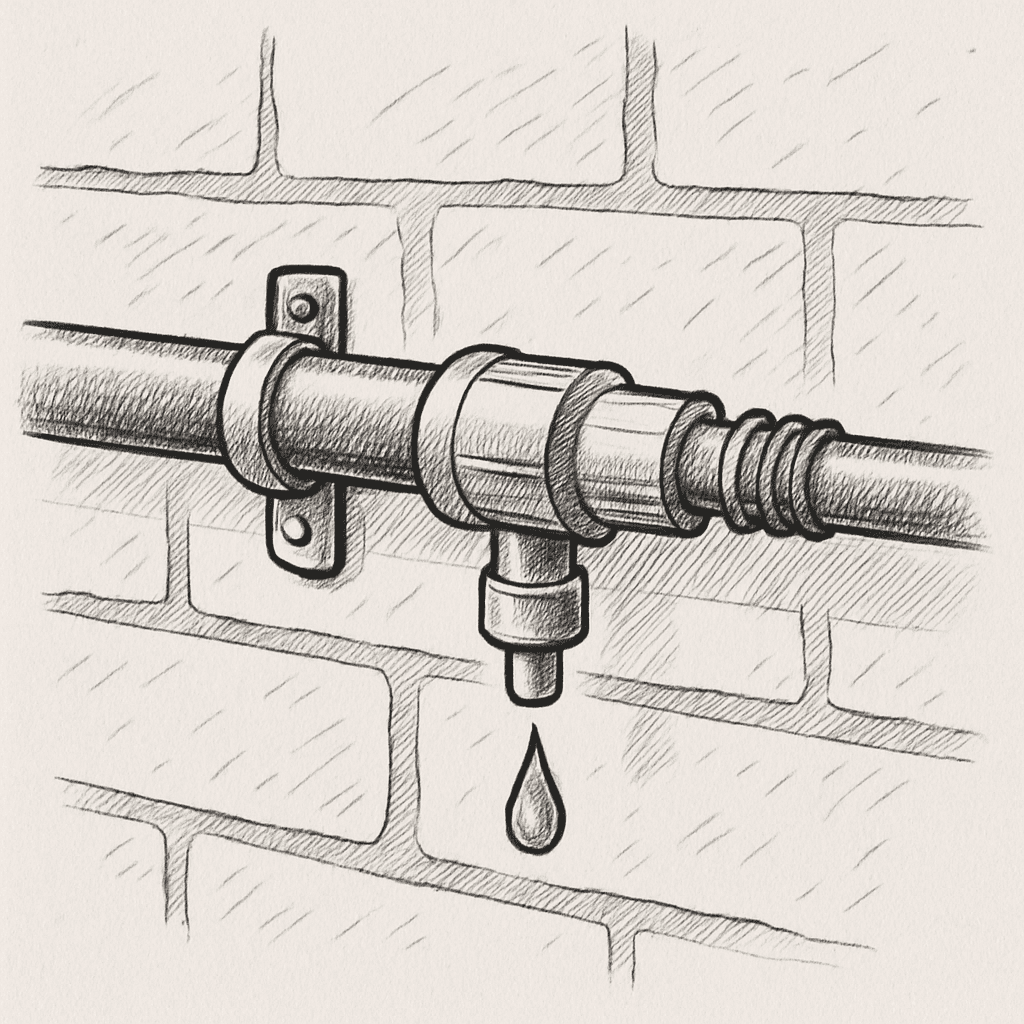
Few people have the time to water hundreds of small plants on a wall individually with a watering can. That's why Automatic irrigation systems for green walls almost a must. Through a drip hose system connected to a timer or smart home control, each row of plants receives precisely the amount of water it needs. Excess water is collected in a base tray and, in closed systems, is pumped back up with a small pump.
7. Control moisture and prevent mold
Where water flows, there is always a certain risk to the building's structure. In order to Effectively prevent mold growth in indoor plants to be able to, direct moisture must never reach the masonry. A waterproof back panel (made of PVC, Alu-Dibond, or pond liner, for example) is mandatory. Also, ensure adequate air circulation behind the system. A room hygrometer will help you keep an eye on the humidity; regular shock ventilation prevents moist air from condensing on cold room walls.
8. Sustainably improve indoor climate and ecology
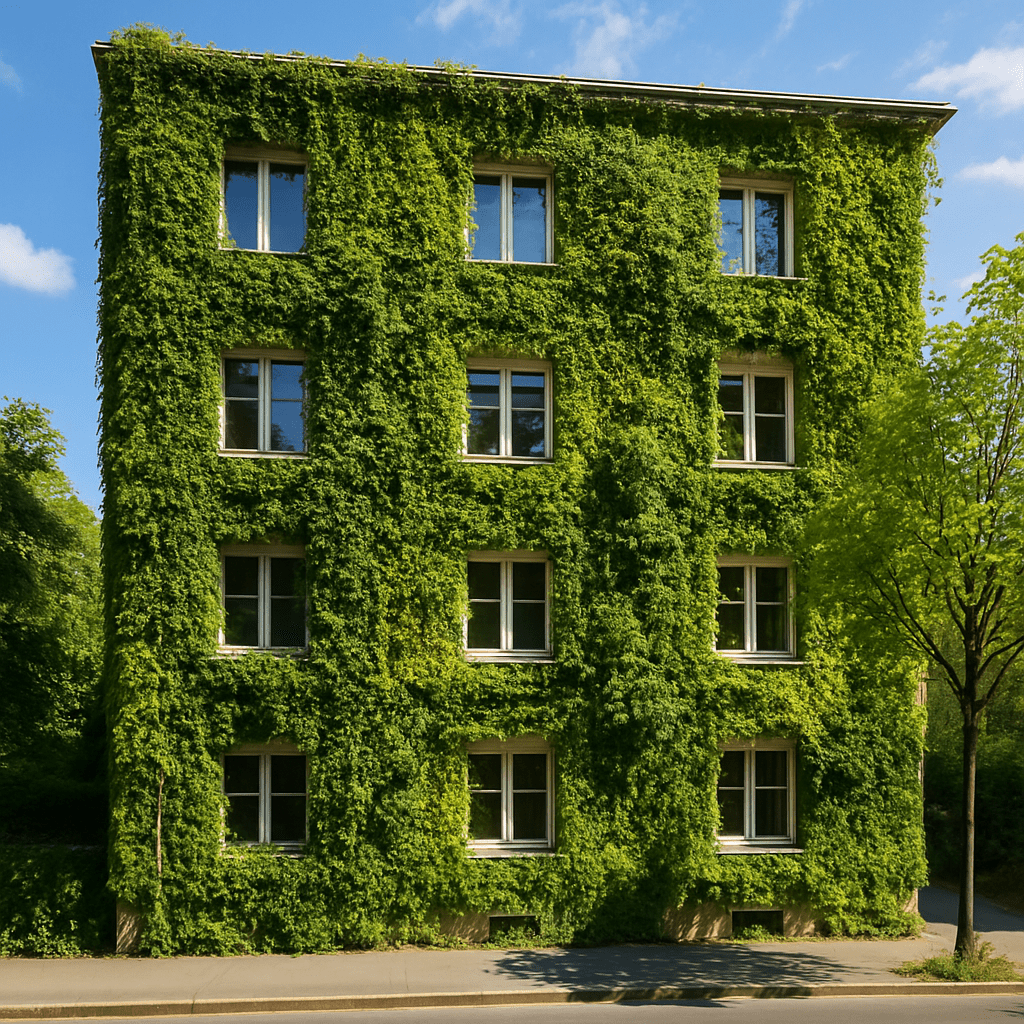
Green walls are true climate wonders. They Improving indoor climate with vertical plant systems It is scientifically proven that plants naturally cool room temperatures on hot summer days through evaporation, increase often too dry indoor humidity (especially in winter), and filter fine dust and volatile organic compounds (VOCs) from the air we breathe. If you apply this concept outdoors, the enormous Ecological benefits of urban facade greening. Planted house walls reduce the urban „heat island effect“, filter exhaust fumes, and offer native birds and beneficial insects a valuable habitat in the middle of the city.
9. Smartly plan and calculate facade greening
There are fantastic options for exterior facades as well. For a small budget or DIY enthusiasts, simple wire rope systems are suitable as Trellises and climbing plants for the house wall. Species like wild grape, wisteria, or climbing hydrangeas quickly conquer these supports and cloaked the house in a green dress. If you're aiming for a full-coverage, professional system, you should budget well in advance. Cost of professional facade greening per square meter vary greatly, but in practice, including the frame, insulation protection, plants, and automatic irrigation, they range between 400 and 1,200 euros. In the long run, however, this pays off through improved building insulation and protection of the facade from weather influences.
10. Long-term greenery through proper care
The prejudice that an automated wall takes care of itself completely stubbornly persists. But even the best garden needs a little love. The Maintenance and Fertilization of Vertical Gardens should not be underestimated. You should reach for the scissors approximately every four to six weeks: Trim back vigorously growing plants (like pothos) so they don't block out light from slower-growing neighbors. Regularly remove yellowed leaves to prevent fungal diseases. Fertilizing is easiest in liquid form directly through the water tank of the irrigation system. It's best to use a high-quality green plant fertilizer mixed into the watering can at half concentration.
Conclusion
A living (or preserved) wall is an impressive design element that will significantly enhance your quality of life. Whether you want to get active on your own or hire professionals: If you consider lighting, irrigation technology, and the right plant selection in advance, nothing stands in the way of your green paradise. Start your green wall project today and finally breathe deeply!
