Imagine stepping outside barefoot on a sunny summer morning with a fresh cup of coffee. Does the foundation of your new outdoor living room feel pleasantly warm, or do you hastily retreat because the material is scorching hot? In practice, it often turns out that balcony flooring that looks fantastic in pictures but wasn't chosen thoughtfully can completely fail in everyday life. Dark stone slabs, for example, heat up extremely and noticeably change the microclimate on the balcony, so that the accumulated summer heat radiates unpleasantly late into the night.
To avoid such mistakes, you need to wisely balance budget and durability. Industry data shows that, in addition to the crucial slip resistance in wet autumn weather, UV stability – meaning the material's protection against fading and becoming porous due to sunlight – is the main factor determining the actual lifespan. Whether you're a renter who prefers flexible click systems or an owner looking for permanently laid flooring for your balcony and terrace: modern terrace design combines aesthetic appeal with technical comfort.
Wood or WPC? How to save 5 hours of maintenance time per year and avoid splinters in your feet
Nothing disturbs the barefoot feeling on your patio more than the sudden fear of splinters. This is where the first important decision for your outdoor living room comes in: Will you opt for the classic solid wood or the modern WPC (Wood-Plastic-Composite)? The latter is a robust mixture of wood fibers and recycled plastic. It is precisely this composition that makes the material an excellent choice for barefoot-friendly deck boards without splinters, which families with small children particularly appreciate.
But how do the materials behave after a few years in sun and rain? Solid wood gradually develops a silvery-gray layer, the so-called patina, due to UV radiation and moisture. Many enthusiasts appreciate this natural aging process. However, those who want to preserve the original, warm brown tone must regularly reach for oil and a brush. High-quality WPC, on the other hand, scores points with its significantly higher weather resistance. It largely retains its color and spares you the annual painting.
The actual time spent becomes particularly clear when comparing them directly.
- Domestic Douglas fir Requires thorough cleaning and fresh deck oil annually to prevent it from becoming brittle.
- Tropical Bangkirai: Is naturally oily and more resistant, but still benefits from an annual conditioning treatment to maintain its color.
- WPC Satisfies with a simple spring cleaning. Warm water, a little dish soap, and a scrub brush are completely sufficient.
However, there is one small catch with the low-maintenance plastic mix on hot summer days. WPC has high thermal inertia – meaning it stores heat very effectively. With hours of direct sunlight, it can heat up noticeably more than natural wood. So, if your balcony is in direct southern sun all day, dark WPC could quickly become uncomfortable for bare feet. For those concerned about overheating in midsummer, porcelain stoneware and natural stone offer heat-resistant and low-maintenance alternatives.
Porcelain stoneware and natural stone: Why frost-resistant tiles visually enlarge your balcony and make cleaning a breeze
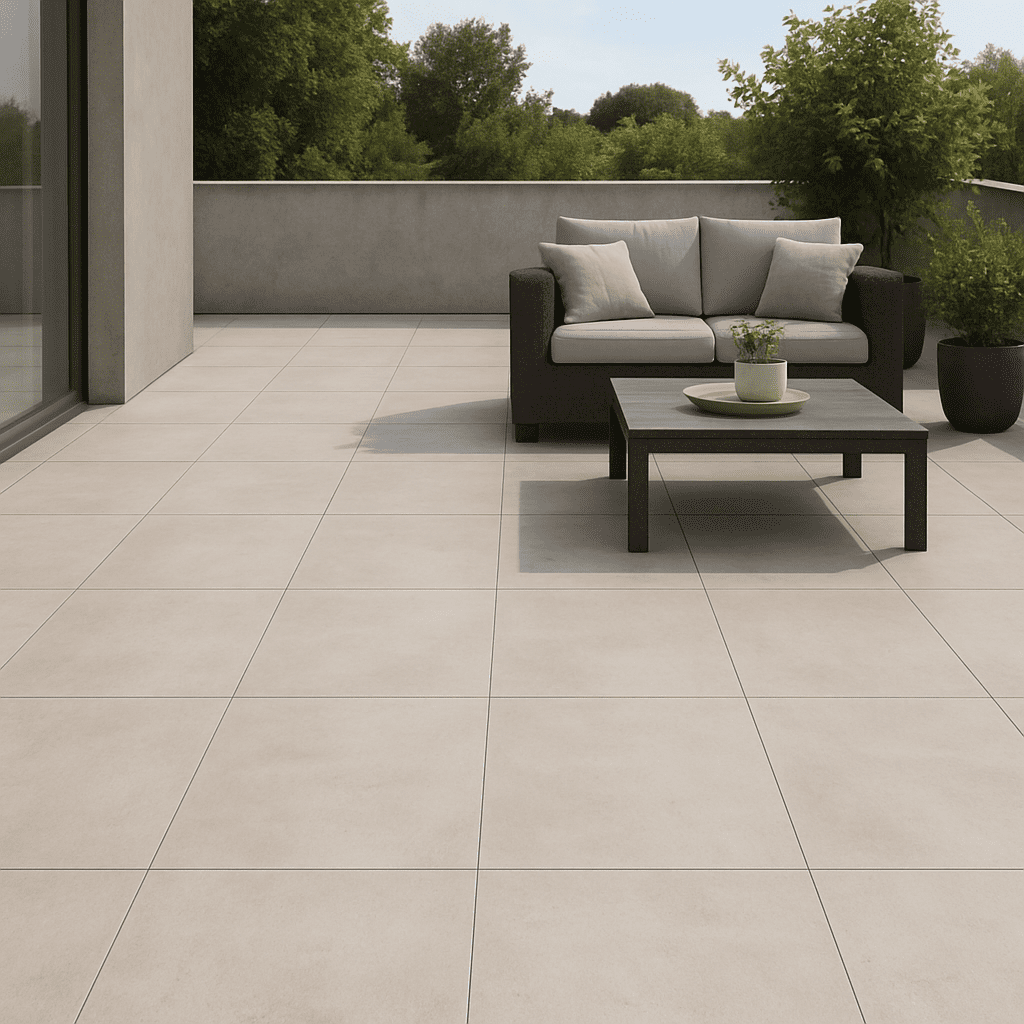
A small balcony immediately appears more spacious if you use few joints and large tiles. This is where stone coverings shine, but the exact material choice determines their lifespan. True natural stone has a fine pore structure that absorbs rainwater like a sponge – experts call this capillary action. If this water freezes in winter, it expands and, in the worst case, cracks the stone. That's why frost-proof floor coverings are crucial for the terrace. Porcelain stoneware is usually the clever alternative: during manufacturing, it is fired so densely at extreme temperatures that hardly any water can penetrate.
However, wet autumn leaves or a rainy summer day can quickly turn even the toughest stone into a dangerous slide. To ensure you get through your barbecue evening without accidents, you should pay attention to three crucial metrics when buying tiles:
- R-value (slip resistance): Non-slip tiles for outdoor use require at least an R10 rating, R11 is even better. This ensures a secure grip even barefoot after a summer thunderstorm.
- Abrasion class This value indicates how scratch-resistant the surface is. Class 4 is ideal for patios so that frequent chair-sliding doesn't leave unsightly marks.
- Frost resistance Look for the snowflake symbol that officially certifies the stone as hardy.
In addition to their practical benefits, ceramic tiles can fulfill almost any aesthetic desire. For example, high-quality stoneware with a wood look combines the cozy appeal of real wood flooring with the absolute ease of maintenance of tiles – a damp mop is all that’s needed for cleaning. Those who rent and are not allowed to permanently adhere heavy stone slabs opt for floating installations instead.
The saviors for rented balconies: Why click tiles and artificial turf are more than just a temporary fix
To enhance the gray concrete of a rented balcony without drilling or screwing, lightweight flooring shines because it requires no adhesive at all. This floating installation – meaning the material just lies loosely on the subfloor – generally does not require landlord permission. It immediately enhances the appearance of the space, and you can simply pack the flooring back into your moving boxes the next time you move.
Even absolute beginners can effortlessly lay click tiles on an old balcony floor. They are considered smart, inexpensive alternatives to natural stone slabs, and the setup works like a puzzle in three simple steps. First, sweep the subfloor thoroughly clean to remove small stones. Then, connect the individual elements at the edges using the simple click system until the desired area is covered. Finally, precisely cut the edge pieces with a small jigsaw for a clean finish at the railing.
Instead, those who prefer the soft feel of a meadow under their bare feet can opt for modern artificial turf. However, never lay this carpet directly on concrete, as this will cause moisture to accumulate and lead to musty mold. When purchasing, be sure to look for integrated drainage nubs on the underside. These small raised areas act like tiny stilts, slightly lifting the carpet to allow air to circulate and rainwater to drain away. However, for this moisture to even find its way to the drain, the covering alone is not enough – functional drainage is essential.
No More Puddles: How to Prevent Frost Damage with the Right Drainage System and Slope
Puddles after a summer thunderstorm or fine hairline cracks in old pavement are clear warning signs for existing surfaces. If water pools on the surface, there is a risk of the dreaded frost heave in winter: freezing moisture expands and inevitably causes the pavement to crack from the inside. The slope of the ground is crucial for effectively preventing waterlogging. Imagine your outdoor area as a slightly sloped tabletop. The secret is a precise 2% slope—that is, a two-centimeter difference in height over a one-meter length—so that rainwater is always reliably directed away from the house.
Even the best slope is of little use if the new wood is directly exposed to moisture. This is where clever drainage systems for the patio substructure come in, lifting the decking like tiny stilts. Laying the support beams of the substructure crosswise on top of each other—professionals call this counter-battens—creates an airy grid. This protective spacer allows moisture to drip downwards and the wind to dry the material quickly. This effortlessly doubles the lifespan of the deck boards, ensuring your flooring remains low-maintenance and durable.
To ensure the structural foundation lasts long-term, the 3 golden rules for the sub-base apply:
- Slope Allow for a 2:1 slope so that water flows directly into the gutter.
- Sealing Protect the bare concrete underneath from creeping moisture with special films or coatings.
- Ventilation create sufficient space for important air circulation through rubber pads or the aforementioned counter battens.
Once the gradients and drainage are professionally solved, nothing stands in the way of selecting the right type of flooring.
Your personal decision-making aid: Which flooring type fits your everyday life?
With the right balance of care, budget, and aesthetics, any unsightly surface can be transformed. Those who wonder which patio material doesn't get hot in the sun, or fear the hours of cleaning dirty patio slabs, will find clear guidance in this type matrix:
- The comfort seeker WPC (minimal effort, modern look).
- The nature lover Solid wood (unparalleled feel, requires annual maintenance).
- The Flexible Tenant Click tiles (quick to install and can be taken with you when you move out).
Your concrete action plan for an informed decision:
- Measure the area precisely.
- Determine personal care type.
- Order material samples to your home.
Your new flooring is not just a construction decision, but the foundation for your outdoor living room. By placing the samples you ordered on your balcony in real sunlight and walking on them barefoot as a test, you will gain confidence in your choice. This ensures that the material is comfortable for your feet and provides you with a durable, comfortable outdoor space for many years to come.