
It's frustrating: you water diligently, yet the grass turns brown. Many garden owners then despair at the question: grass dries out despite watering, what to do? Daily, short watering often only creates a deceptive surface moisture. The water evaporates quickly before it reaches the deep roots, inevitably causing visible symptoms of drought stress in grasses.
Imagine parched earth like a stiff kitchen sponge, where drops initially just bead up and roll off. When moisture sits on the surface, three main factors typically block its downward path: severe soil compaction, unfavorable watering timing, or a water-repellent thatch layer. To put an end to this ineffective watering, these invisible barriers must be specifically breached.
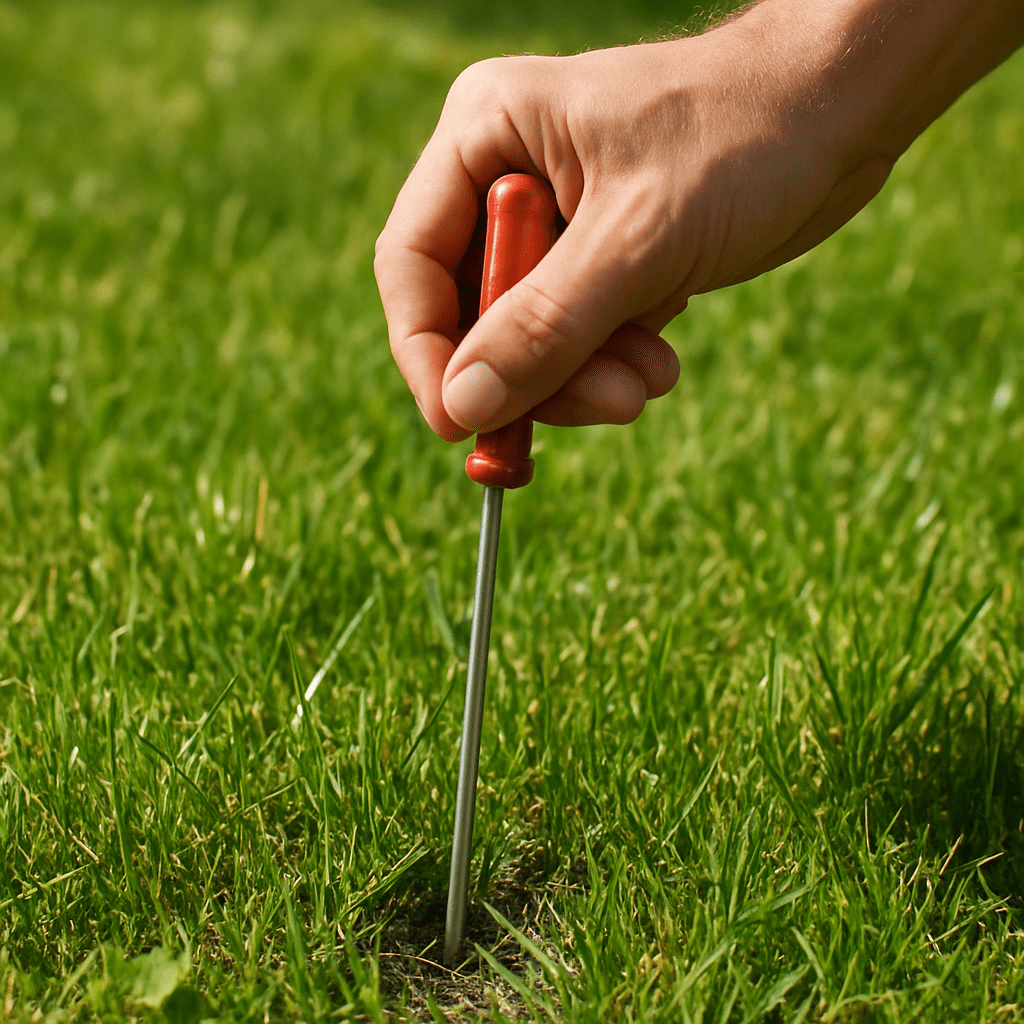
The Screwdriver Test: How to Uncover Dry Soil Deep Down
Does the precious moisture actually reach the roots? A moist surface can often be deceptive, hiding the fact that the soil underneath is rock-hard and bone-dry at deeper levels. With a simple toolbox trick, you can check soil moisture in the deeper root zone in just ten seconds.
This is how the insightful screwdriver test works:
- Pick a typical brown spot in the lawn.
- Push a long screwdriver into the ground with normal force.
- Measure the exact depth at which strong resistance suddenly occurs.
- Then compare this result with a lush green area.
Even after just a few centimeters, you'll feel resistance, which precisely indicates where the water stops. Even if you choose the perfect time to water the lawn properly, the grass will still dry out – the only solution here is targeted guidance on how to loosen soil compaction. However, it's not just compacted soil that prevents watering: organic material on the surface can also act like an impenetrable raincoat.
Thatch as a barrier: When the ‚raincoat‘ doesn't let water through
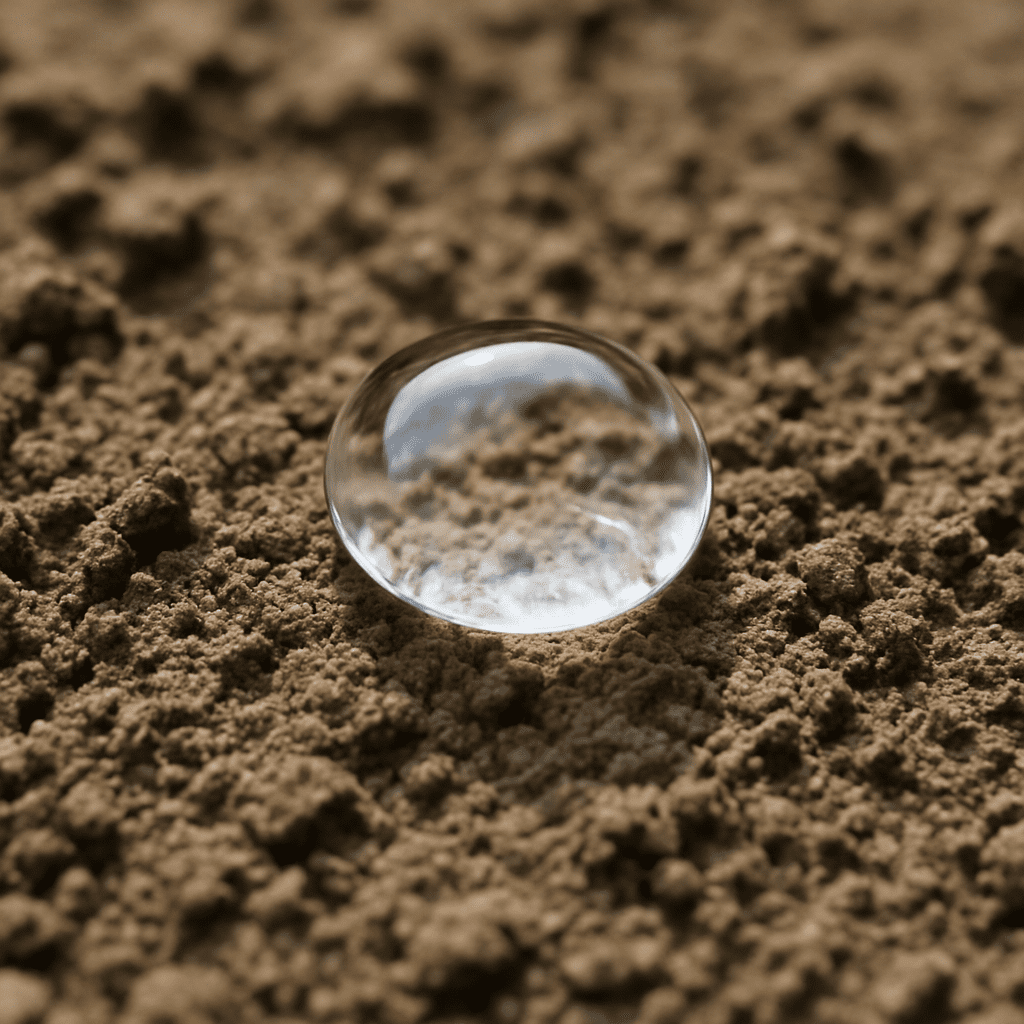
Sometimes it's not the hard soil that's to blame when lawn care fails during dry spells. Dead grass and old clippings often form a dense, matted layer on the soil surface – so-called thatch. This acts like a water-repellent tarp: the precious irrigation water flows uselessly to the side onto the pavement instead of seeping down to the thirsty roots.
You can find out if your lawn is suffering under this barrier without any heavy equipment. Look out for these three typical warning signs:
- A springy, almost spongy feeling when walking on it.
- A clearly visible layer of brown fibers directly between the green blades and the soil.
- Water droplets that remain on the surface like little pearls after watering.
To remove thatch as a barrier, the right measure is crucial. There is often confusion when it comes to aerating versus scarifying a lawn: while aerating punches deep holes against soil compaction, scarifying – ideally in mild spring or early autumn – combs out the suffocating thatch from the grass like a rake.
Hydrophobic Soil: How to Heal Your Soil's ‚Waterphobia‘
If you hold a rock-hard, dried-out kitchen sponge under the faucet, the moisture beads off at first. This sponge effect answers the gardener's question: Why doesn't the lawn absorb water, even when the suffocating thatch has already been removed? During extreme drought, organic matter coats the soil particles with a waxy layer, making the soil water-repellent and causing the irrigation water to evaporate uselessly on the surface.
To treat hydrophobic soil in a lawn, the surface tension of water must be reduced. Special wetting agents for dry spots in the garden work similarly to a drop of mild dish soap when washing dishes. As a DIY trick, it's often enough to lightly spray the hard soil at first to „wake up“ the pores, and then water thoroughly after ten minutes. For long-term improvement, incorporate a soil activator for water retention, which permanently maintains a crumbly humus structure.
Once the garden soil is workable again, the watering method determines success. The most absorbent soil is of little use if the wrong technique dries it out again immediately. It is not enough to simply wave the hose over the blades of grass in the evening – the water must reach where the plant actually drinks.
Deep watering instead of an end-of-day shower: The 15-liter rule
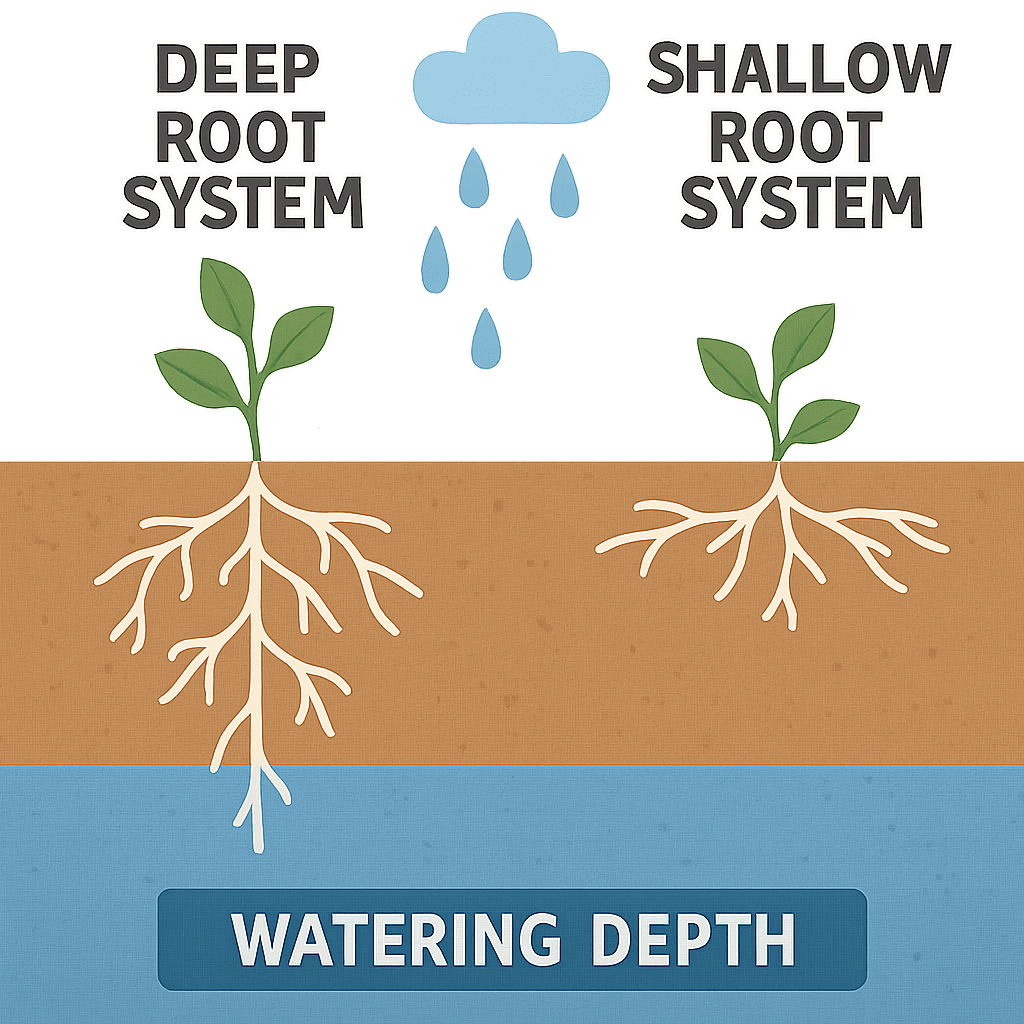
The well-intentioned short „end-of-workday shower“ effectively trains your lawn to become lazy. If you only water your lawn for ten minutes daily, most of the moisture evaporates unused over the hot ground and leaves – a loss of moisture that experts call evapotranspiration. Instead, use the simple jam jar test: place an empty jar on the lawn and let the sprinkler run until the water inside is about two centimeters high.
This level corresponds exactly to the optimal water amount per square meter of 15 to 20 liters. Only this large volume penetrates deep enough into the soil to encourage plants to perform saving deep watering for strong roots. The contrast between the two watering methods is enormous:
- Daily spraying: Shallow roots, extreme evaporation, and a high risk of fungal disease.
- Rare, deep watering: Deep root system, robust drought resistance, and maximum water efficiency.
With this targeted „root training,“ your greenery will also withstand longer heat periods much better.
When Water Isn't the Solution: Check for Grubs and Soil Compaction
Sometimes even the best irrigation fails. If puddles form while watering, yet the soil underneath remains bone dry, the ground acts like a waterproof raincoat. Causes for these localized dry spots often arise from heavily trafficked areas due to hard soil compaction. The grass simply cannot absorb the much-needed water.
If, on the other hand, moisture is absorbed without problems and the blades of grass still die, the problem usually lies underground. If voracious beetle larvae sever the fine grass roots, the plant perishes with a full water tank. To detect white grubs in your lawn, check for the following warning signs:
- Can the brown turf be lifted effortlessly like a carpet?
- Do birds conspicuously often peck holes in these places?
- Are thick, white grubs found directly under the soil?
If the grass lacks roots or hard soil is blocking water flow, further watering will only cause harm. With a targeted approach and gentle pest control, the area can still be saved.
From brown carpet to green oasis: The 3-step rescue plan
More water won't help if the soil acts like a sealed sponge. Use the screwdriver test for a reliable diagnosis. Mechanically break up compacted layers by aeration and switch to infrequent but deep watering so that moisture reaches the roots.
Once the soil shows absorption again, the first greenery usually sprouts after 10 to 14 days. As soon as the blades recover, you can fertilize the lawn to prepare it for long-term drought resistance. This will permanently strengthen the soil structure and effectively protect your lawn from future heatwaves.
