
A sad, gray flat roof over the car is a thing of the past. More and more homeowners are discovering the advantages of a green oasis right outside their own front door. Those who want to sustainably green their carport roof not only make a valuable contribution to environmental and climate protection but also significantly enhance the visual appeal of their property. This comprehensive guide is all about Carport Roof Greening: Sustainable Plant Selection and Costs. We'll show you what to consider when planning, what the right setup looks like, and what expenses you should budget for.

Why a green roof on the carport is worthwhile
Choosing a green roof for a carport offers numerous ecological and economic benefits. It is far more than just a pretty sight.
- Ecological added value One of the greatest strengths is the Improving the microclimate through roof planting. The plants evaporate water, cooling the surrounding air on hot summer days and binding fine dust.
- Water Management A green roof acts like a sponge. Through the Rainwater retention and saving on sewage fees You save money, as many municipalities offer split wastewater fees, and green spaces are often exempt from or discounted on stormwater fees.
- Roof waterproofing protection: The planting protects the actual roof covering from UV radiation, hail, and extreme temperature fluctuations. This often doubles the lifespan of the roof.
Static and Legal Framework
Before you enthusiastically buy plants and soil, two essential points need to be clarified: the load capacity and your community's regulations.
Statics: The be-all and end-all
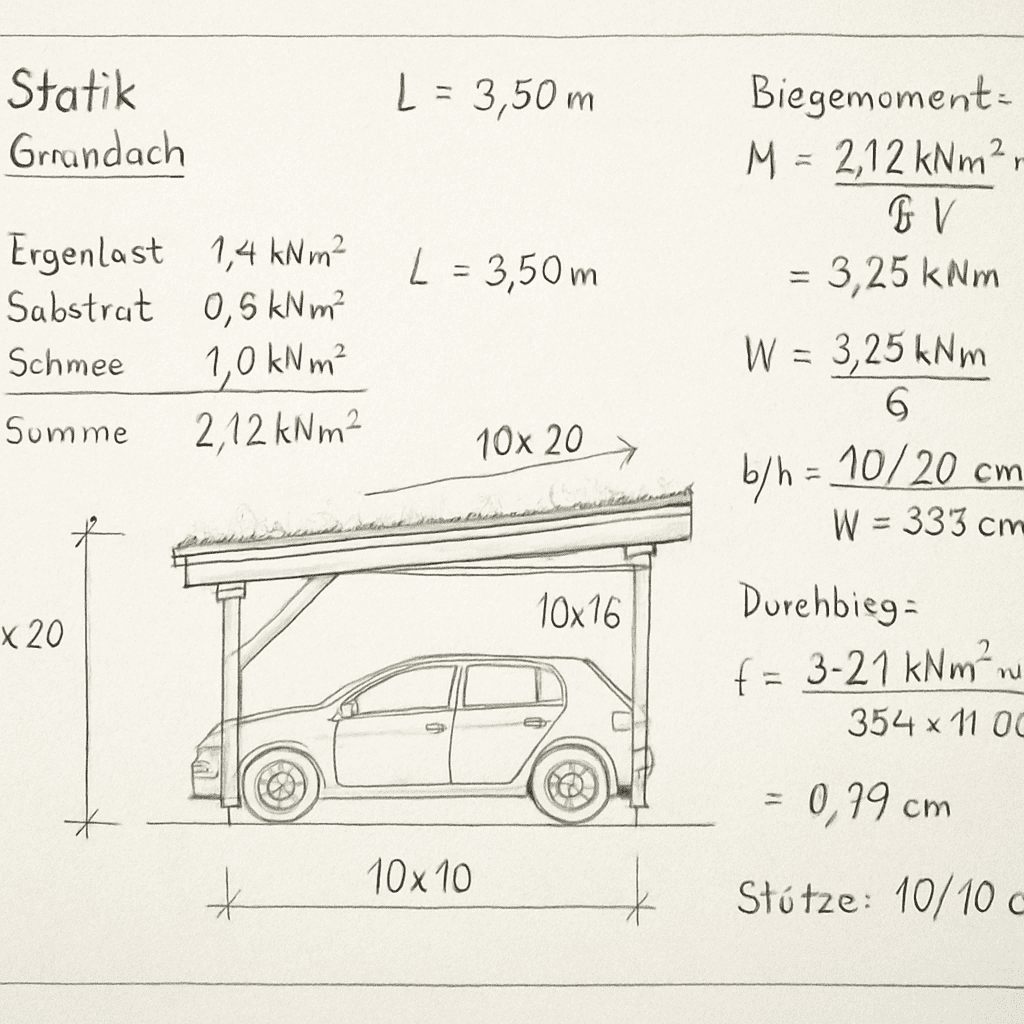
Earth and plants already weigh a lot when dry. However, it gets really heavy after a heavy downpour or in winter with snowfall. Therefore, you absolutely must Check static load for green roof on carport let go. If you the Calculate maximum surface load for a green roof, you must factor in the water-saturated weight of the entire structure as well as any snow loads. An extensive green roof typically weighs between 60 and 150 kg per square meter when saturated. A carpenter or structural engineer can tell you precisely whether your carport can bear this additional weight or if it needs to be reinforced.
Do I need a permit?
A frequently asked question concerns the Building permit for green garage roofs and carports. As a general rule, a green roof is exempt from permits in most states, provided the carport itself was legally constructed and the development plan (B-Plan) does not state otherwise. In some new development areas, a green roof on outbuildings is even mandatory! A quick call to the local building authority will clarify this.
Types of Green Roofs: Extensive vs. Intensive
When we talk about green roofs, we generally distinguish between two types. However, for a carport, only one is feasible in 99 percent of cases. Cost comparison: extensive vs. intensive green roofs shows quickly why.
Intensive Green Roofs (The Roof Garden)
These are full-fledged gardens with shrubs, lawns, and sometimes even small trees.
- Weight: 300 to over 1000 kg/m²
- Care Very high (like a normal garden)
- Costs Very high
- Suitability for carports: Rarely suitable, as the static requirements would be immense.
Extensive Green Roof (The Flat Nature Meadow)
This is the standard solution for carports and garages. It consists of low-growing, robust plants that are largely left to themselves.
- Weight: 60 to 150 kg/m²
- Care Low
- Costs Manageable and often eligible for funding
- Suitability for carports: Perfectly suitable.
Which plants are suitable for carport roofs?
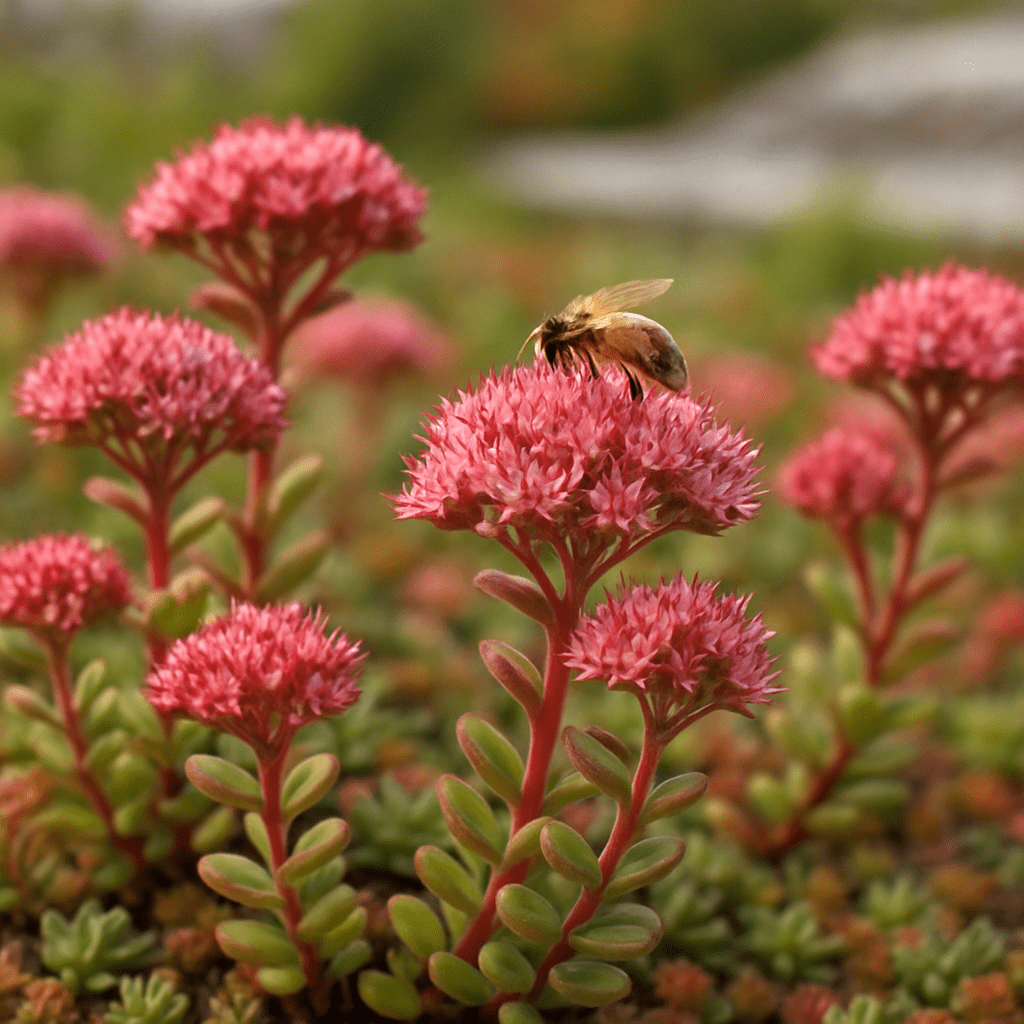
The conditions on a carport roof are extreme: scorching heat and dryness in the summer, frost in the winter, and strong winds blow year-round. Therefore, the answer to the question „Which plants are suitable for carport roofs?“ is very clear: succulents, mosses, and drought-resistant herbs.
Are particularly popular insect-friendly Sedum species for dry locations (also called sedums). Species like Biting stonecrop (Sharp stonecrop), White Stonecrop (White Stonecrop) or Sedum spurium (Sedum spurium) store water in their thick leaves and can easily withstand long dry periods. When these bloom in early summer, they become a magnet for bees, butterflies, and other pollinators.
The Right Structure: Layer by Layer to a Green Roof
A green roof only functions if water can drain away in a controlled manner without the roots damaging the roof. The correct Layer sequence for extensive green roof construction is therefore crucial.
- The roof sealing: The foundation is an absolutely watertight roof. EPDM sheeting (synthetic rubber) has proven itself here. The Durability of EPDM waterproofing under green roofs are excellent; they often last 50 years or longer because they are protected from UV light by the earth.
- The root protection sheet: Even if the roof is watertight, plant roots will find a way. If the roof waterproofing is not explicitly certified as „root-resistant“ (according to FLL guidelines), you must install a separate root protection membrane.
- The protective fleece It protects the seal from mechanical damage.
- The drainage layer This layer (often made of solid sheets or expanded clay) absorbs excess rainwater and directs it to the drain.
- The filter fleece: It prevents fine soil particles from being washed into the drainage and clogging it. Laying root protection fleece and drainage fleece correctly One should always ensure that the paths overlap generously (approx. 10-15 cm).
- The roof substrate: Regular potting soil is out of the question, as it becomes too heavy and muddy. Special roof substrate consists of a mix of mineral components (pumice, lava) and some compost.
- The plants: Here you can sow sprouts, plant bare-root plants, or – especially easily – pre-cultivated Laying sedum mats on a carport yourself. You simply roll out these mats, similar to sod, and you immediately have a finished, green roof.
Solar panels and green roofs: A dream team
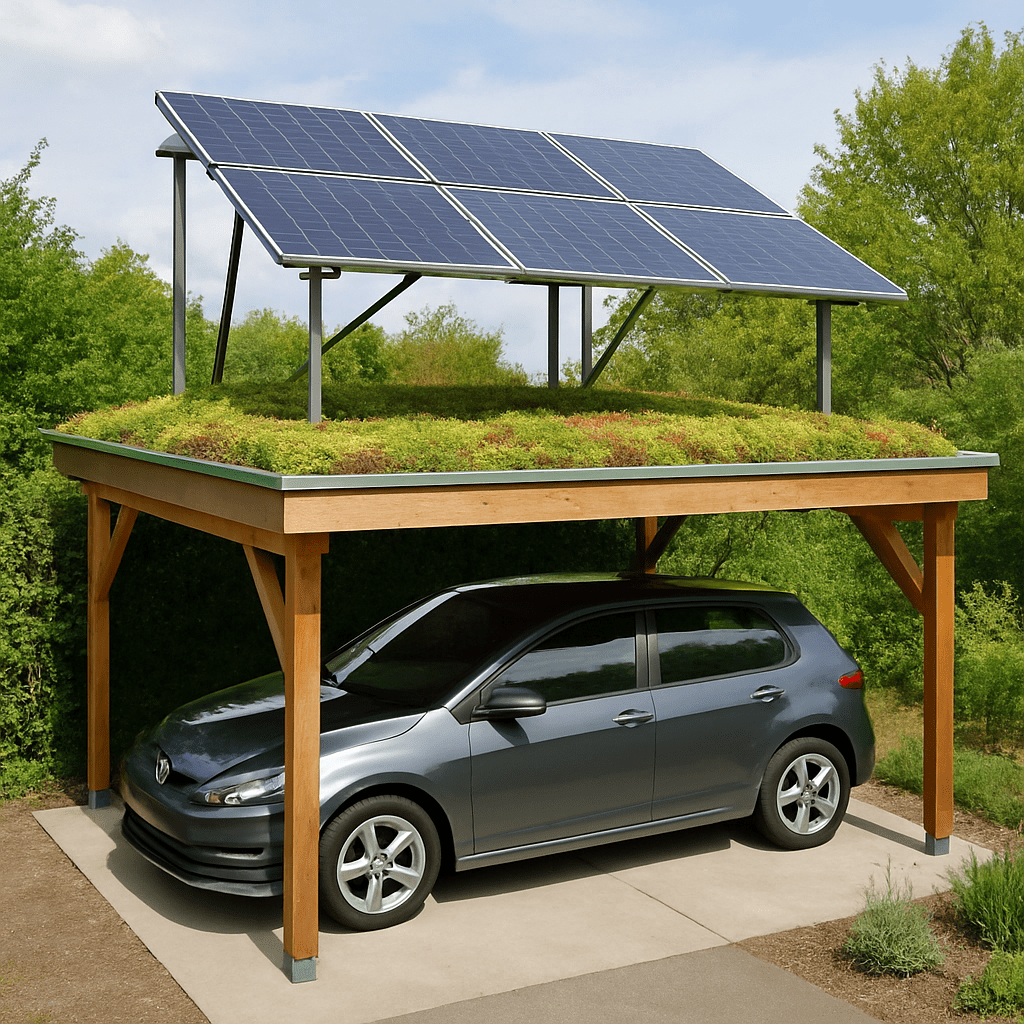
Many homeowners are considering whether to use their carport roof for photovoltaics or nature. The good news: you don't have to choose! Combination of Solar Systems with Green Roofs (Solar green roof) is not only possible, but highly efficient.
Solar panels lose efficiency when they get too hot in the middle of summer. The plants beneath the modules create a noticeable cooling effect through evaporation, which can increase the PV system’s output by up to 5–10%. However, make sure the plants do not grow too tall and shade the modules.
Green Roof Costs: What Expenses to Expect
Let's get to the financial part. The Cost of green roofs depend heavily on whether you do the work yourself or hire a professional company, and which system you choose.
If you're wondering how high the Green roof carport cost failure, the following rough breakdown for extensive greening will help (material costs per square meter):
- Protective fleece, root protection, and drainage: approx. €15 – €25 / m²
- Extensive substrate (approx. 6-8 cm thickness): approx. 10 – 20 € / m²
- Plants (Sedum slips or small plug plants): approx. €5 – €15 / m²
- Alternative Finished sedum mats (incl. substrate roll): approx. 30 - 50 € / m²
The raw material costs for the DIY setup, meaning the actual Carport roof greening costs, thus amounting to approximately 30 to 70 Euros per square meter.
Having the work done by a professional roofer or landscaper, the costs including labor usually amount to 80 to 150 Euros per square meter.
Using grants and saving money
Initial investments can often be significantly reduced. In recent years, many cities and municipalities have recognized the ecological value of green roofs. municipal funding for ecological roof greening is no longer uncommon. Often, flat-rate subsidies are paid per square meter (in some cases up to 50% of eligible costs). Be sure to check with your environmental agency or city administration before ordering materials, as grant applications usually bear The launch of measures must be initiated.
Low maintenance and sustainable: How to keep your roof green
Many shy away from the supposed effort of a green roof. But the Maintenance effort for low-maintenance green roofs In the extensive domain, it is minimal.
The following tasks are typically involved:
- One to two visual inspections per year: Best in spring and autumn.
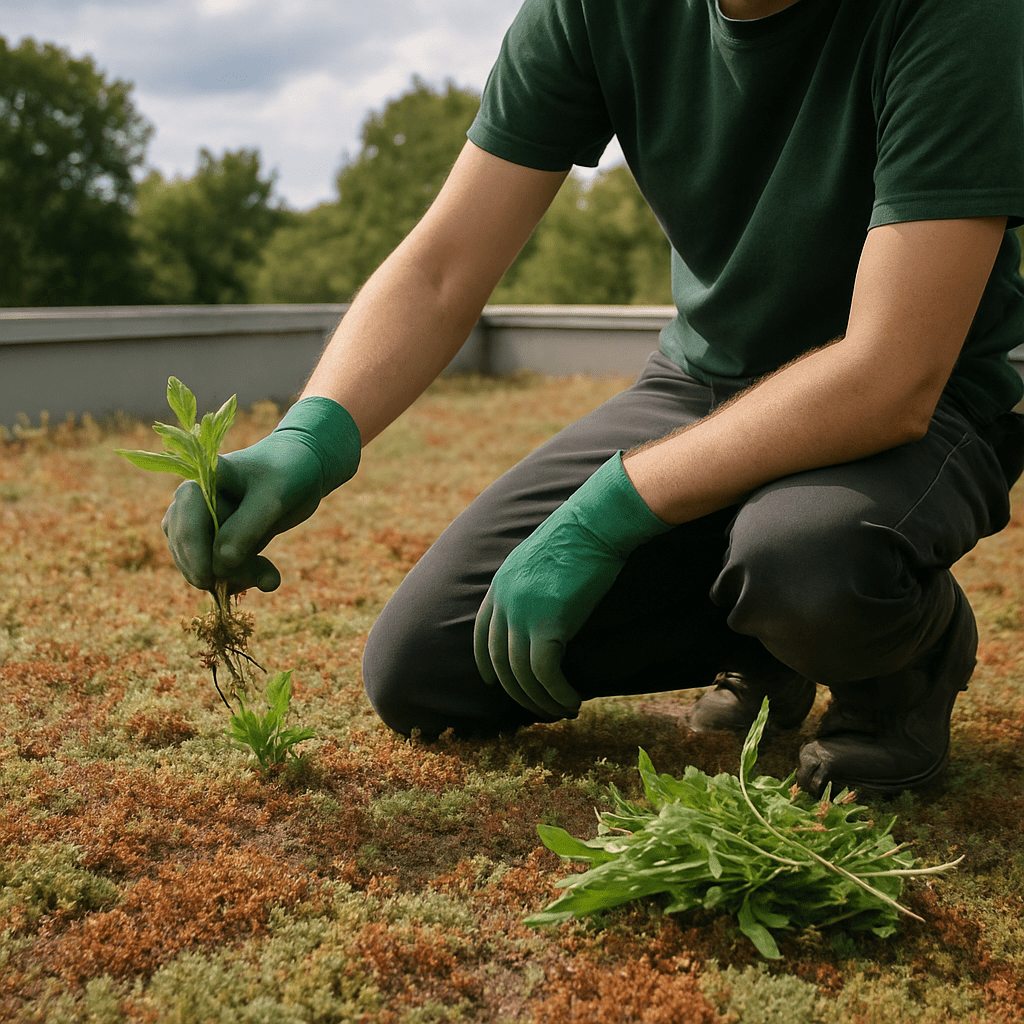
- Remove foreign growth: Winged seeds from trees (like birch or maple) or unwanted weeds should be pulled out in a timely manner so that their roots do not endanger the roof sealing.
- Process Control Gutters and downspouts must be cleared of leaves and debris so that water can always drain.
- Fertilizer A special long-term fertilizer for green roofs in spring helps sedum plants grow dense and healthy.
- Watering Water only during the establishment phase (the first few weeks after planting) or during extreme, weeks-long droughts in midsummer.
Conclusion
Sustainably greening a carport roof is a project that pays off all around. You create new habitats for insects, protect the structural integrity of your roof, improve the microclimate on your property, and can even save on permanent fees through clever rainwater retention.
Those with a knack for DIY can easily assemble it themselves using finished sedum mats. However, it is always important to have the structural integrity checked beforehand and to inquire about possible municipal grants. This way, your gray carport roof will soon become a blooming highlight that you will enjoy for decades.
