
You bring the watering can closer to your Monstera and suddenly you see it: tiny dots that look like harmless dust. But when this supposed dirt starts to crawl, you're usually dealing with spider mites. These plant pests are tiny vampires that suck the vital sap out of the leaves, leaving them weakened. Don't worry – your plant is far from a lost cause because of this.
Based on experience, white mites appear on plants precisely when warm heating air turns our living rooms into dry deserts. The spider mite loves this bone-dry climate and then multiplies rapidly. The secret to successfully controlling them lies in simply understanding their weaknesses.
To get rid of uninvited guests, a simple strategy has proven effective in garden practice: first, the pests are washed off with a gentle shower, then the leaves are treated specifically, and finally, the room climate is adjusted preventatively.
Dust or pest? The 30-second test for your leaves
Often, a plant initially appears only slightly dusty, but upon closer inspection, the real problem is revealed. Gently wipe the leaf: If the apparent dirt stubbornly sticks, danger lurks. The very first warning sign is tiny light speckles on the upper side. Usually, the direct sucking of plant cells by white mites is the cause of yellow dots on the leaves. To reliably detect the damage caused by spider mites, you don't need a microscope, but merely a simple office supply.
Place a clean white piece of paper under the suspicious leaf, and gently tap the stem from above. Examine the material that falls onto the paper for these three distinct signs of an active infestation:
- Moving points: Tiny „dust specks“ suddenly crawling around on the white paper.
- Spot discoloration: The typical mottled, sickly pattern directly on the leaves.
- Delicate webs: Fine, web-like threads at the leaf axils, resembling miniature spiderwebs.

Why the air from your heater turns your Monstera into a magnet for mites
Outside, temperatures are dropping; inside, we turn up the heat—cozy for us, but often the start of an invisible crisis for our houseplants. The appearance of white mites on houseplants depends heavily on the so-called microclimate directly on the leaf. As soon as the heated air dries out the natural humidity in the room, a desert-like environment is created that offers ideal conditions for these tiny pests.
Drought acts as a veritable turbo-incubator for mite reproduction. Where an egg takes weeks to develop in humid summer air, the next hungry generation often hatches in just a few days in the dry winter climate. To break this vicious cycle, you need to specifically increase humidity to combat pests in the long term – arachnids hate a damp environment more than anything. For the first step of rescue, a direct change of location to the bathroom is recommended.
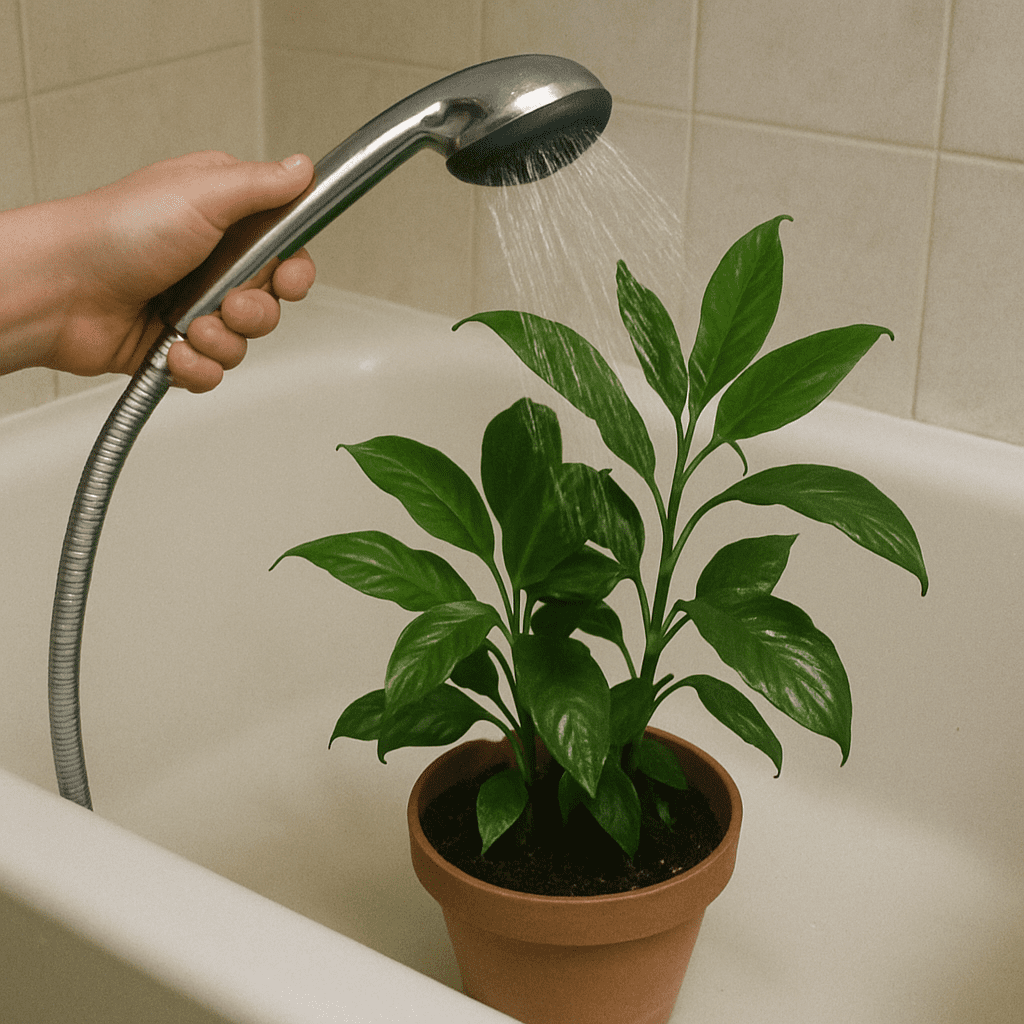
First Aid in the Bathroom: Mechanical Cleaning as an Immediate Measure
Before resorting to special home remedies, plain water is your most effective weapon. The most important step in isolating and treating infested plants starts in the tub. Thoroughly hosing down the plants simply washes most of the pests mechanically down the drain, allowing subsequent care products to reach the leaves directly in the first place.
To make sure you don't accidentally drown your plant while performing this first aid, follow these steps:
- Packaging soil: Wrap the pot tightly in a plastic bag. This protects the root substrate from waterlogging.
- Shower gently: Use a gentle stream of lukewarm water.
- Note the angle: Spray the leaves from below at an angle to effectively remove fine webs from the leaf axils.
Once the foliage has dried, the plant visibly perks up. An accurate diagnosis is now essential for determining the appropriate course of treatment.
Mealybugs or spider mites? Why the wrong diagnosis puts your plant at risk
Not all white spots on houseplants are the same. If they are tiny, dust-like spots with delicate webs between the leaves, spider mites are usually at work. Mealybugs, on the other hand, disguise themselves as small, fluffy cotton balls, often sitting completely motionless, hidden in the leaf axils of Monstera or orchids.
The second crucial warning sign is the nature of the leaves. A significant difference between mealybugs and spider mites lies in their byproducts: mealybugs excrete extremely sticky honeydew, which coats the plant with a shiny film and clogs the leaf pores. Spider mites, by sucking the sap, tend to leave the foliage dull, dry, and yellowish-speckled.
Anyone who confuses these two pests will lose valuable time during rescue. The water-repellent coating of woolly aphids requires a different approach than the webs of mites. In the worst-case scenario, an unsuitable treatment will bead off ineffectively, while the pests continue to drain the plant's sap. However, targeted treatment cleverly and gently penetrates these protective shells.
Home Remedy Check: How Rapeseed Oil and Neem Oil Stop Pests from Breathing
For quick and effective relief, you don’t have to resort to harsh chemicals right away. The effectiveness of neem oil compared to chemical pesticides is based on a physical principle rather than a neurotoxin. As soon as the liquid comes into contact with the pests, it forms a thick film over their bodies. The oil mechanically blocks their tiny breathing holes, causing the mites to suffocate without contaminating your home with harmful substances.
For this effective home remedy against mite infestation, simply mix the following ingredients in a standard spray bottle:
- 1 liter of room-temperature water
- 1 drop of mild dish soap (to help the water and oil mix)
- 2 tablespoons of canola oil (if using neem oil, always adjust the dosage according to the label)
Spray the leaves until dripping wet from all sides and repeat the process exactly every seven days for a total of three weeks. Only by following this rhythm can you reliably catch newly hatched larvae from the next cycle.
Attention: Never place treated plants in direct sunlight. The fine oil film acts like a magnifying glass under light exposure and causes dangerous leaf burn (phytotoxicity). Ideally, apply the treatment in the evening. As an alternative to weekly spraying, natural predators can also be used.
Natural Bodyguards: Using Predatory Mites as a Biological Secret Weapon
Biological pest control for houseplants relies on beneficial insects—tiny natural predators that protect your plants. The absolute expert among these bodyguards is a specific predatory mite (Phytoseiulus persimilis). It hunts tirelessly on the leaves and devours the pests along with their eggs until the foliage is completely free of them.
Using them indoors is incredibly easy. If you use predatory mites to combat spider mites, they usually arrive at your home in small paper bags. You hang these directly onto the branches of the affected plant. From there, the hungry predators crawl onto the foliage without ever spreading to the rest of your home.
However, never combine these beneficial organisms with neem oil or chemical sprays. Such products do not distinguish between beneficial insects and pests and would immediately suffocate the predatory mites. Once the beneficial insects have done their job, they will disappear on their own due to a lack of food. After that, it’s important to permanently adjust the indoor climate.

Jungle feeling instead of desert climate: 3 ways to permanently prevent infestation
Once the pests are driven out, the room climate decides the future of your green darlings. Since spider mites love dry, heated air, the best prevention is a local tropical climate. Three simple tricks can help you increase humidity specifically against pests:
- The Pebble Tray: Fill a saucer with pebbles and some water. The flowerpot standing on it will remain dry, but the evaporating water will envelop the leaves in a moist protective dome.
- The Plant Roommates: Move your pots closer together. Through shared evaporation, the plants create their own humid climate zone.
- The spray rain A regular mist from a spray bottle or a small humidifier can often work wonders.
Sometimes, however, the specific plant variety is simply the deciding factor. When expanding your collection, look for indoor plant varieties that are resistant to mites. Hardy houseplants like Sansevieria (snake plant) or Zamioculcas (lucky bamboo) have such thick, leathery leaves that the tiny arachnids’ mouthparts simply bounce off. A structured emergency plan helps ensure that all these measures are implemented effectively.
Your Emergency Checklist: Get Your Plant Mite-Free in 4 Weeks
The question of what to do about spider mites on plants can be answered with a clear action plan. Whether using simple home remedies, beneficial biological organisms, or a gentle plant protection product for sensitive houseplants – you are in control of your plants' health.
Your 4-Week Emergency Checklist:
- Week 1: Thoroughly rinse the plant, wipe the leaves, and immediately isolate it from other houseplants.
- Week 2-3: Strictly repeat the chosen treatment every 7 days and permanently increase the humidity around the plant.
- Week 4: Success monitoring. Once new, lush green shoots appear and the leaves remain completely dust-free, the infestation is over.
Consider this incident a valuable learning experience in your plant care. In the event of an infestation, immediately begin mechanical cleaning and isolation to prevent it from spreading to other plants and keep your green oasis healthy in the long term.
