
Congratulations! The hard work is done, you have successfully completed your new Lay sod, And now your garden shines in a rich, flawless green. The sight resembles a plush carpet, inviting you to walk barefoot on it, sunbathe, or play with the children. But be careful! Even though the lawn already looks perfect visually, it is still highly sensitive under the surface.
By far the most common question that new garden owners ask themselves at this moment is: When can you walk on sod again?
In this comprehensive guide, you will learn not only the exact timeframes but also what happens underground during the growth phase. Additionally, we will give you valuable tips on how to shorten the waiting time and optimally care for your new dream lawn.
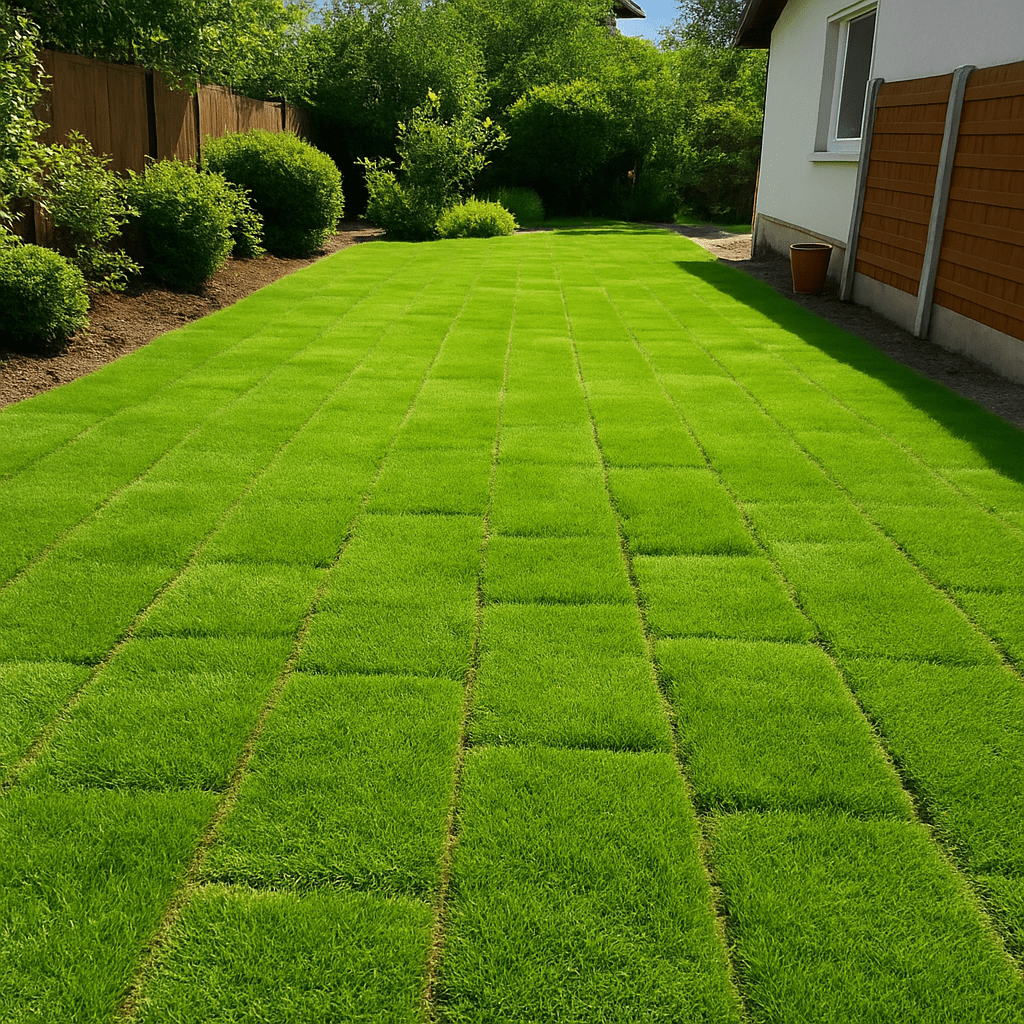
The critical initial phase: How long should you not walk on sod?
Immediately after installation, the sod is like a patient that needs absolute rest. Although the turf is flush with the soil, it hasn't yet bonded with the underlying ground.
As a general rule of thumb: In the first 10 to 14 days You should avoid walking on the lawn entirely. This is when the most important biological processes take place. The fine root hairs of the grass begin to extend from the sod into the prepared topsoil. Any careless step during this phase can disrupt the delicate connection between the turf and the soil.
Many homeowners are asking themselves, given the lush green: How long can you not walk on the sod, when he already looks so healthy? The answer remains at least two weeks, because appearances can be deceiving. Visually the lawn is fully grown, but structurally it is an absolute newcomer to your garden.
The subtle difference: Turf you can walk on versus fully load-bearing
To avoid frustration, it's important to classify the terms correctly. There's a significant difference between „walkable“ and „fully loadable.“.
- Ready for foot traffic (after about 10 to 14 days): This means you can walk on the lawn carefully, wearing flat shoes, to perform necessary maintenance tasks. For example, if you need to reposition the sprinkler or are planning the first mowing, you may walk on the lawn Walking on sod. However, avoid sudden twisting motions, running, or placing heavy objects on it.
- Fully weight-bearing (after about 4 to 6 weeks): Now the lawn is firmly rooted in the ground. Children can play soccer on it, dogs can run around, and you can set up patio furniture. The grasses have formed a strong root system that can withstand physical stress.
If you have a Ensure that the turf can be used quickly If you want it, there's no way around meticulous care and absolute rest in the first few weeks.
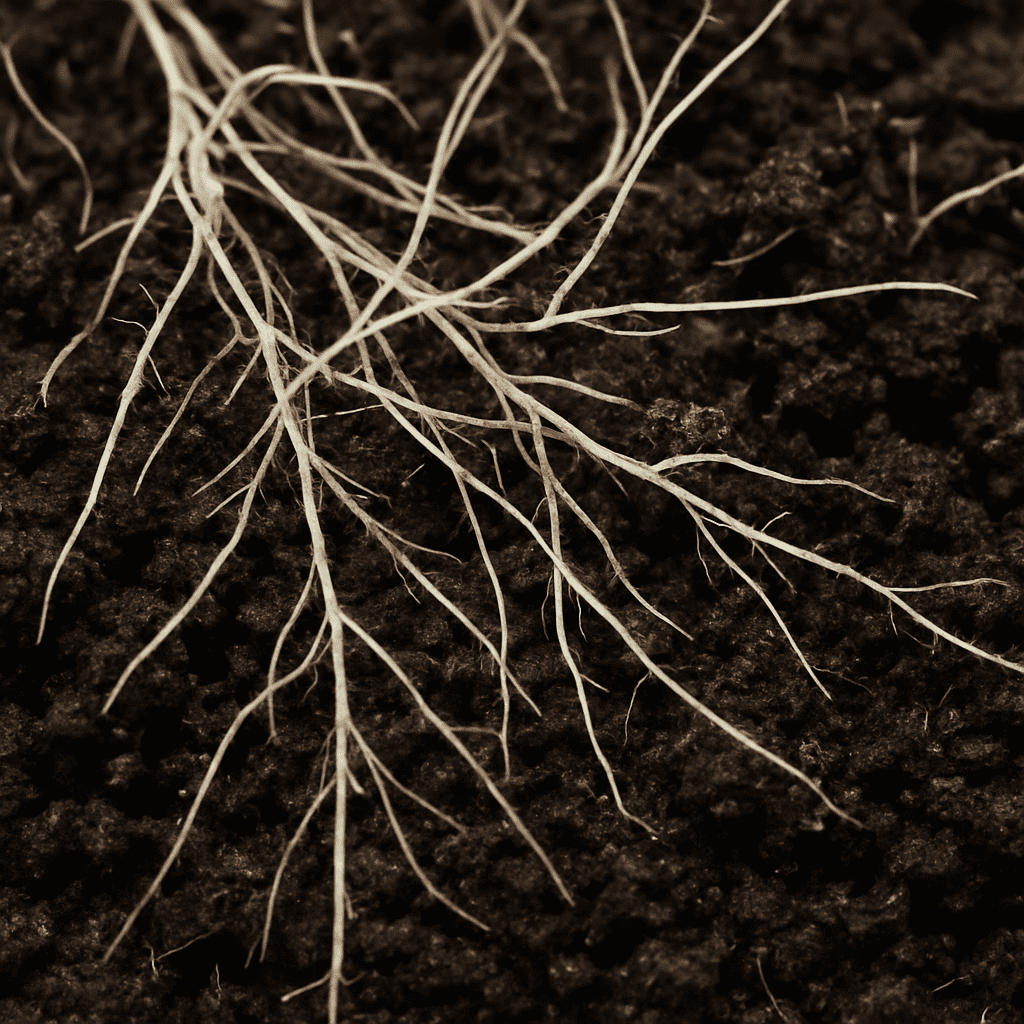
Here's how to test the durability of a new lawn
How do you know after two weeks if nature has done its job? Instead of just running blind, you should check the progress.
Around the Check the turf's contact with the ground To check this, we recommend the so-called "pull test." Crouch down (preferably starting from the edge of the lawn) and grab a small tuft of grass. Now pull on it gently but steadily.
- The lawn is slightly raised: The roots haven't penetrated the soil deeply enough yet. You need to let it rest for a few more days.
- You feel significant resistance: Perfect! You can now Assess the shear strength of turfgrass roots. A firm hold means that the rooting was successful and the first delicate phase has been overcome.
What happens if you walk on the lawn too soon?
Patience isn't everyone's strong suit. However, anyone who ignores the lock-up period risks causing permanent damage to their expensive investment. Compliance with strict Precautions after laying the lawn is essential to avoid frustration.
If you walk on the fresh grass too soon, you’ll compact the soil unevenly. The ground beneath the lawn is extremely soft due to heavy watering in the first few days. Every step leaves small indentations. To Preventing foot traffic damage on freshly laid sod To be able to do this, you must wait until this soft phase has passed.
Even more serious, however, is the tearing of the fresh roots. When the sod shifts under your body weight, the tiny, newly formed root hairs tear off. The result: small air pockets form between the sod and the soil. The grass can no longer absorb water or nutrients in these areas and dies.
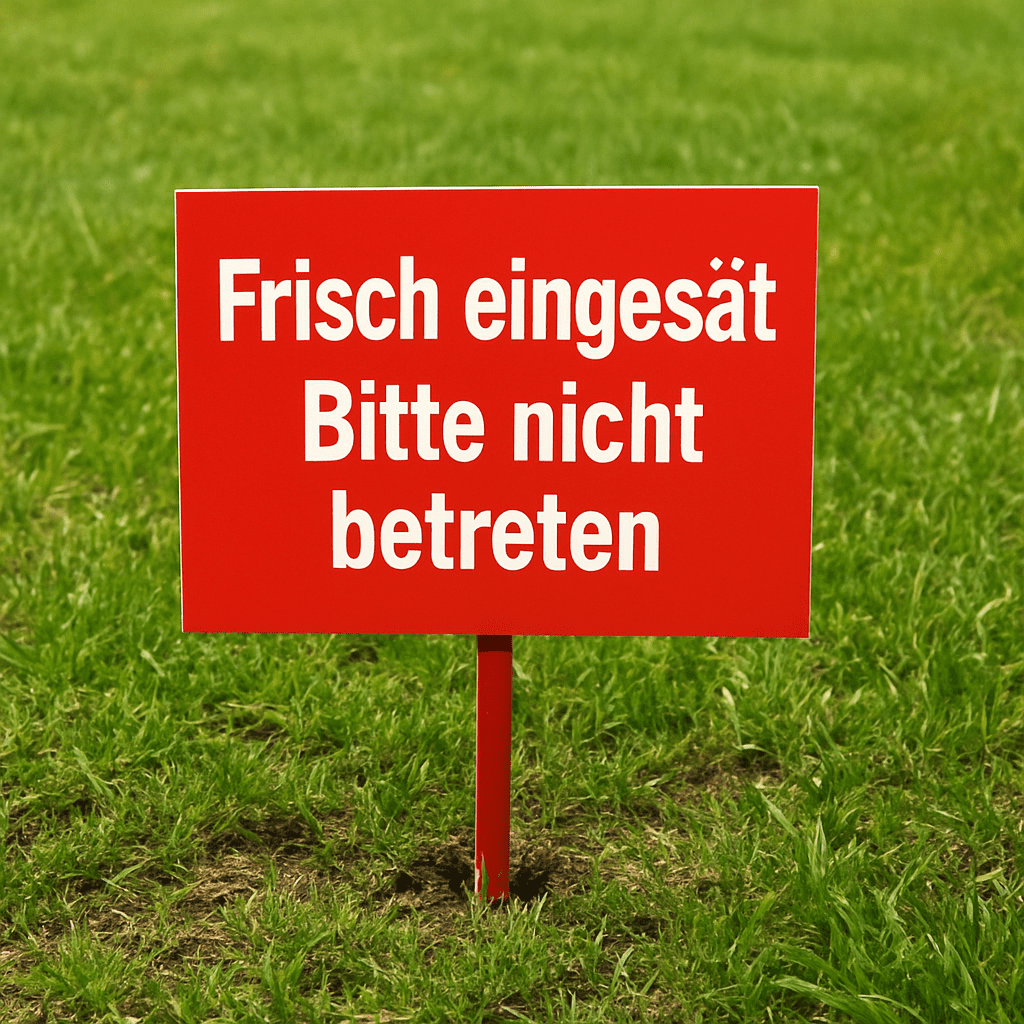
Anyone who is careless here will see the consequences quickly. Do you want unsightly, dried-out and Prevent yellow stains caused by using the item too soon, you must strictly enforce the ban on visitors during the first two weeks.
Kick it into high gear: Speed up the establishment phase of sod
Don't want to wait forever to make proper use of your garden? Luckily, you can take active steps to help your Promote root growth in new sod to be able to. The secret lies in how you Lawn care after installation.
Proper watering is essential.
Nothing is more important than water during the first 14 days. Since the newly laid sod has only very short roots, it cannot draw water from deeper layers of soil. It is 100% dependent on your help.
Here is a short Instructions for watering in the first few weeks:
- Days 1 to 14: The lawn must be kept constantly moist (but not soaking wet or muddy!). Water 1 to 3 times a day depending on the weather. Approximately 15 to 20 liters per square meter distributed throughout the day is ideal.
- From week 3: Once the lawn is established (tug test!), reduce the frequency but increase the amount of water per watering. Water thoroughly only once or twice a week. This forces the roots to grow deeper into the soil in search of water. Deeper roots mean a more robust, drought-resistant lawn.
Pro Tip: Ideally, water in the early morning or late evening. In the midday sun, water evaporates too quickly, and water droplets can act like magnifying glasses, damaging delicate blades.
2. Nutrients for a strong start
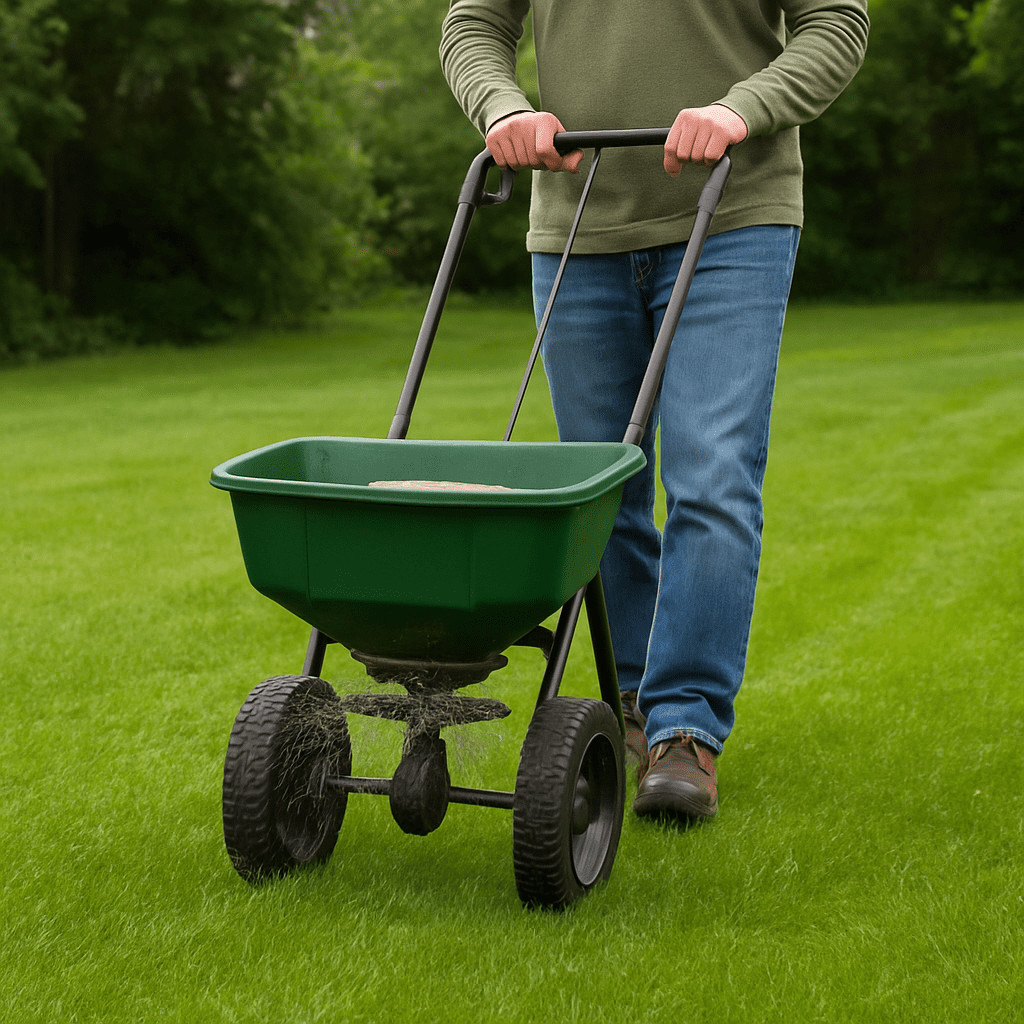
To provide the roots with energy directly from the start, nutrient supply plays a central role. A targeted Fertilization to support root development ideally already bear The transfer will take place (so-called starter fertilizer, which is easily incorporated into the topsoil).
This phosphorus-rich fertilizer extremely stimulates root growth. If you neglected this before laying the sod, you should ask your sod supplier how heavily the sod was pre-fertilized. Often, no additional top-dressing fertilization is necessary in the first 4 to 6 weeks to avoid burning the fine grasses. After that, you can cover the nutrient needs with a high-quality slow-release fertilizer.
3. The First Cut: When to Mow Sod for the First Time?
Mowing is one of the most important maintenance measures. It not only ensures a well-groomed appearance, but also encourages the grass plant to grow wider (tillering) and form a dense carpet that leaves no chance for weeds.
However When to mow sod for the first timeOnce the grass blades reach a height of about 8 to 10 centimeters and the pull test is positive (usually after 10 to 14 days), it's time for the first mowing.
Please be sure to note the following points:
- Mow only when dry: Wait until the lawn is no longer wet from watering or dew.
- The 1/3 Rule: Never cut more than one-third of the grass blade length at once. Set your lawnmower to about 5 to 6 centimeters for the first cut. Cutting too short weakens the young plant tremendously.
- Razor-sharp knives This is the most important point! A dull mower blade doesn't cut grass blades cleanly, but rather tears or frays them. In the worst-case scenario, a dull blade will pull the weakly anchored grass plants, roots and all, right out of the ground.
Consider seasonal differences
The question „When can you walk on sod again?“ also slightly depends on the season in which you laid the sod.
- Spring and early summer: The ideal conditions. Warm soil (but not extreme heat yet) and moisture cause the lawn to grow at a rapid pace. Usually, 14 days of waiting time is completely sufficient.
- Midsummer At temperatures above 30 degrees Celsius, the lawn comes under severe heat stress. It focuses on survival rather than root growth. The establishment phase can be delayed. Extreme watering is essential here.
- Autumn Often referred to as the best time for laying sod. The ground is still warm from the summer, and precipitation is increasing. Perfect conditions for the roots, which grow particularly deep now. Nevertheless, the lawn needs significantly longer to establish itself once the outside temperatures cool down from November onwards.
The Big Day: Planning a Garden Party on New Sod
You've successfully watered the lawn, mowed on time, and meticulously adhered to deadlines. Now you want to celebrate your success with friends and family. Anyone who has Plan a garden party on new sod wants, should keep an eye on the calendar.
Plan larger events no earlier than 6 to 8 weeks after laying. Immense shearing forces act on the lawn during a party: women with narrow heels, dancing guests, pressure marks from chair legs, and generally high foot traffic. If the party has to take place sooner, try to channel the paths. Place beer tent sets or gazebos on paved areas and lay down temporary stepping plates (e.g., made of wood) on the lawn to distribute the weight and avoid point loads.

Conclusion: Patience pays off
When can you walk on rolled turf again? The answer requires a bit of discipline, but rewards you with decades of enjoyment from dense, robust greenery.
Let's review the most important rules again:
- Days 1 to 14: Absolute entry ban. Water thoroughly!
- From day 14: Perform root test. If roots are firm, you can carefully walk on it and mow for the first time (not too short!).
- Week 3 and 4: The lawn can be walked on and can tolerate light stress.
- From week 5 to 6: The lawn can now withstand full use with proper care. Sports, games, and fun are now possible without restrictions.
Always remember that when you lay turf, you're not just buying a visual product, but millions of living plants that need to adapt to their new environment. Give the roots the time they need, control soil moisture, and avoid unnecessary stepping during the initial phase. This is how you transform delicate turf into an unshakeable, deep green carpet that will make any neighbor green with envy!
