
Anyone redesigning their garden, patio, or driveway will inevitably face the question: Laying kerbstones: which concrete is ideal? Whether you're creating a simple lawn edge or using concrete as a border for your paving stones, choosing the right material will determine the stability and longevity of your project.

The Preparation: Foundation and Base
Before the proper curbstone concrete is mixed, the subgrade must be perfectly prepared. However How deep does the foundation for curbs need to beFor walkable garden paths, a trench 20 to 30 cm deep is usually sufficient. It's a completely different story for driveways: the Installation depth of kerbstones for car loads requires an excavation of a good 40 to 50 cm to guarantee the necessary stability.
To prevent frost damage, you must first Compact the gravel base course. This layer, about 10 to 15 cm thick, serves as capillary break layer under the concrete foundation. Only in this way can rising damp be stopped and the Ensure frost protection for foundations in outdoor areas.
Which concrete is best suited?
The classic and proven choice for foundations is lean concrete. It is cost-effective and strong enough for most applications.
- The recipe: The ideal Lean concrete mix ratio for kerbstones is 4 parts gravel to 1 part cement.
- The grain size: One often wonders: What gravel for lean concrete mix Is the right one? Unwashed concrete gravel with a grain size of 0/8 mm or 0/16 mm is ideal.
- The strength Pay attention to the Compressive strength class C12/15 for garden path edging. This standard guarantees that the concrete can withstand everyday loads in the home garden.
For those who don't want to mix their own from individual components, practical alternatives can be found at the hardware store. Very popular is Screed concrete as an alternative for kerb foundations, as it already contains the perfect sand mixture. For small beds or very short distances, it is suitable GalaBeton bagged goods for small bed edgings excellent. If you this Mix dry concrete for stable hold, save valuable time.
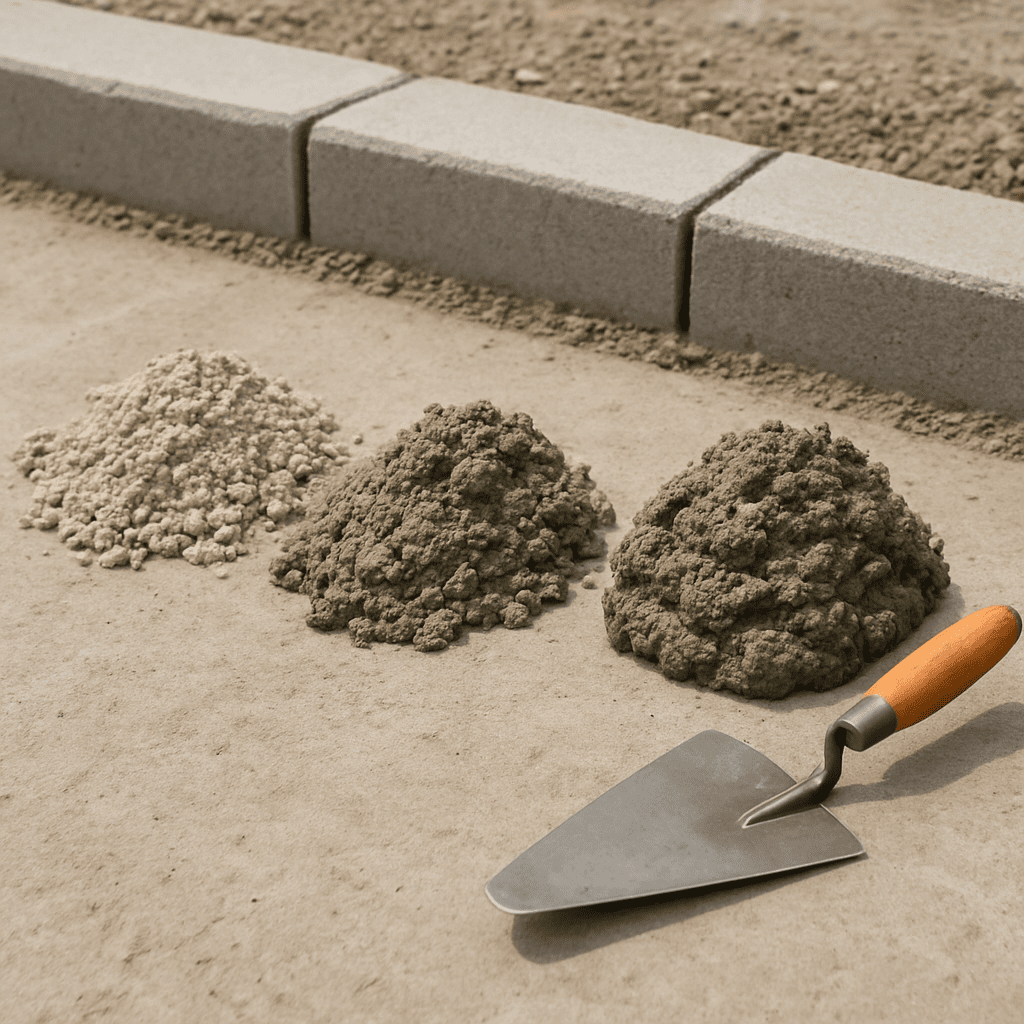
Consistency: Earthy-moist or liquid?
A crucial point when Setting curb stones is the right texture. It is often debated on the internet: Damp-cured concrete vs. flowable concrete for curbs – what is better? The professionals' answer is clear: the concrete must absolutely damp earth (similar to wet sandbox sand)! Too fluid concrete would flow away under the weight of the stone and would not provide immediate support.
Installation, back support, and drying time
Once the foundation is in the trench, place the stones level with a rubber mallet. In the next step, you need to Properly sizing a retaining wall for curbs. Taper the concrete on the outer sides, from the bottom third to half of the stone. This supports the curbstone against lateral pressure from earth or paving stones.
To a subsequent Preventing cracking in the concrete layer to be able to, you should lightly moisten or cover fresh concrete with water on hot days. Finally, be sure to observe Drying time of concrete for lawn edging. Allow the material at least 24 to 48 hours to cure before backfilling with soil or paving.
Conclusion: With a well-compacted sub-base, damp lean concrete or screed concrete, and solid backing, you can lay kerbstones like a true professional – for results that will last for decades!
