
A tiny seedling seems harmless, yet within a few weeks, it develops into a meter-wide giant. Anyone who is realistic about the issue Planting zucchini: the ideal spacing ignored, quickly experiences shock when the vines engulf entire garden paths.
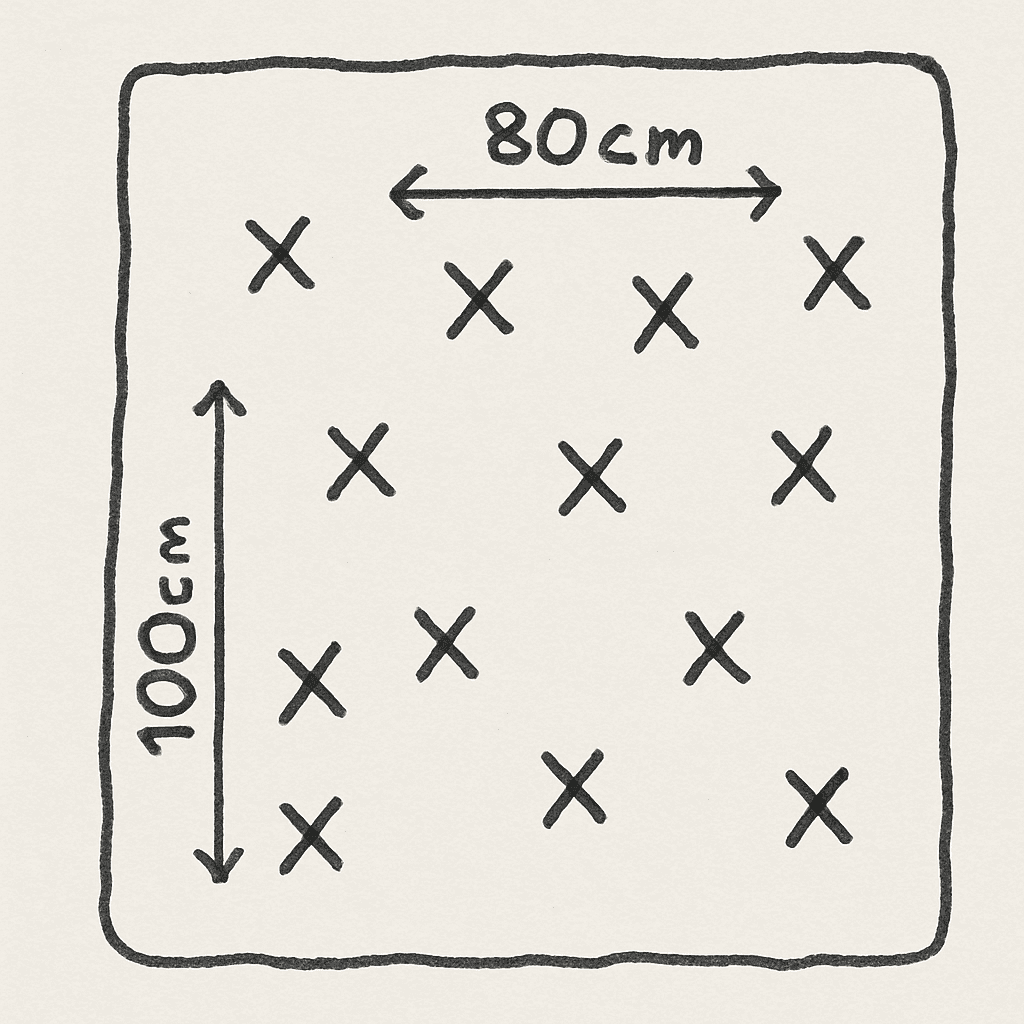
An old gardening saying states that a generous Zucchini plant spacing The best protection against crop failure is. A spacing of 80 to 100 centimeters between plants ensures that the wind can dry the morning dew, which effectively prevents crop-destroying powdery mildew.
Unfortunately, this massive Space requirements often underestimated. Since zucchini are heavy feeders – meaning they are plants that require a lot of nutrients – sufficient space remains the most important prerequisite for a healthy, rot-free harvest.

The „Laundry Effect“: Why Air Circulation Determines Whether There's Mildew or a Record Harvest
Anyone who has ever seen a full-grown zucchini knows about the giant, umbrella-like leaves. Morning dew quickly accumulates under this dense foliage, which gardeners refer to as canopy humidity. If this moisture doesn't dissipate, it creates an ideal microclimate for destructive fungal diseases.
This is where the simple yet crucial laundry effect comes into play. Think about wet clothes on the clothesline: if the pieces hang too close together, they stay damp and start to smell musty. The same applies to overlapping plant leaves that can't dry properly without enough space for wind and sun.
Can powdery mildew be prevented through proper ventilation? Absolutely, as generous plant spacing acts as your most reliable, completely chemical-free plant protection. Optimal air circulation ensures that wind quickly blows away dew, keeping plants resilient and healthy in the long term.
The visible shortage of space above ground is, however, only part of the problem with vegetable plants that are too close together. Below the surface, an equally dramatic competition rages when the roots suddenly behave like straws in a milkshake, claiming every nutrient for themselves.
Straws in the Milkshake: The Battle for Nutrients Underground
While the foliage above ground fights for every ray of sunshine, the real drama unfolds invisibly in the soil. Zucchini are classic Heavy feeder – they have a huge appetite for water and fertilizer. If you plant them too close together, their root systems behave like multiple straws in the same milkshake. To avoid competition for nutrients in the vegetable garden, each root system needs its own undisturbed territory.
If this space is missing, mutual nutrient theft is inevitable. The unmet nutrient demand of the zucchini, which are heavy feeders, will then quickly become apparent, as the vegetable plants will literally starve. Watch out for these three typical warning signs of underground space limitations:
- Pale or yellowing leaves, often first appearing on the lower part of the plant.
- Noticeable stunting, where the shoots remain thin and the leaves unusually small.
- Shrinking or prematurely falling mini-fruits due to a simple lack of energy for complete ripening.
Only with exclusive access to essential soil nutrients can plants build up enough strength for plump, large harvests. The 80-100 cm rule provides a reliable guideline for the perfect row spacing in the vegetable garden.
The 80-100 cm Rule: Measuring the Perfect Row Spacing in the Vegetable Garden
The small sapling quickly becomes a giant as wide as a bicycle tire. For the perfect Zucchini plant spacing To check without a measuring tape immediately, clever garden physics in the form of the arm-length rule helps. Simply extend your arm between two planned planting holes – if your fingertips easily reach the next hole, the plants are definitely too close together.
It is often mistakenly believed that more seedlings on the same area automatically bring more vegetables. In reality, you only maximize the yield when the individual plant can breathe. A generous Row spacing for zucchini in the vegetable garden prevents the giant leaves from overlapping like roof shingles and blocking each other's light. This also ensures comfortable pathways for harvesting the heavy fruits later.
So that you Spacing when planting zucchini Two proven arrangements can be optimally applied to your square meters:
- Classic Series: Plant the plants 80 cm apart in a line, with the rows themselves 100 cm apart.
- Offset zigzag: In a triangular arrangement, about 90 cm on all sides is sufficient, which makes more efficient use of the floor space and closes gaps.
If this abundant space is missing in the garden soil, vegetables will still thrive splendidly in raised beds or containers with the right methods.
Space-saving gardening: Zucchini in raised beds and containers
If you don't have a huge vegetable garden, you have to get creative. Space-saving cultivation is excellent when you cleverly use the edges of your garden bed. The space required by zucchini in a raised bed can be tricked: plant the young plant directly at the edge or in a corner. This way, the sprawling leaves will later grow downwards like a green waterfall over the border, effectively doubling the valuable space inside for other types of vegetables.
Do not be fooled by the initially tiny size of the seedling on the balcony. The vegetable is an extremely hungry, heavy feeder. For the roots to develop optimally, when planting zucchini in a pot, the pot size is the absolute critical success factor:
- Volume: At least 40 liters of high-quality soil per plant are mandatory, with 60 liters being ideal.
- Planting depth: The container should be 40 centimeters deep to safely accommodate the massive root system.
If even this optimized setup reaches its limits, vertical cultivation of climbing zucchini is an option.
Vertical instead of Horizontal: Trellised Zucchini as a Solution for Narrow Gardens
When floor space becomes scarce, simply grow upwards. The Space comparison between climbing and crawling zucchini shows a huge difference: While conventional, bushy varieties quickly take up an entire square meter, climbing varieties save you up to 70 percent of valuable ground space. Instead of spreading out like a wide, open umbrella on the ground, the plant grows upward, saving space.
A Space-saving cultivation of climbing zucchini however, only works with a stable structure. Since the fruits can reach a considerable weight, a robust wooden trellis or metal grid is essential Trellis an absolute must. The effort rewards you immediately: The leaves flutter freely in the wind, dry faster in the morning, and stay healthy, while you enjoy a wonderfully back-friendly harvest at eye level.
Trailing varieties are naturally best suited for this vertical approach:
- ‚Black Forest‘A reliable, dark green climbing artist.
- ‚Shooting Star‘Grows rapidly and produces bright yellow fruits.
- ‚Albenga Trumpet‘An Italian specialty with decoratively curved zucchini.
The ground surface around the plant stem that is gained through climbing techniques can be excellently utilized for suitable companion plants.

Good Neighbors, Bad Neighbors: Mixed Planting Strategies for Optimal Growth
Leaving the freed-up space under the trellis unused would be at the Vegetable Garden Planning utter waste. Zucchini are hungry heavy feeders, sucking nutrients from the earth like thick straws from a milkshake. That's precisely why targeted Companion planting with good and bad neighbors for zucchini so valuable: They need companions that utilize deeper root levels or naturally improve the soil in the bed without competing for light.
A clever arrangement respects the enormous Zucchini Site Requirements and avoid fatal „disease dividers“ that attract the exact same mildew.
- Good Neighbors (Friends): Pole beans (collect useful nitrogen as fertilizer), corn (robust windbreak), and radishes.
- Bad Neighbors (Enemies): Cucumbers, pumpkins, and melons. They all share pests and fiercely compete for every drop of water.
If compatible partners are cleverly grouped around the root area, nothing stands in the way of rapid growth.
Your Roadmap to a Record Harvest: From Seedling to Yield Monster
With the right measuring tape and strict adherence to the 80 to 100 centimeter distance, you can How to Properly Transplant Zucchini Seedlings, without nutrient competition or fear of suffocating mildew.
A low-maintenance layout is based on three simple steps: measure spacing generously, plant carefully, and ensure good leaf aeration. Higher yield through proper bed planning primarily arises from maximizing air circulation and root space, not from overcrowding the soil with additional seeds.
The initially large and seemingly empty gaps between plants are crucial for strong development. Those who trust these generous distances and give the sprawling leaves room to breathe create ideal conditions for a healthy, mildew-free record harvest.
