
A garden shed is the dream of many homeowners. Whether as a practical storage space for lawnmowers and garden tools, as a cozy retreat for mild summer evenings, or even as a home office in the green – the possibilities are virtually endless. But before you head to the hardware store or order a stylish wooden house online, German bureaucracy often gets in the way. Therefore, many garden owners ask themselves the crucial question right at the beginning: Building Permit: Can I build a garden shed without a permit? Is that even possible in Germany?
The good news first: Yes, that's possible! However, there are numerous conditions attached to permit-free construction. In this comprehensive guide, you'll learn everything you need to know to implement your project legally, stress-free, and without unpleasant surprises.
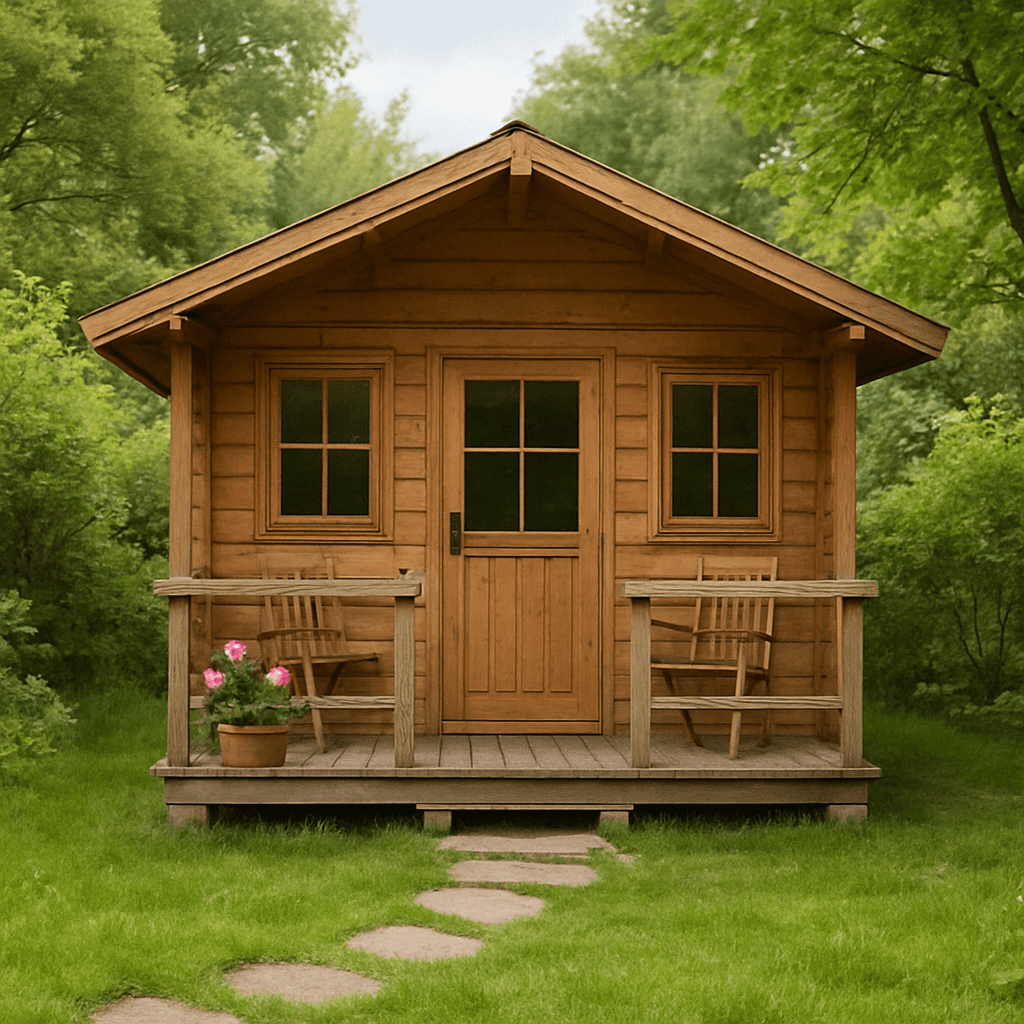
When is a building permit necessary for a garden shed?
Whether you need an official permit from the building authority depends on three essential factors: the size of the planned house, the exact location (federal state and municipality), and the intended use.
The most important guideline in the planning phase is the Maximum gross volume without permit. This value is measured in cubic meters (m³) and is calculated by multiplying the length x width x height of your garden shed, including the roof. If your construction project remains below this set limit, there is an excellent chance that you can complete your project without a lengthy application process. Nevertheless, „permit-free“ does not mean „lawless“ – all local building regulations must still be strictly adhered to!
Comparison of State Building Codes
Since construction law in Germany is a matter for the federal states, no law is the same as another. Comparison of State Building Codes shows how serious the differences can be:
- Bavaria: Here you can build a proud 75 m³ of built space without a permit in the so-called interior area (within municipalities).
- North Rhine-Westphalia (NRW): Anyone building in North Rhine-Westphalia has different regulations. The garden shed building permit NRW states that buildings with an interior volume of up to 30 m³ are exempt from permit requirements.
- Berlin & Saxony: In these states, the limit is often reached at just 10 cubic meters.
Tip: Never blindly rely on information from the internet or from neighbors. A quick call to the responsible building authority will give you certainty about whether in your specific case garden shed building permit is required.
Zoning Plan and Location: Where exactly is construction permitted?
Even if your garden shed does not exceed the permitted cubic meter limit, you cannot simply place it anywhere in the garden. First, you must consult the local Check building plan for outbuildings.
This plan (often viewable online with your municipality) regulates in detail what is permitted in your residential area. Sometimes, so-called „building envelopes“ are marked. No buildings may be erected outside these lines – not even small garden sheds. Often, the zoning plan also makes specifications regarding roof shapes, permitted materials, or even colors in order to preserve the visual character of the area.
Another crucial factor is the distinction between the inner and outer areas. The inner area comprises continuously built-up districts. However, if your property is located on the edge of a field, in a forest, or in a allotment garden settlement, you quickly find yourself in the planning law outer area. Building projects in rural areas that do not require a permit are extremely strictly regulated and often completely forbidden for private individuals without a farm, as urban sprawl is to be prevented. Here is a Garden shed permit As good as always, mandatory.
Keeping Your Distance from the Neighbors: Maintaining Peace at the Garden Fence
One of the most frequent reasons for disputes and subsequent intervention by the building authority is the setback. As a general rule in German building law, buildings must maintain a distance of at least 3 meters from the property line.
However, there is what is known as the „right to build along the property line“ for outbuildings. The Distance between the garden shed and the neighboring property may be reduced to zero (meaning you may build directly on the boundary) if certain conditions are met:
- The building has no common room (no fireplace, no toilet).
- The average wall height does not exceed 3 meters.
- The total length of the boundary development (often summed with garages or carports) does not exceed 9 meters on one boundary and 15 meters on all property boundaries combined.
Important: Even if you are in the right, you should discuss your plan with your neighbor beforehand. To permanently secure yourself, you should get a Neighborhood Consent Form Template Download it from the internet, customize it, and have your neighbor sign it. This way, you’ll avoid costly problems later on if your neighbor changes their mind.
Using your garden shed: Storage space or living idyll?
The way you plan to use your new cottage has significant implications under building codes. There is a serious Difference between a garden shed and a garden house under building law.
A garden shed is used exclusively for storing items (lawnmowers, bicycles, tools). Such a building is usually unproblematic and remains below the exemption limits.
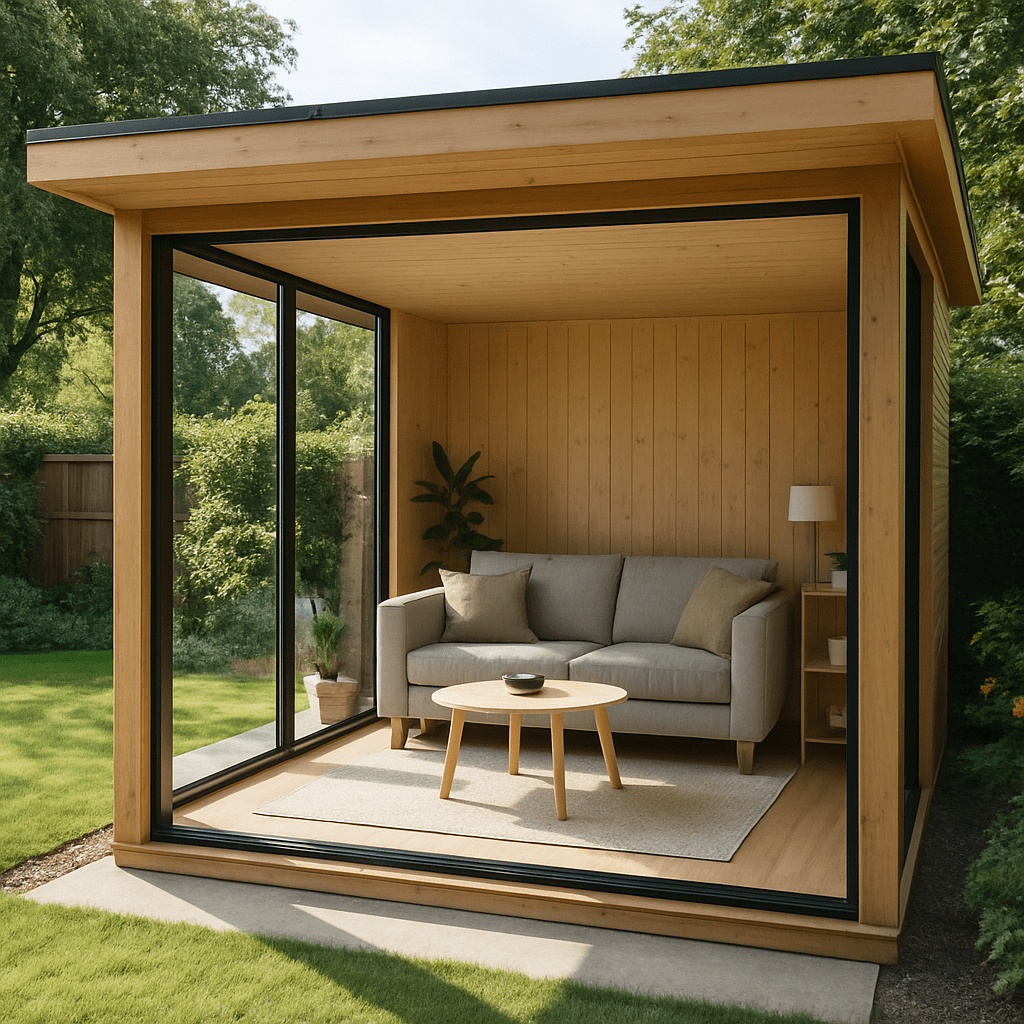
As soon as you Using a garden shed as a living space want to spend regular time there, entertain guests, or work there, significantly stricter regulations apply. The legislature places higher demands on living spaces regarding structural stability, escape routes, ventilation, and insulation.
Is it permissible to live permanently in a garden shed?
The answer is in the vast majority of cases: no. Can you live in a garden shed permanently?Building law classifies garden sheds as „subordinate ancillary facilities.“ Permanent living is only permitted in buildings officially approved as residential and located on land zoned for residential use. Anyone secretly moving into a garden shed risks hefty fines and an order to cease use.
Plumbing and heating
Would you like a Approve garden house with toilet and heating you'll quickly run into legal hurdles. A permanently installed toilet connected to the public sewer system effectively turns the shed into a building intended for permanent or temporary human habitation (e.g., a weekend house). In most cases, the simplified procedure is completely inapplicable here. You must submit a regular building permit application and adhere to regulations concerning wastewater and emissions protection.
Construction Method and Safety: Foundation and Fire Protection
Even with construction projects that do not require a permit, you as the client bear full responsibility for safety. There are two areas that you absolutely must not neglect:
1. The Foundation
Special Garden shed foundation regulations require that the building be constructed in a structurally sound manner. Depending on the size and soil conditions, you will need a point foundation, a strip foundation, or a solid concrete slab. The foundation must be frost-proof (typically about 80 cm deep in the ground) to prevent the wooden house from being lifted and damaged by thawing moisture in the winter.
2. Fire protection
The Fire safety regulations for garden houses vary depending on the distance to other buildings. If the garden shed is built directly on the property line, the walls facing the neighbor often have to be fire-resistant (e.g., F30 standard) to prevent flames from spreading to neighboring buildings. If you plan to install a wood-burning stove in the garden shed, this must be discussed with the responsible district chimney sweep beforehand and approved by the building authority.
What happens if you build without a permit?
Some garden owners think, „Where there's no plaintiff, there's no judge.“ However, authorities are now using aerial image analysis, and ill-disposed neighbors are also quick to pick up the phone.
When is a garden shed considered an illegal construction? A building is considered an illegal structure (formally: formally building-code violating) as soon as it has been erected without a building permit, even though one would have been required. Likewise, it is an illegal structure (materially building-code violating) if it violates applicable law (e.g., too close to the property line, too large, in a rural area).
The consequences can be drastic. The building authority can impose an immediate stop-work order, prohibit use, or in the worst case, demand complete demolition at your expense.
If the house is generally eligible for approval, you can submit a subsequent building permit application. However, please note that Costs for a retroactive building permit which can be significantly higher due to additional fines for the offense committed than with a regular, pre-submitted application. So it's never worth taking this risk.
The Path to Official Permission: The Approval Process
If your preliminary inquiries reveal that you need a permit, there's no need to panic. For smaller buildings like garden sheds, a simplified procedure often applies, which is processed faster and is less strictly reviewed.
Following Documents for the simplified building permit process you usually need to submit (often through a licensed architect or civil engineer) to the relevant building department:
- Completed application form
- Current excerpt from the cadastral map / property map (not older than 6 months)
- Official Site Plan (Scale 1:500)
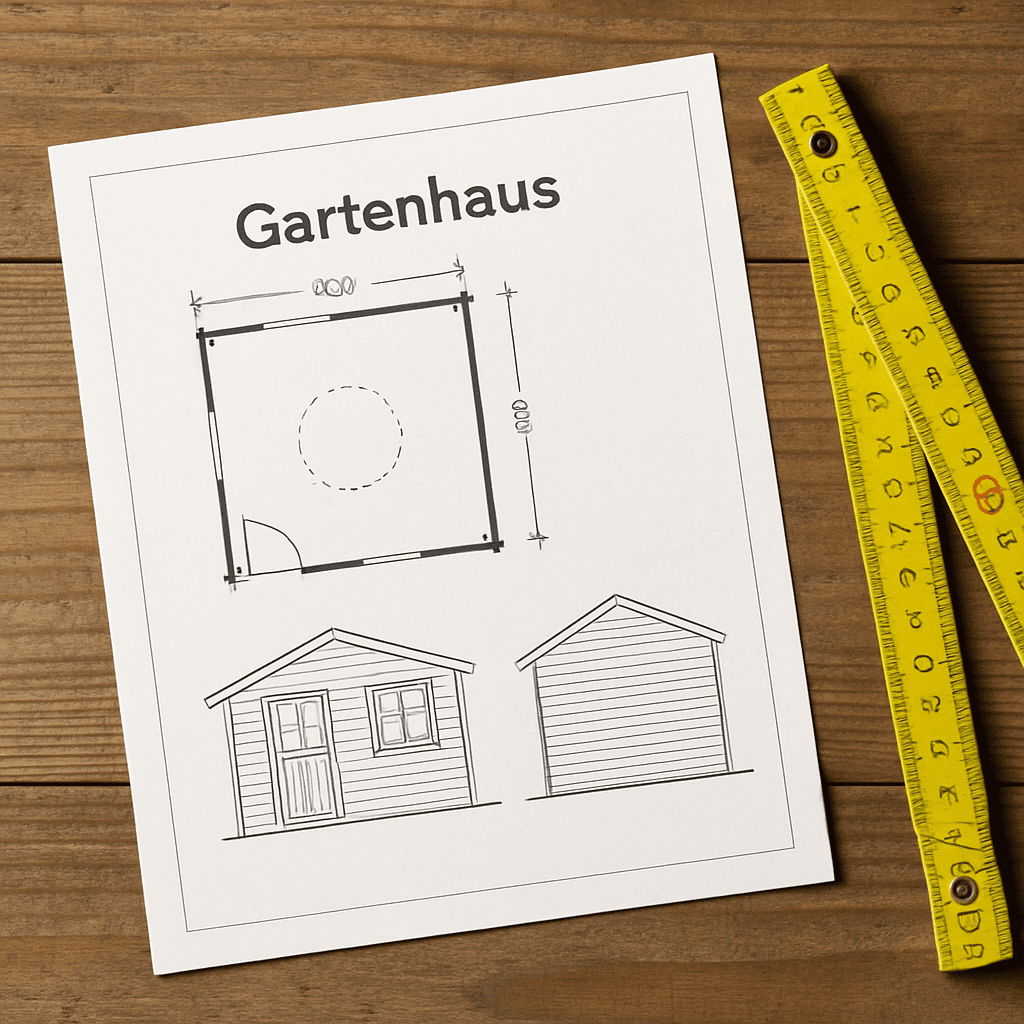
- Construction drawings (floor plans, sections, elevations at a scale of 1:100)
- Building description (materials, type of use)
- Calculation of the enclosed space (gross volume) and the usable area
- Possibly static calculations (can often be obtained from the garden house manufacturer as standard structural calculations)
Tip: Many manufacturers of high-quality garden sheds offer to include the necessary blueprints and structural calculations with your purchase, saving you a lot of time and money on hiring an architect.
Conclusion: Well planned is half built
The question „Building permit: Can you build a garden shed without a permit?“ can be answered with a clear „It depends.“ If you are planning a simple tool shed that does not exceed the prescribed volume limits of your federal state, respects the zoning plan, and maintains the correct building line distance, you can usually get started directly without tedious paperwork.
However, as soon as you want to install a toilet, heating, or even a sleeping area, or if your property is located in a rural area, there’s really no way around filing an official building permit application.
Take the time to plan thoroughly. Check the zoning plan, talk to your neighbors well in advance, and if in doubt, give the local building department a quick call to ask for clarification. That way, nothing will stand in the way of your dream of having your own garden shed—safe, legal, and completely stress-free.
