
A stubborn tree stump that is lifting patio slabs quickly becomes a nuisance for any homeowner. Out of frustration, the temptation is great to look online for Buy tree killer to search for a quick solution to the problem with chemicals such as copper sulfate.
However, before pouring toxic solutions into the ground, it is important to consider the legal reality. According to environmental authorities, the use of unauthorized substances to bypass natural biodegradation is a direct violation of the strict Plant Protection Act for use in the home garden.
Are Are tree-killing agents like copper sulfate & Co allowed? Absolutely not. Anyone who treats their private property like a chemical disposal facility massively pollutes the groundwater. This causes the responsible regulatory authorities to impose severe fines of up to 50,000 euros on unsuspecting homeowners for non-compliance.
Why Copper Sulfate and Herbicides Are Mostly Banned in Gardens
The use of any tree poisons is strictly prohibited, especially on so-called sealed surfaces, such as paved or concrete paths, as chemicals can flow directly from there into the sewer system.
Before using any product, you must check its official approval for home and small garden use. Just because a product is freely available for purchase does not protect you from environmental liability if it is used for purposes other than intended. The fine schedule of the tree protection ordinance provides for severe penalties if the responsible plant protection office discovers unauthorized practices during routine inspections.
The following substances are typically prohibited for private tree destruction without a special permit:
- Copper sulfate (highly toxic to aquatic life)
- Glyphosate (strict application bans on tree stumps)
- High-dose vinegar or pure salt
Even light rain is enough to invisibly distribute these prohibited substances beyond property lines. This often provokes severe legal consequences due to tree poisoning in the neighboring garden, should foreign plants suddenly die there.
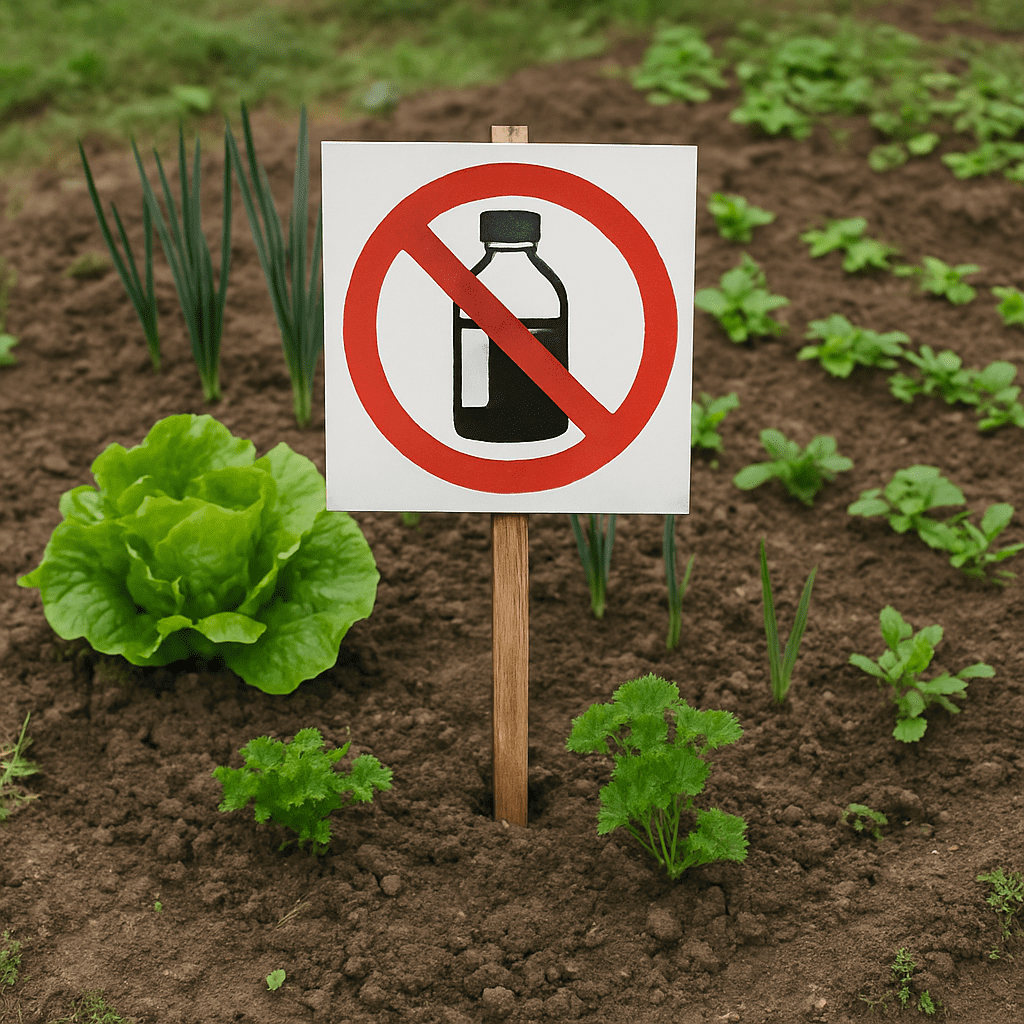
Copper Sulfate & Salt: The Insidious Poisoning of Your Soil
Anyone who fills a stump with chemicals hopes for a quick solution. The Effect of Copper Sulfate on Tree Roots is, however, toxic: The heavy metal blocks cellular respiration, causing the tree to starve internally. However, the poison does not remain in the wood but is inevitably washed out and accumulates. These permanent Environmental consequences of copper sulfate in the soil render your garden soil unusable for new life for years.
The seemingly harmless reach into the kitchen cupboard is just as fatal. People often ask online: Is a Killing a tree with salt and vinegar is allowedThe answer is a clear no. Salt triggers a destructive osmosis in the soil. It effectively sucks the water out of neighboring plant roots instead of hydrating them. This insidious soil salinization renders the surrounding soil completely sterile.
Dry grass in a wide radius around the treated stump is the first visible sign of this invisible destruction. This is the uncontrollable Mechanism of action of Tree-Ex Preparations and illegal home remedies that go far beyond the actual goal.
The Myth of the Copper Nail: Why this Secret Weapon Often Remains Ineffective
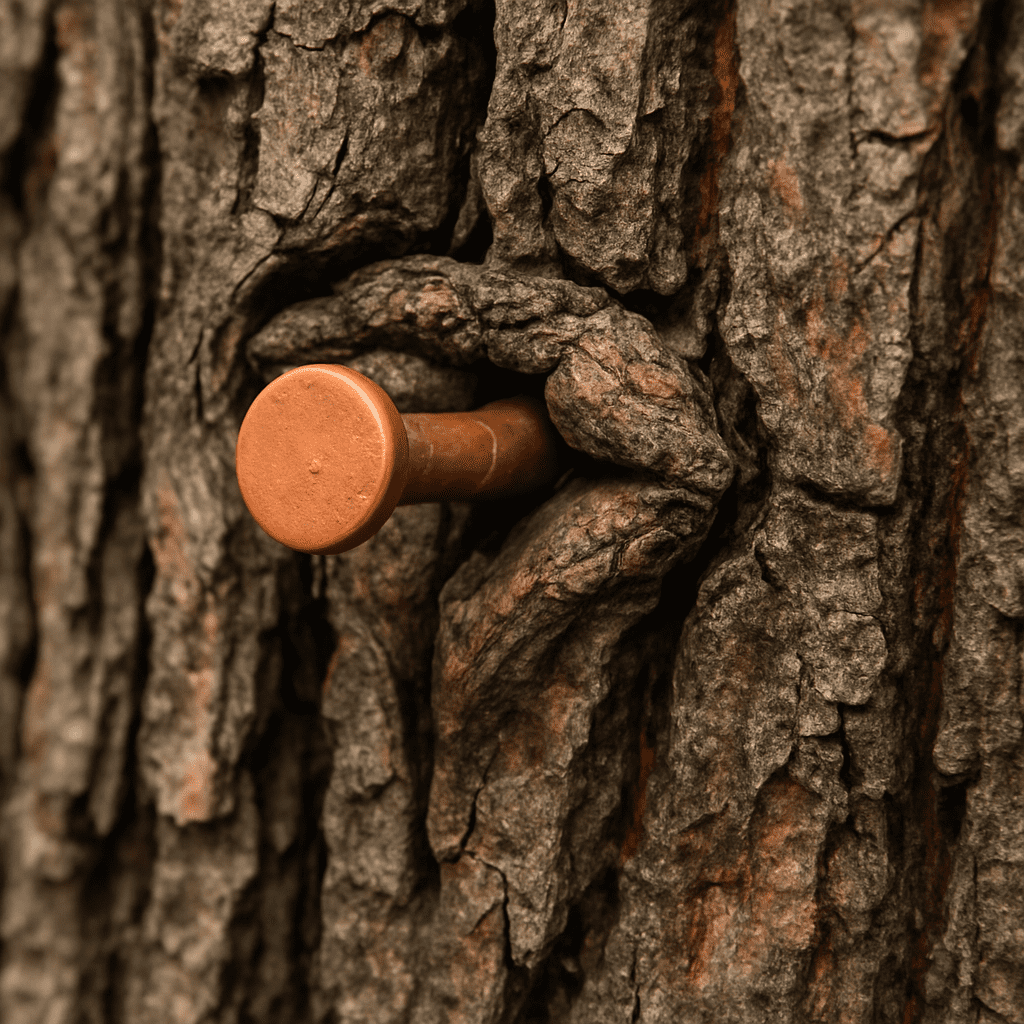
Every gardener knows the Kupfernagel Myth, but anyone who relies on this old trick is just wasting valuable time. A living tree immediately reacts to this small wound with a brilliant self-protection mechanism.
Instead of starving internally, the organism isolates the metallic foreign body. The failure of this method has three biological reasons:
- Containment (CODIT) The trunk hermetically seals the injured cells around the nail, blocking further spread.
- Low dose A single piece of metal never releases enough copper to cause systemic poisoning of the tree.
- Oxidation The material oxidizes very quickly in the air, keeping the already weak local damage minimal.
Who is now exasperated in search of a How to chemically decompose a tree stump quickly realizes: Illegal tree killers poison the soil, while supposed home remedies fail completely.
Removing a rhizome without a fine: Mechanical and biological methods
When the tree is felled, the most persistent problem often remains hidden in the ground. Those seeking quick results are best advised to use a mechanical stump grinder instead of renting an excavator. The grinder pulverizes the wood on-site into chips, which is especially important if you know the location of the stump in relation to underground pipes – a heavy excavator could easily damage them during removal. If, however, you are looking Ecological alternatives to stump removal, nature itself offers brilliant solutions.
Patient gardeners rely on so-called mycoremediation, where special fungal cultures decompose the residual wood. Unlike toxic substances, which in every Root Killer for the Garden Test fall through anyway, you can so the Kill rootstock without chemicals, as useful fungi literally break down the hard structure.
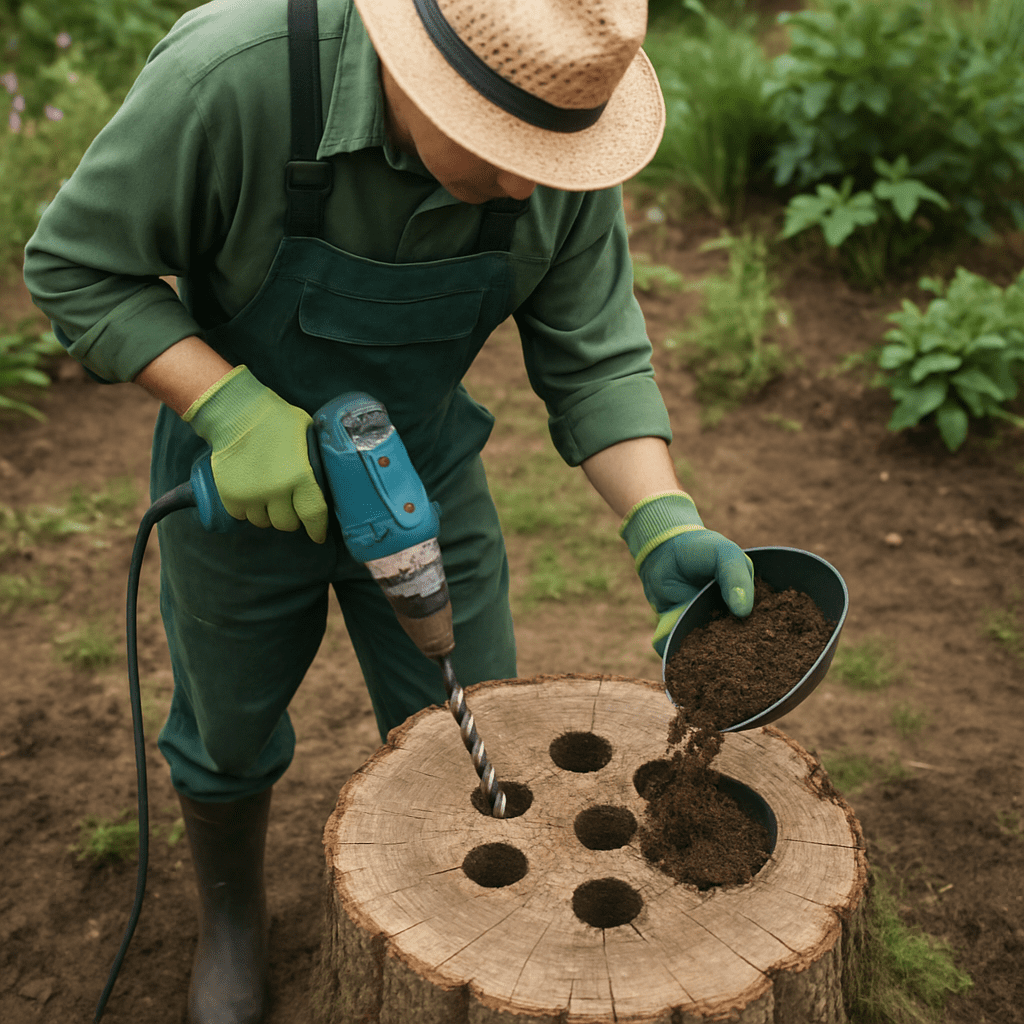
This process becomes even more effective through the practical „drill and fill“ method. As a reliable Home remedies to make a tree stump rot faster, use nitrogen-rich accelerators that massively boost natural decay:
- Drilling holes Drill deep, vertical holes into the stump with a thick wood drill bit.
- Fill Add mature compost and an organic, nitrogen-rich fertilizer.
- Keep moist: Lightly water the holes and cover the stump with leaves.
Over time, what was once a nuisance becomes valuable, nutrient-rich humus for your garden bed.
Your Action Plan for Safe Tree Stump Removal
The purchase of illegal Tree killer This poses a high legal and environmental risk. Instead of risking fines, the decision for the right method simply depends on your own timeline: Give nature a few years to decompose the wood biologically, or hire a professional with a stump grinder for a quick solution in one day.
Who Remove trees permanently without digging them up, should adhere to a safe and environmentally friendly approach:
- Check tree protection: Always check your local municipality's tree protection ordinances in advance.
- Evaluate environment: Assess the proximity of the roots to neighboring properties, utilities, and pipes.
- Choose method: Decide between the mechanical or natural method depending on the urgency.
- Consistently implement: Execute the plan without the use of toxic substances.
Those who respect groundwater protection regulations avoid serious liability risks for their own garden. This way, a persistent obstacle can be responsibly transformed into nutrient-rich mulch—proof that sustainable methods are always the most effective tool in the long run.
