
As soon as the first warm rays of sun beckon us outdoors and spring arrives, many garden owners inevitably turn their attention to the ground of their home oasis. After the wet and cold winter months, outdoor paving stones often look anything but inviting. Gray-green films, ingrained dirt, and moss have taken hold. One question that repeatedly arises and is hotly debated in this context is: Can you clean patio slabs with baking soda?
Die erfreuliche und kurze Antwort lautet: Ja, absolut! Wenn Sie Ihre Clean patio slabs wish to avoid immediately resorting to chemical deterrents, the white powder from the baking aisle is a true insider tip. In this article, you will learn in detail how the Baking soda cleaner works, what stones it is suitable for, and how you can achieve radiant results with this simple home remedy.
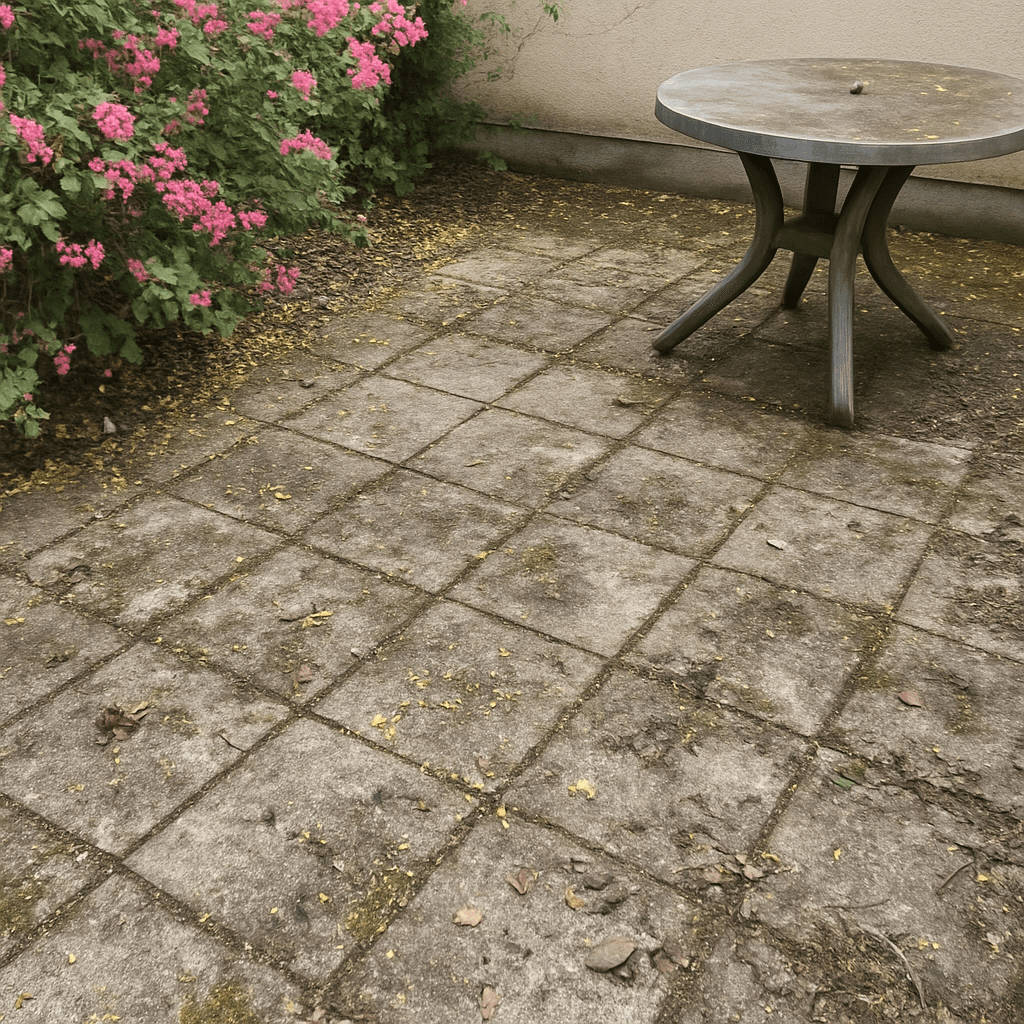
Why baking powder after all? The advantages of the gentle method
Whoever Cleaning patio slabs with baking soda wants, decides quite deliberately for nature. In direct comparison Baking Soda vs. Chemical Patio Cleaners The proven home remedy scores on all fronts. Conventional special cleaners often contain aggressive substances (like biocides or surfactants) that are washed into the adjacent soil with rainwater. There, they can harm plants, kill important soil microorganisms, and contaminate groundwater.
Baking powder (and its main chemical component, baking soda) breaks down completely harmlessly. It allows for a Environmentally friendly cleaning of concrete slabs, where you don't have to worry about your garden plants or frolicking pets. Plus, it's incredibly affordable. If you need to treat large areas, this home remedy offers Cost-effective moss removal without chemicals, that saves money while still delivering excellent results.
It's all about the material: Be careful with natural stone
Even though home remedies sound gentle, their effectiveness should not be underestimated. Before you start on a large scale, you should definitely Check material compatibility with natural stone.
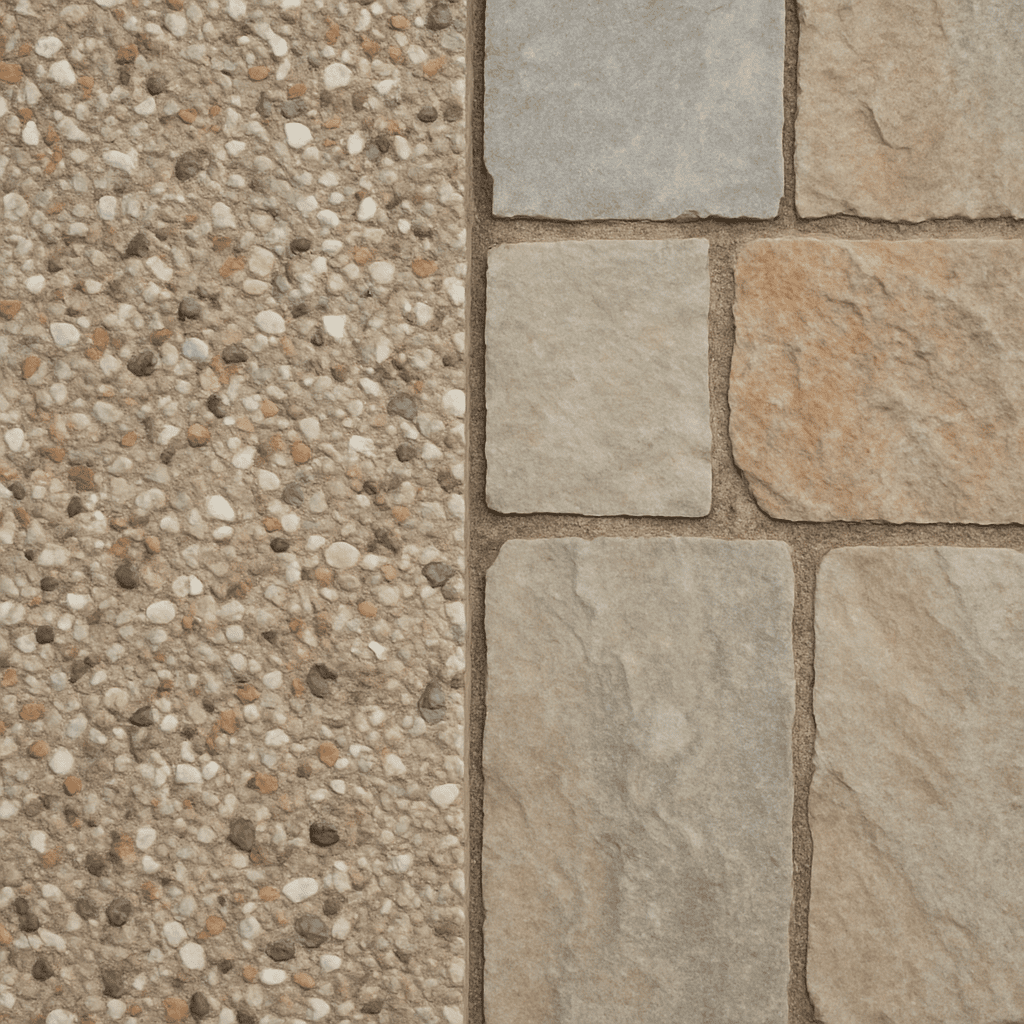
Baking powder reacts slightly basic (alkaline) when combined with water. This is absolutely unproblematic for robust materials such as clinker, paving stones, or concrete. Even stubborn stains on washed concrete slabs can be excellently treated with the baking soda method.
However, caution is advised with sensitive natural stones such as marble, limestone, or certain types of sandstone. Here you need to pH value effects on stone sealing and keep an eye on the stone structure itself. A pH value that is too high can dull open-pored natural stones or attack existing impregnations. When in doubt, always test the mixture on an inconspicuous corner of the terrace first.
Preparation: Making the perfect mixture
To achieve full cleaning power, the powder must be mixed correctly. If you are unsure about the optimal Baking soda water cleaning ratio (or baking powder and water) instructions, you'll often encounter different recipes. For effective outdoor use, the following rule of thumb has proven successful:
- For large-area light contamination: Dissolve approximately 3 to 5 packets of baking powder in 10 liters of lukewarm water.
- For targeted stain treatment (paste): Mix a packet of baking soda with just a few tablespoons of water until a spreadable paste forms.
Lukewarm water accelerates the chemical reaction of baking powder, causing the sodium bicarbonate and acidifier it contains to start fizzing. This very effervescent effect helps to lift dirt particles from the pores of the stone.
Step-by-step guide to stone cleaning
With the right technique, your patio will be summer-ready in no time. Follow this Step-by-step guide to stone cleaning, to achieve the best results:
- Remove heavy dirt: First, thoroughly sweep the patio with a stiff broom. Remove loose leaves, twigs, and sand.
- Apply mixture: Pour the prepared baking soda-water mixture evenly over the dry (!) patio slabs.
- Wait and see Patience is the key to success. Contact time for baking soda solution outdoors should be at least one to two hours. For heavy green growth, you can leave the solution on overnight – just make sure it doesn't rain heavily during that time so the mixture isn't washed away.
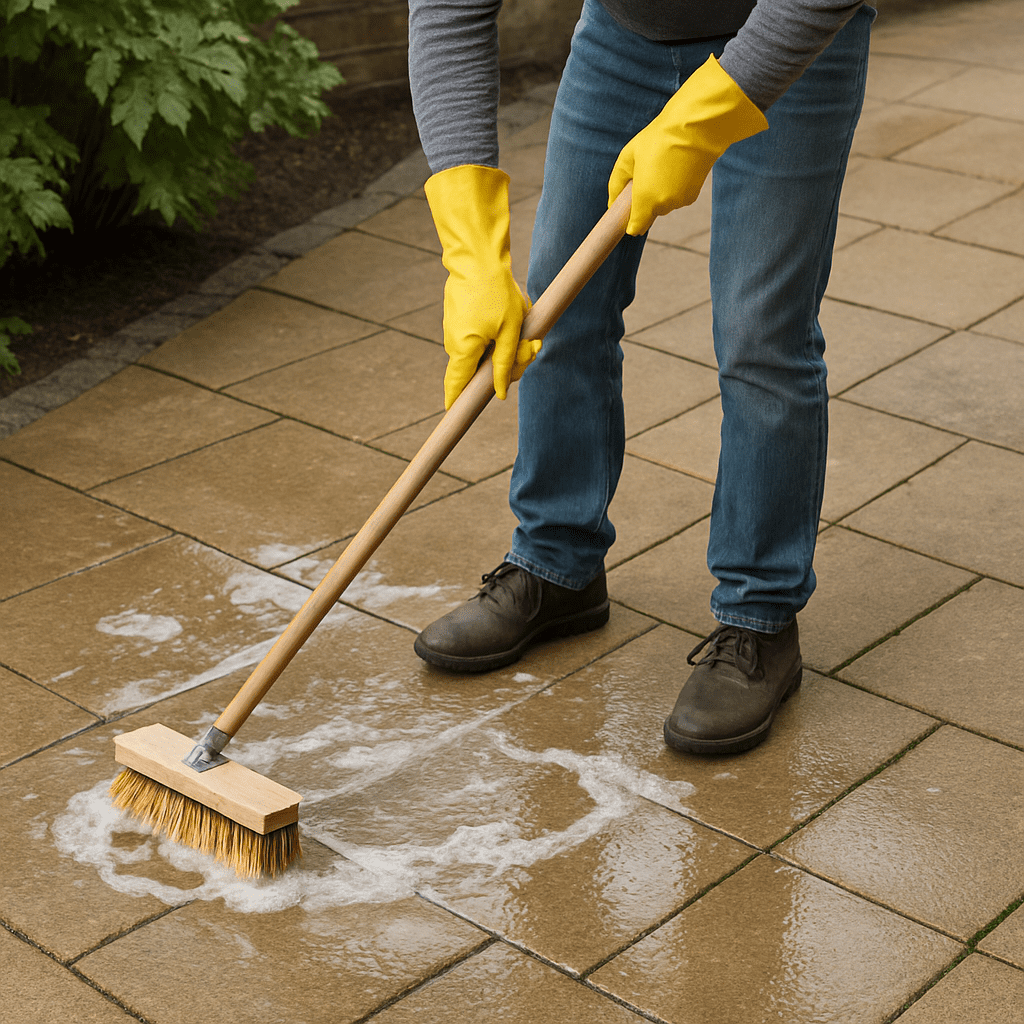
- Scrub Now some muscle power is required. Grab a sturdy tool. A special joint brush or a hard Scrubber for effective patio care is essential for brushing deep into the pores of the stone to remove loosened dirt particles.
- Rinse aid Finally, rinse the area thoroughly with plenty of clean water (for example, from a garden hose or a watering can).
This manual method with a scrubber and garden hose is extremely material-friendly Alternative to a pressure washer for garden paths. While the power washer may be fast, its hard water jet tears microscopic pieces from the stone surface. The stone becomes rougher, offering an even better foothold for new algae and moss the following season. Baking soda, on the other hand, cleans deep into the pores without destroying the structure.
Special problem cases: Moss, grease, and lime on the patio
Different types of dirt accumulate on the patio in everyday life. Fortunately, baking soda is a multi-talented ingredient and helps with a variety of specific problems.
Green growth and moss control
After wet winters, a slippery green layer quickly forms on the stones. Baking soda is a fantastic Home remedies for green mold on stones. The alkaline environment deprives algae and mosses of their livelihood. If you have stubborn Remove moss from tile grout Sprinkle the dry baking soda directly into the damp joints. Add a few drops of hot water, let it bubble, and simply scrape out the dead moss the next day with a joint brush.
The leftovers from the last barbecue
One careless moment at the grill, and grease has dripped onto the floor. If you have unsightly Removing grease stains from patio pavers use, you take advantage of the absorbent property of baking soda. Sprinkle the powder dry onto the fresh grease stain. It will soak up the oil from the stone. After an hour, you can add hot water, rub the whole thing into a paste, scrub briefly, and rinse it off.
White spots from hard water
Sometimes unsightly rims appear due to watering or limescale rain. If you have such Treating limescale stains on outdoor tiles However, pure baking soda sometimes reaches its limits when it comes to limescale, as limescale is best dissolved with acid. Here you can mix the baking soda with a dash of clear vinegar or citric acid (Caution: Never apply vinegar to natural stone like marble!). The fizzy mixture breaks down the limescale crust and makes the stone shine in its original color again.
Conclusion: The terrace is shining again
The answer to the question „Can you clean patio slabs with baking soda?“ is an enthusiastic „Yes.“ It's environmentally friendly, gentle on materials, incredibly inexpensive, and above all, it protects the microclimate in your garden. Whether you want to remove the gray film left by winter over a large area or specifically tackle stubborn stains and moss in the joints – this unassuming powder from the kitchen is a true powerhouse. So, the next time you're doing your spring cleaning, simply swap out the chemical cleaners and aggressive pressure washer for baking soda, water, and a good scrub brush. Your patio and nature will thank you for it!
