
The Thuja ‚Smaragd‘, with its dense, bright green foliage, is the undisputed star in many local gardens. It offers perfect privacy screening, muffles noise, and provides structure to the property year-round. But suddenly, a shock: the rich green gives way to unsightly, rusty discoloration. When the Thuja Smaragd is turning brown, many garden owners panic. Is the hedge on the verge of dying?
The good news first: often, plants can be revived with the right measures. The mission is: Thuja Smaragd Turns Brown: Saving the Arborvitae. To be successful, however, we must first make an accurate diagnosis. In this comprehensive guide, you'll learn all about the causes, effective first aid measures, and optimal care so that your hedge will soon be in full splendor again.
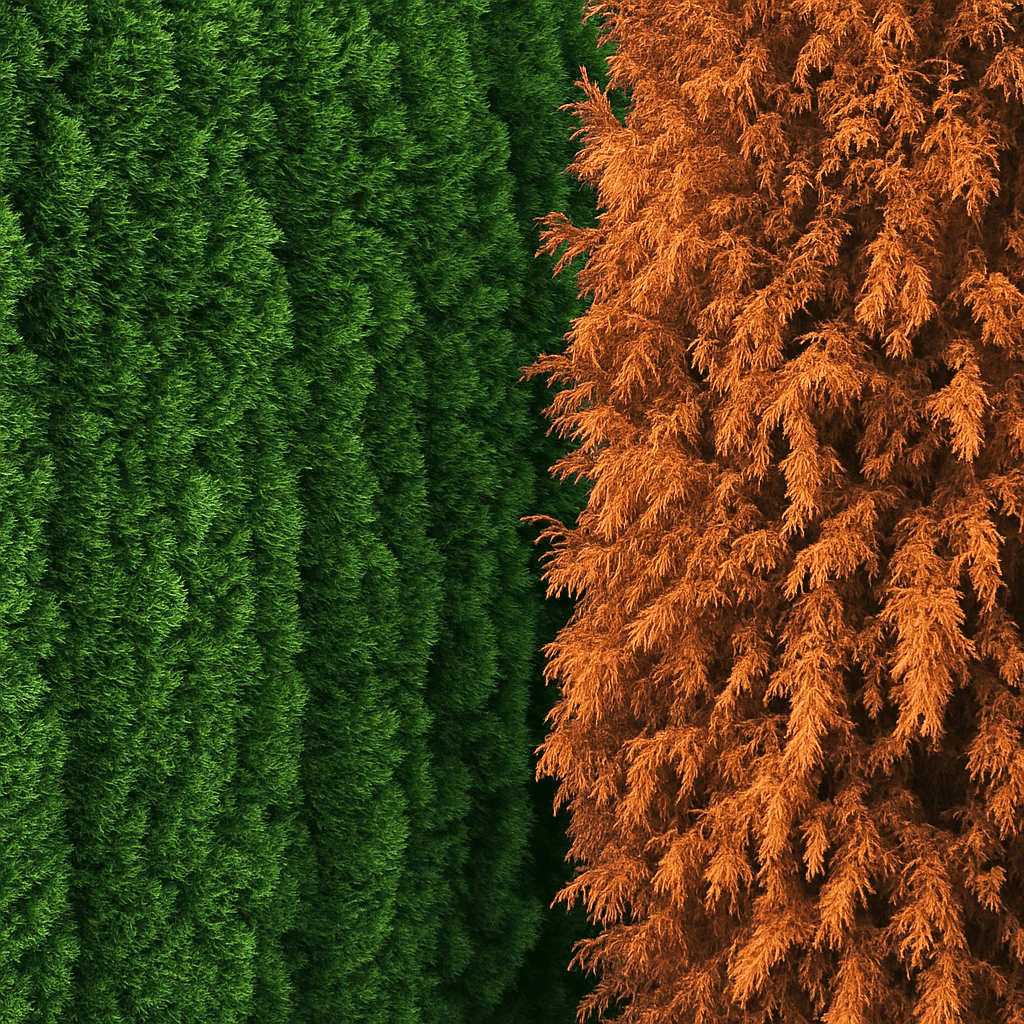
Natural process or serious problem?
Before you reach directly for the pruning shears, you should take a close look at the cut. Not every browning is a cause for concern. The Natural thinning inside of the Thuja is a completely normal process. Since sunlight does not penetrate the dense interior of the hedge, the arborvitae sheds its older scale-like leaves there. Therefore, if your Thuja is lush green on the outside and only has brown, dry needles on the inside near the trunk, there is absolutely no need for action.
However, if the plant turns brown from the outside in, or the tips of the branches dry out, there is a problem that you need to fix.
Root cause investigation: Why are my thuja tips turning brown?
The reasons why a Thuja Emerald green The triggers are diverse. Often it is a combination of different stress factors. The following breaks down the most common triggers in detail.
1. Drought stress: The number one enemy
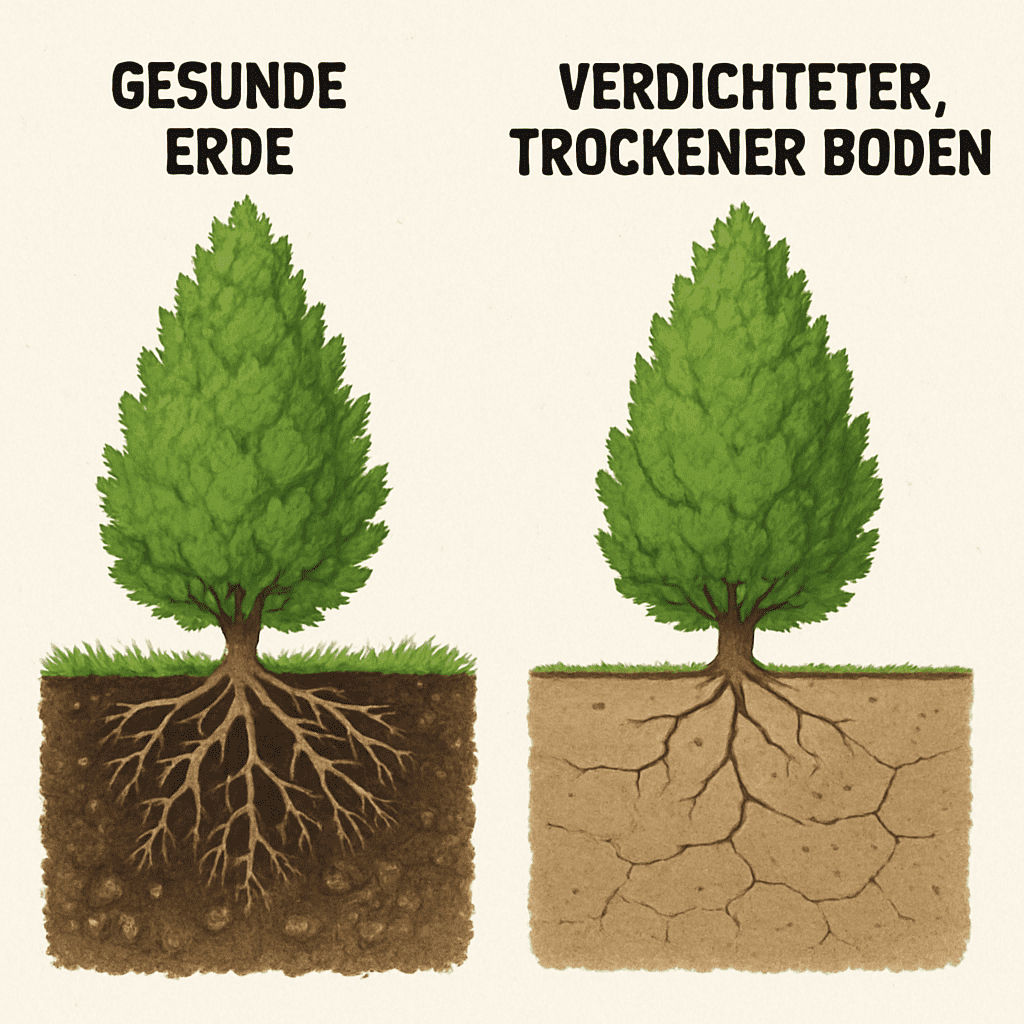
Arborvitae are so-called shallow-rooted plants. Their root system spreads just below the surface of the soil, which is why they can hardly reach deeper water reserves. In hot, dry summers, the plants evaporate an enormous amount of water through their large needle surface. If you want a How to water a dried-out Thuja hedge properly, a short, superficial spray is not enough. The soil must be thoroughly watered. A drip hose is best, allowing water to slowly seep deep into the soil without wetting the needles (which would promote fungal diseases).
2. Waterlogging: Drowning in installments
The exact opposite of dryness is just as deadly for the Thuja. If the water in the soil cannot drain away, the roots will suffocate. In order to Prevent root rot from waterlogging in hedges To be able to do this, preparation before planting is crucial. A drainage layer of gravel or expanded clay at the bottom of the planting hole works wonders. If waterlogging is already acute, often only loosening the soil and working in coarse sand helps.
3. Nutrient deficiency and soil problems
An inappropriate Soil conditions for healthy Thuja growth inevitably leads to deficiency symptoms. Arborvitae prefer a slightly acidic to neutral, nutrient-rich, and loose soil. Particularly common are Magnesium deficiency in conifers symptoms on. You can recognize these by the fact that the older needles turn yellowish to brown, while the younger shoots are still green. A typical Thuja occidentalis Smaragd care mistakes is also the use of conventional blue corn, which can salt the soil in the long run.
4. Fungal Diseases and Pests
When care is optimal and the Thuja Smaragd is turning brown, diseases or pests come into play.
- Pests The Thuja moth is a dreaded enemy. The small caterpillars bore their way through the inside of the scale leaves. Do you want that Control Thuja moth damage, generously cut off infested shoot tips (often clearly demarcated light brown and appearing hollow in backlight) and dispose of them in household waste.
- Mushrooms: To Identifying fungal infections on thuya trees To be able to, watch for black pustules on the brown branches (Pestalotia twig blight) or sharply demarcated brown discoloration on young shoots in spring (Kabatina twig blight). Fungicides and a radical pruning of the affected areas are indispensable here.
5. Environmental influences: winter stress and road salt
Many garden owners puzzle over brown hedges in spring and often don't know how to Distinguish frost damage from drought damage in conifers should. In fact, it's usually „frost drought.“ In winter, plants evaporate water on sunny days but cannot draw new water from the frozen ground. They literally dry out at sub-zero temperatures. Watering on frost-free winter days is therefore an important preventive measure. Another problem for hedges along sidewalks or streets is the Effects of de-icing salt on hedge plants. The salt draws water out of the soil and accumulates toxically in the plant. In the spring, ensure strong watering to flush the salt out of the root zone.
First Aid: Thuja Smaragd Turning Brown - Saving the Arborvitae
Once you have identified the cause, it is important to act quickly and decisively to Thuja Smaragd Growth to get it going again. Proceed systematically:
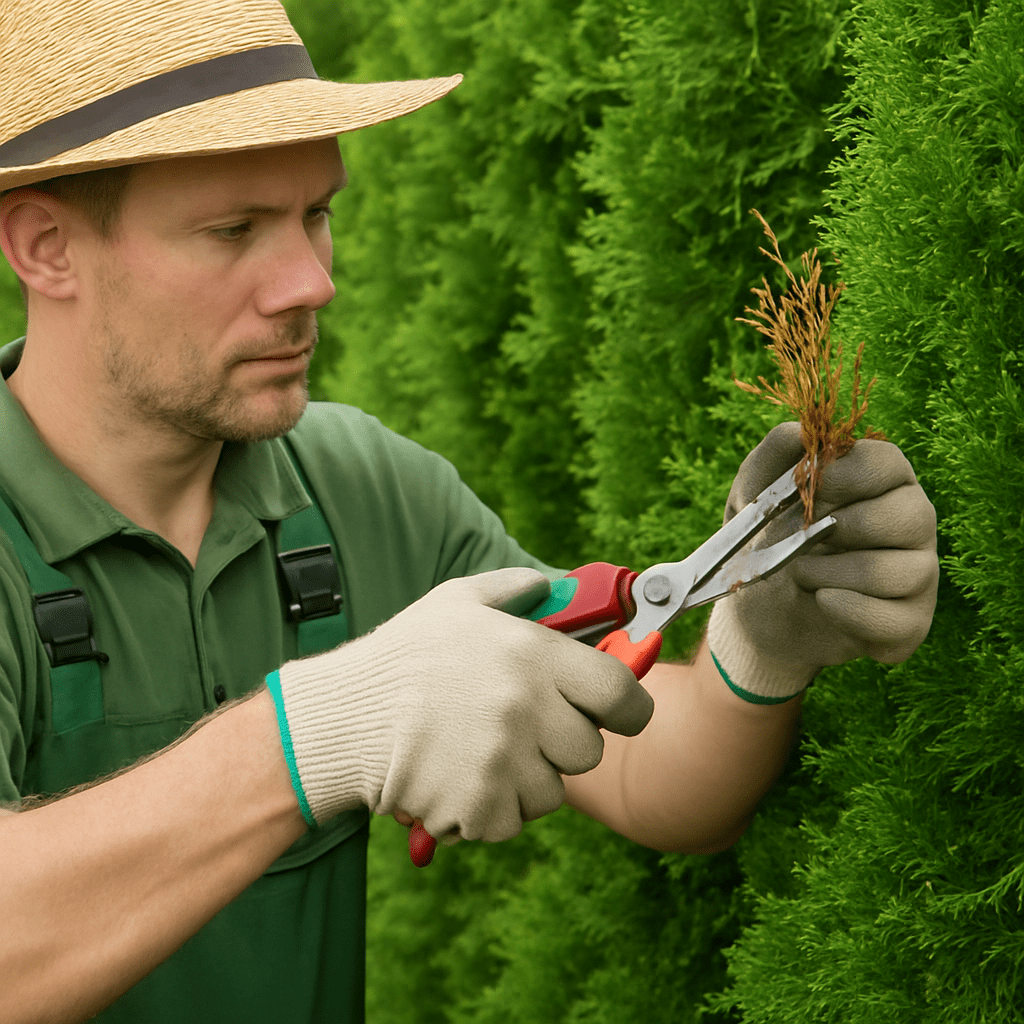
Step 1: Remove deadwood and prune back
The question arises: When to prune sick arborvitae trees? The best time for corrective pruning is early spring (February/March) or late summer (late August). However, in case of acute fungal infestation, you must grab your shears immediately.
- Important: Cut back diseased and brown branches to the healthy (green) wood.
- Attention: Avoid cutting too deep into the old, brown wood inside the hedge. Arborvitae does not sprout from old wood, and this will leave unsightly holes.
Step 2: Optimize and water the soil
If the soil is compacted, carefully loosen it with a digging fork. Be careful not to damage the shallow roots. Apply a layer of mulch (e.g., bark compost). This retains moisture in the soil and protects against drying out. Switch to infrequent but deep watering.
Step 3: Targeted Nutrient Intake
To strengthen your ailing plant, missing nutrients must be replenished quickly.
- Epsom salt If a magnesium deficiency has been confirmed, Epsom salt for brown spots on arborvitae the method of choice. It can be dissolved in water and sprayed on the needles as a fast-acting foliar fertilizer or added to the irrigation water. It quickly restores the plant's deep green color.
- Special fertilizer: For long-term care, use a Special fertilizer for evergreen conifers. This contains the optimal composition of nitrogen, phosphorus, potassium, and essential trace elements (such as iron and magnesium) that conifers need.
The Perfect Care Guide for Long-Term Health
To prevent your hedge from needing first aid in the first place, prevention is the best medicine. With a tailored care routine, you promote a strong and dense Thuja Smaragd Growth.
Correct fertilizing throughout the year
If you your Fertilizing a thuja hedge correctly in spring, This lays the foundation for the entire season. Start fertilizing in March or April. A high-quality conifer fertilizer mixed with some compost and horn shavings will provide long-lasting nutrition for the plants. In late August, you can apply a special autumn fertilizer (potassium sulfate) again. This contains a lot of potassium, which strengthens the plant's cell walls and makes it more resistant to winter frost. Avoid nitrogen-rich fertilizers from mid-August onwards, as these would promote soft, frost-sensitive new growth.

The right cutting timing
Regular, light shaping and maintenance pruning not only keeps the hedge in shape visually, but also promotes density. One cut per year around St. John's Day (end of June) is usually sufficient. Ideally, prune the thuja in a trapezoidal shape (wider at the bottom than at the top). This ensures that the lower branches receive enough sunlight, which prevents thinning in the lower areas. Always use sharp, disinfected tools to prevent fungal spores from entering through the cuts.
Location and lawn care
Regularly check the soil condition. An annual soil analysis (e.g., with a pH test kit from a hardware store) will show you whether the pH level is still in the ideal range (approx. 6.0 to 7.0). A thin layer of mulch not only protects against evaporation but also suppresses weeds that would otherwise compete with the thuja for nutrients.
Conclusion: Patience and the right care lead to success
A hedge losing its color is an unpleasant sight, but the motto „Thuja Smaragd turns brown: Saving the Arborvitae“ is crowned with success in most cases. The most important thing is not to fall into "actionism," but to first determine the exact cause.
If it's natural thinning from the inside, you can relax. However, if there's a lack of water, waterlogging, nutrient deficiency, or even a fungal infection, you now know exactly what steps to take. Whether it's watering on dry winter days, using Epsom salts, or a decisive prune for pest infestation – with the right care, a suitable special fertilizer, and a little patience, your Thuja Smaragd will soon grow dense, green, and healthy again, enriching your garden for years to come.
