
A lush green garden that offers privacy year-round is the dream of many homeowners. Among hedging plants, the cherry laurel (Prunus laurocerasus) is an absolute favorite. It is robust, opaque, and low-maintenance. But before you decide on this plant, the most important question in garden planning is: How tall does cherry laurel get? Growth & Height depend on various factors, which we will examine in detail in this article.
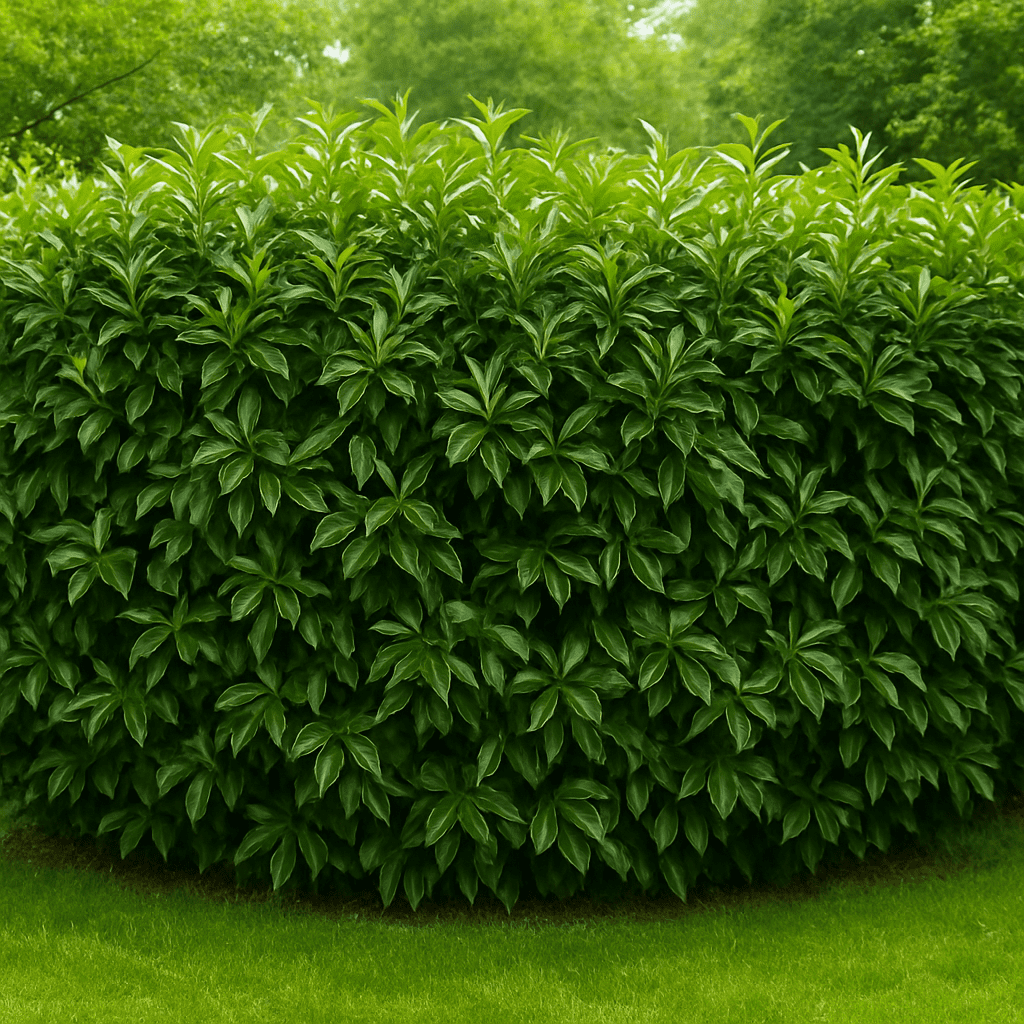
Whether you're looking for a low hedge in the front garden or a meter-high green wall – with the right knowledge about variety selection, care, and location, cherry laurel growth can be ideally managed.
How fast does cherry laurel grow per year?
Anyone who plants a hedge usually doesn't want to wait years for the perfect privacy screen. Regarding the question „How fast does cherry laurel grow per year?“, there's a pleasing answer: it's one of the fast-growing shrubs.
Depending on the variety, soil conditions, and care, the plant annually between 20 and 50 centimeters it in height and width. Under optimal conditions, particularly vigorous varieties can even achieve up to 60 centimeters of growth per year. This makes it the perfect choice for impatient gardeners.
The maximum growth height of cherry laurels: Varieties in focus
If left to grow undisturbed, cherry laurel will develop into an impressive shrub or small tree rather than a classic hedge. Maximum growth height of cherry laurels can reach four to six meters in the wild or without pruning. However, variety selection is crucial for the home garden.
Cherry Laurel Varieties: Growth Speed Comparison
Not every laurel grows the same. A short Cherry Laurel Varieties: Growth Speed Comparison helps with the selection:
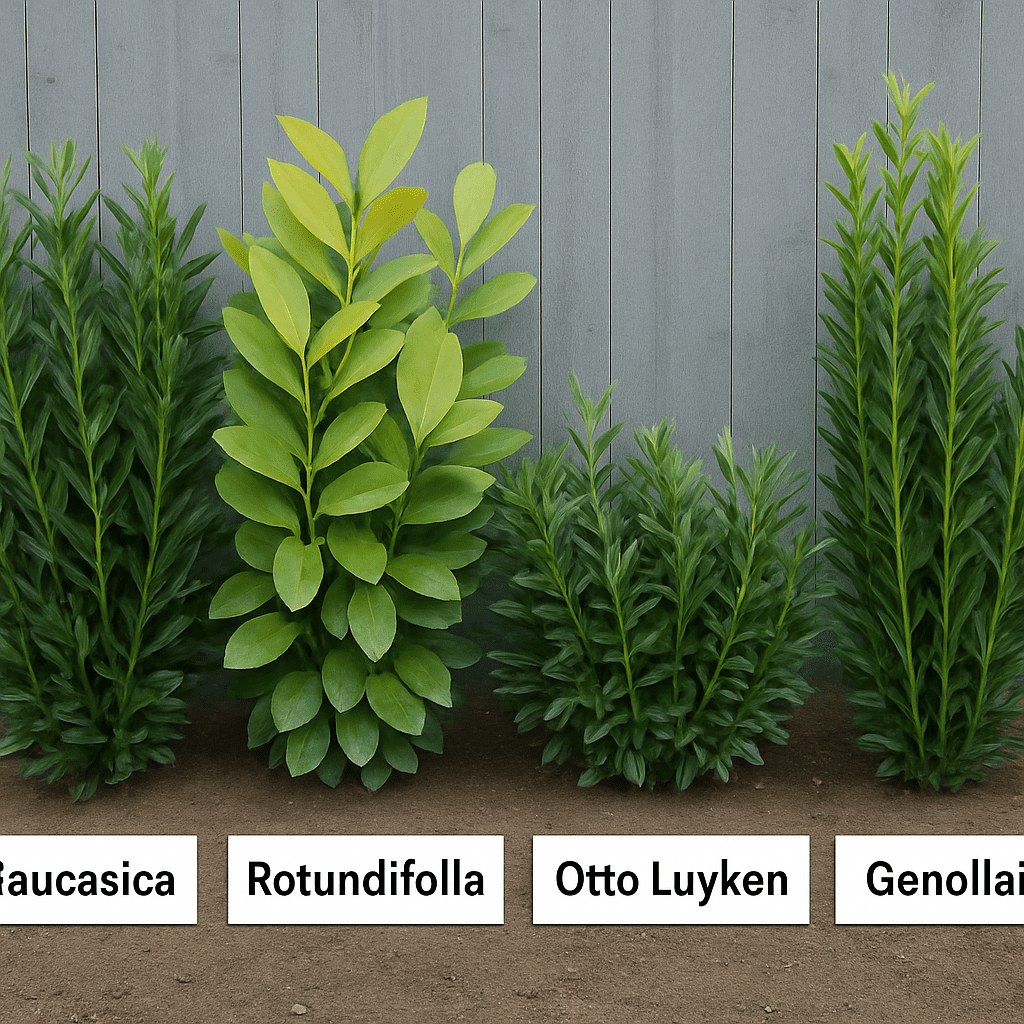
- Fast-growing (40–60 cm/year): Varieties like ‚Novita‘ or ‚Rotundifolia‘ shoot up rapidly, quickly reaching 3 to 4 meters.
- Medium-fast (20–40 cm/year): ‚Caucasica‘ or ‚Genolia‘ grow quickly, but are more controllable.
- Slow growing (10–20 cm/year): Dwarf forms such as ‚Otto Luyken‘ or ‚Mount Vernon‘ often do not grow taller than 1 to 1.5 meters.
Prunus laurocerasus Caucasica Mature Height
The ‚Caucasica‘ variety is a true classic for tall hedges. It grows upright and forms dark green, narrow leaves. The Prunus laurocerasus Caucasica Mature Height With uncut specimens, it reaches a proud 3 to 4 meters. Due to its slender growth habit, it is perfectly suited for properties where space is limited in width.
Narrow-growing cherry laurel varieties: Genolia
Anyone with limited garden space who doesn't want to compromise on height should opt for Narrow-growing cherry laurel varieties resort to. A prime example of this is the ‚Genolia‘ variety.
The Growth height Cherry laurel Genolia can reach up to 3.5 meters, with the plant remaining remarkably slender (often only 80 to 100 cm wide). Its branches grow steeply upwards, causing it to spread little in width and require fewer side trimmings.
The perfect privacy screen: Cherry laurel as an opaque hedge
The main reason for planting is usually the desire for privacy. Cherry laurel as a dense hedge protects not only from prying eyes, but also dampens wind and street noise.
Heckenhöhe Cherry laurel - correct identification
Before planting, you must Heckenhöhe Cherry laurel - correct identification. Not only visual preferences play a role here, but also legal requirements. Inform yourself about the neighborhood law in your federal state. Often the rule is: Hedges up to 2 meters in height must maintain a boundary distance of at least 50 centimeters. If the hedge is to be taller, the distance often has to be increased accordingly.
Planting distance for tall privacy hedges
For the hedge to become dense quickly, the correct spacing is essential. The Planting distance for tall privacy hedges is generally 2 to 3 plants per linear meter for cherry laurels. If you plant them too close together, they will later compete with each other for nutrients and light. If you plant them too far apart, it will take years for the gaps to close.
Location, soil, and root system
For the plants to reach their full splendor, the right conditions must be in place.
Optimal location for rapid growth
The optimal location for fast growth It prefers sunny to partially shaded locations. While cherry laurel also tolerates shade, it grows significantly slower and often less densely there. The soil should be rich in humus, loose, and well-drained. Waterlogging is the plant's greatest enemy.
Root system English laurel space requirements
An often underestimated factor is the root system. The Root system English laurel space requirements is not to be underestimated. Cherry laurels are heart-rooted plants whose roots spread both deep and wide. Therefore, do not plant them too close to paved paths, patios, or pipe systems, as strong roots can cause damage in the long run. A distance of at least one meter from buildings is advisable.
Nutrients: The Effect of Fertilizer on Vertical Growth
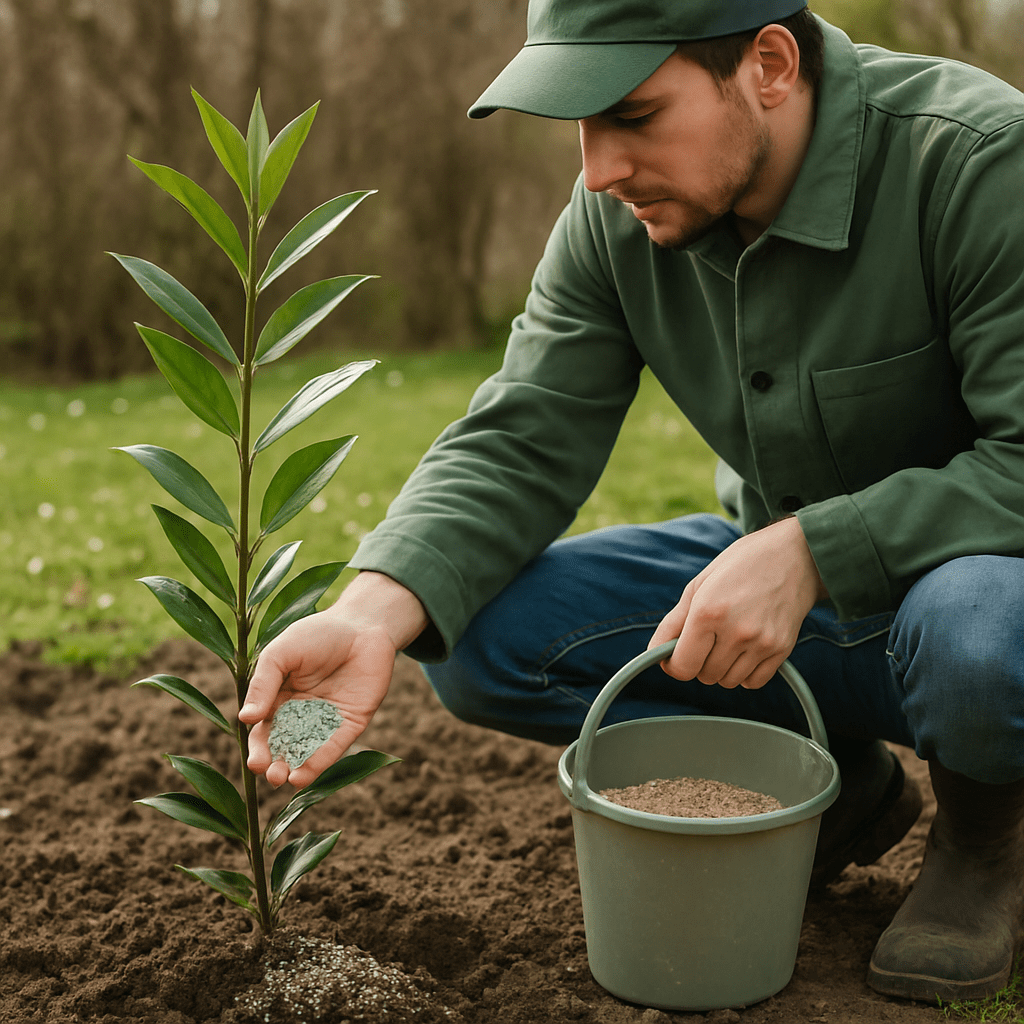
As with any living organism, nutrition determines the development of the cherry laurel. Influence of fertilizer on height growth is immense. A well-nourished plant not only grows faster, but also forms larger, lusher leaves and is more resistant to diseases.
A regular Cherry laurel fertilization should occur twice a year:
- In the spring (March/April): Use organic slow-release fertilizer such as hoof shavings, compost, or a special hedge fertilizer. This provides the energy for the first strong flush of growth.
- In late summer (August): A potassium-rich autumn rock meal fertilizer (Patentkali) is recommended here. It doesn't promote growth in length, but allows the wood to mature, which makes the plant hardy. Caution: Do not fertilize with nitrogen after August, as new, soft shoots will otherwise freeze in winter!
Problem Solving: Cherry laurel not growing taller
Sometimes, despite good planning, not everything goes as planned. If your Cherry laurel does not grow taller., that can have various causes:
- Waterlogging As previously mentioned, roots rot with too much moisture. The plant stops growing and gets yellow leaves. (Solution: Loosen the soil, create drainage).
- Nutrient deficiency Extremely barren soil without fertilization hinders growth.
- Incorrect cutting time: Whoever prunes too heavily in the fall takes away the plant's strength for spring.
- Frost damage In very harsh winters, the tips can freeze back. The plant needs to regenerate these in the spring before it can grow taller again.
Care Tip: Keeping Cherry Laurel small through pruning
What to do if the plant gets too tall? Luckily, it's very easy to Keeping cherry laurel small through pruning. The robust shrub is extremely tolerant of pruning. Even radical pruning back to old wood (rejuvenation pruning) is usually well tolerated, and the plant will sprout again.
- The best time: It's best to prune your hedge at the end of June (around Midsummer's Day), after the first strong growth spurt has finished. A second, lighter corrective prune can be done in late summer.
- The right tool: If possible, use manual hand shears. Electric shears will tear the large, leathery leaves. The brown cut edges will dry out and look unsightly.
Conclusion
In summary, the cherry laurel is a true growth miracle. If the varieties are chosen carefully and the site is well prepared, nothing will stand in the way of rapid growth. Whether you evergreen privacy screen maximum height whether you're aiming for over three meters or prefer a compact, formal hedge – the cherry laurel can do it all. Pay attention to the correct planting distance, balanced fertilization, and regular pruning, and your hedge will form the green, lively backbone of your garden for decades to come.
