
Honestly: When you pull into your driveway after a long day, does your house smile at you, or do you just think of tedious chores? The entrance area is the personal calling card of your home, giving both guests and yourself the very first impression. Anyone who wants to design their front yard significantly determines whether this space radiates a warm welcome or merely remains a barren passageway.
For a long time, the infamous gravel garden was considered the most convenient solution, but according to experts from the Nature and Biodiversity Conservation Union (NABU), these stone surfaces heat up the microclimate and, due to persistent weeds, actually create significantly more work in the long run. A vibrant flower bed, on the other hand, can be implemented much more easily if you consider it like furnishing a living room: the lawn or green ground cover serves as the carpet, small shrubs are the structural furniture, and low-maintenance plants that return every year (perennials) serve as colorful cushions for highlights. With clever ideas for front yard design, you can replace gray monotony with a lively, low-maintenance system.
Well-planned front yard ideas not only change the pure appearance but also create real added value for your everyday life. A harmonious entrance area rewards you with three decisive advantages:
- Daily visual delight: A piece of inviting nature that greets you relaxedly every day.
- Increased property value A well-maintained exterior immediately makes the entire property appear more upscale.
- Neighborhood connection A pretty flower bed often serves as a natural icebreaker for a friendly chat over the garden fence.
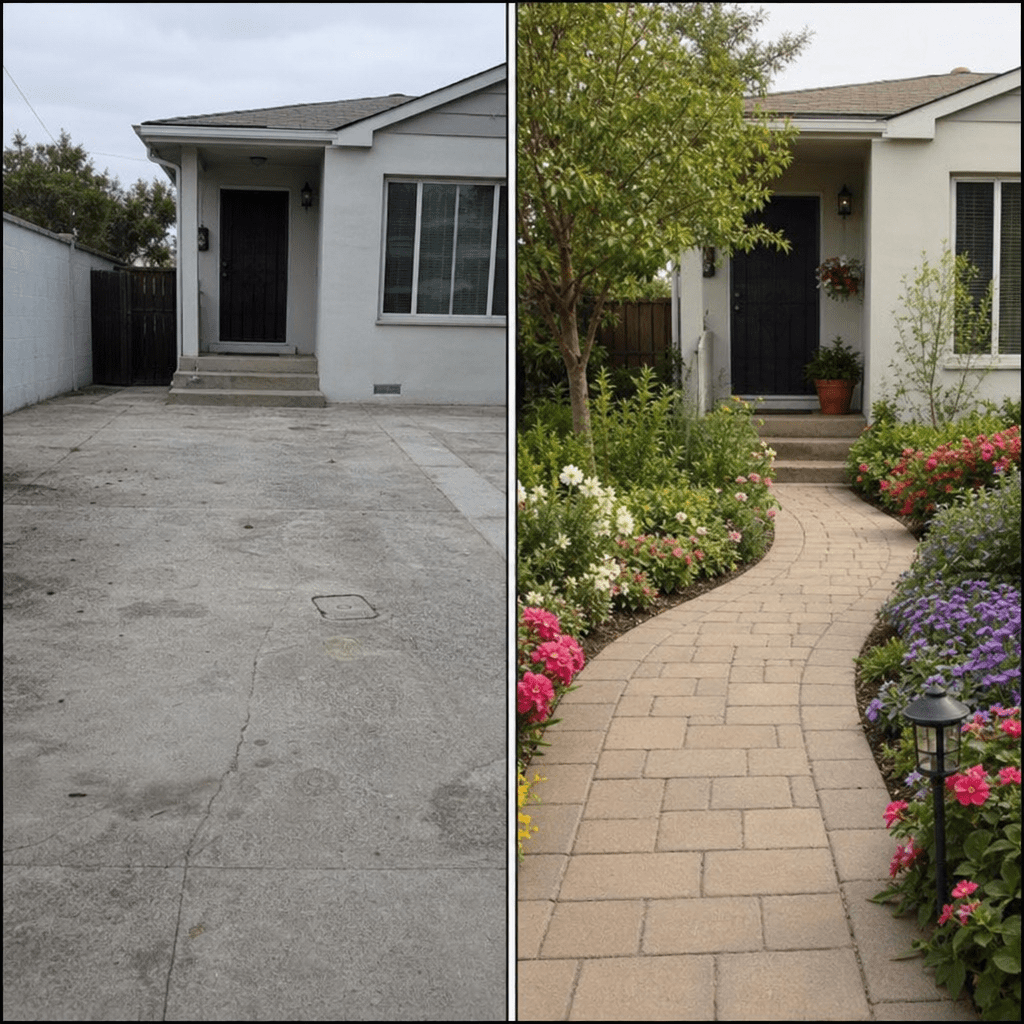
Check light and soil: Why your plants need a ‚comfort zone‘
Plants are like people: some love the blazing midday sun, while others get sunburned immediately. Before you shop, it's best to observe the sun's path in front of your door. A south-facing garden offers completely different conditions than a north-facing side, where the question often arises as to which plants are suitable for a shady entrance. Often, walls or hedges create small microclimates where it's suddenly cooler or less windy than a few meters away. Thoughtful site selection simply prevents your new protégés from drying out after a few weeks.
Just as crucial is the invisible foundation beneath your feet. The soil texture basically works like cake batter: if the soil is too sandy, it crumbles in your hand and watering runs off unused. If it's too clayey, it can be formed into a solid ball, which often leads to damaging waterlogging in the rain. Simply perform the quick kneading test with moist garden soil to determine your soil type and later amend it with compost as needed.
Once you understand these two factors, you’ll never buy the wrong varieties at the garden center again. You’ll choose plants that match their natural preferences, so that your flower bed will practically take care of itself in the future. This solid foundation will perfectly prepare you for your first major purchase: the tree that will serve as the green backbone of your front yard.
The backyard tree for small gardens: How to create the green skeleton of your front yard
An inviting front garden needs a strong framework, much like a room needs its large main pieces of furniture. These so-called structural plants provide support throughout the year and visually frame the house entrance. Since plants continue to grow steadily over the years, the right size from the beginning is crucial. When choosing a yard tree for small gardens, be sure to consider the mature crown width (the maximum diameter of the leafy treetop). This way, you can easily prevent branches from soon darkening the windows or growing unwantedly over the fence and causing trouble with neighbors.
So that every square meter is optimally utilized, shrubs with multiple benefits are worthwhile: fragrant blossoms in spring and colorful leaves in autumn. When you are at the garden center, pay attention to the trunk circumference (the thickness of the trunk). This value tells you how strong the tree already is. These four compact favorites have proven themselves for long-lasting plantings:
- Serviceberry (Amelanchier): Offers white spring flowers and sweet, edible berries.
- Hedgehog Grows almost entirely on its own in a perfect spherical shape.
- Ornamental apple Wears bright mini apples that birds love in winter.
- Japanese Maple: Striking with absolutely spectacular fall color.
Once this green highlight has found its perfect spot, it draws all admiring glances. A cleverly placed tree also wonderfully distracts from the purely practical corners. But even essential things like garbage cans and fences can be stylishly hidden.
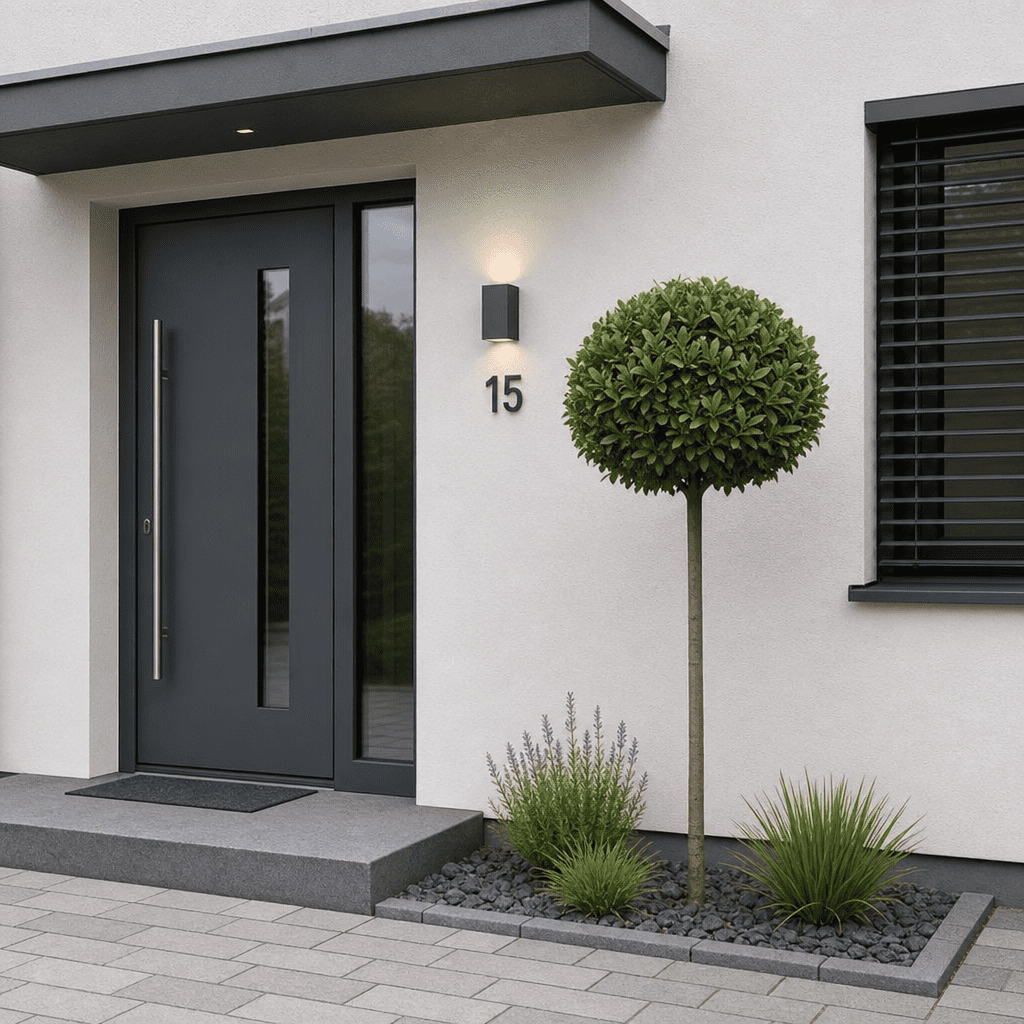
Trash Cans and Fences: How to Stylishly Hide Necessary Evils
Honestly: Nobody likes to look at colorful plastic bins right next to their front door when they come home. You already know exactly where these indispensable containers need to go, but now it's time for clever visual concealment. A trash can cover made of wood or metal works wonders here, combining practicality with beauty. While warm wood perfectly complements romantic flower beds, powder-coated metal scores points for its extreme durability and easy everyday maintenance.
Just as important as hiding unsightly elements is creating a clear structure for your front yard, similar to the baseboards in a cozy living room. If you're planning fencing options for small properties, bulky walls should be off-limits, as they can quickly feel overwhelming. Instead, opt for delicate elements or semi-tall hedges that gently enclose the property without taking up valuable space. Such permeable borders immediately create structure while still allowing plenty of light and air to reach your plants.
Would you like some privacy on the way to the door, but don't want to build a wall? Strategic planting of taller grasses can create a clever privacy screen in front of the house without a fence. This natural barrier blocks prying eyes and blends seamlessly into the overall green landscape. Once the boundaries are established and the bins are hidden, a.
Low-maintenance groundcover and perennials: floral splendor without constant weeding
A beautiful front garden doesn't have to be a lot of work. Do you know the annoying weekend weeding? The solution is surprisingly simple: don't give weeds any room to grow in the first place. We use low-growing plants that cover the soil like a protective blanket. This method retains moisture in the earth and reduces weeding by a full 80 percent. Low-maintenance ground cover for sunny locations are true lifesavers for after-work gardeners.
Plants often behave like good neighbors: when planted in the right groups, they support each other. When designing a flower bed, simply think of your living room: the low-growing ground cover serves as the carpet, while the taller, perennial plants (perennials) represent the cozy furniture. This clever layering creates a low-maintenance, year-round planting that retains its structure even in the bleak winter.
When choosing, opt for varieties that tolerate drought and attract native insects. Bee-friendly perennial mixes will transform your space into a vibrant paradise. These five robust companions have proven themselves in small gardens:
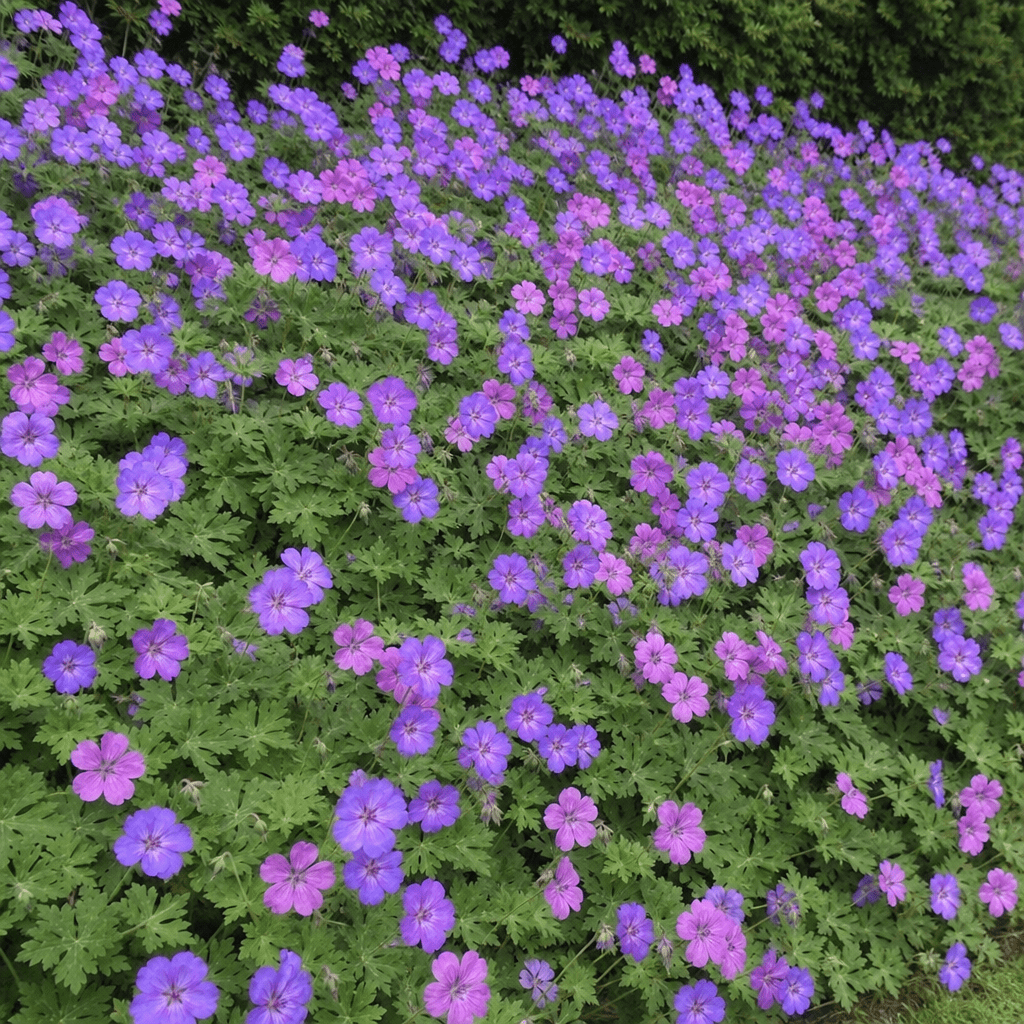
- Cranesbill (Geranium ‚Rozanne‘): An evergreen bloomer for dense carpets.
- Lavender (Lavandula): Smells divine and loves full sun.
- Lady's Mantle (Alchemilla): Catches raindrops like tiny diamonds.
- Goldberry (Waldsteinia): The perfect green carpet.
- Coneflower (Rudbeckia): Brings radiant yellow well into autumn.
Once this colorful carpet of flowers starts to grow, the garden bed practically takes care of itself. So that guests don't trip in the dark in the evening, a well-planned path with appropriate lighting leads safely to the front door.
Paths and Light: The Safe Path to the Front Door
The path to the front door is like the hallway of your garden: it should be inviting and, above all, safe. A width of at least 1.20 meters is ideal for two people to walk comfortably side by side. Various floor coverings give the entrance the right character. Before paving a path with natural stone, always think of the invisible foundation: the frost protection layer. This thick layer of compacted gravel directly under the paving acts like a shock absorber. It prevents freezing water in winter from lifting your expensive slabs.
Once the stones are safely in place, the lighting takes center stage. Clever lighting concepts use soft, downward-facing lamps. This saves electricity and protects nocturnal animals from light pollution, which often completely disorients insects. To ensure your project is a success right from the start, avoid these three common beginner mistakes:
- Missing substructure Without the protective antifreeze layer, the panels will wobble at the latest after the first severe frost.
- Too narrow path: Save on width, and your guests will have to walk uncomfortably one after another.
- Incorrect light angle Uplighting that shines upwards blinds visitors directly in the face instead of illuminating tripping hazards on the ground.
A well-lit path perfectly frames the adjacent areas. When filling these remaining areas, many homeowners resort to gravel out of pure fear of gardening – a decision that, upon closer inspection of costs, legal aspects, and ecology, often proves to be a mistake.
Gravel Garden vs. Planted Bed: Costs, Law, and Ecology
Many people opt for the supposedly low-maintenance gravel garden due to a lack of time. However, those who weigh the pros and cons will quickly be surprised. The initial costs for redesigning with gravel are high, and the hoped-for freedom from maintenance remains an illusion. Dust blows between the stones, and stubborn weeds still sprout. Furthermore, the essential weed membrane placed under the stones decomposes after a few years, leaving fine microplastics permanently in your soil.
On hot summer days, gray gravel surfaces also turn into real ovens. Stones store solar energy like a radiator and release it into the surroundings at night. This so-called heat island effect causes the air directly in front of your doorstep to stagnate unpleasantly. Planted areas, on the other hand, act like a natural air conditioner, as the leaves evaporate water and noticeably cool the entrance area even in midsummer.
In addition to the hidden maintenance effort, stone enthusiasts now often face legal consequences. Many states already have a strict gravel garden ban, which obliges homeowners to have more greenery and demands expensive retrofits in case of non-compliance. A living flowerbed therefore saves you money in the long run, cools the microclimate, and protects you from fines. The transition to a green oasis of well-being can be systematically mastered with a simple strategy.
The 3-Step Strategy: How to Start Your Front Yard Redesign This Weekend
Gone are the days when looking out at your house only revealed tired lawn or gray gravel. With the right ideas for your front yard design, you now have the practical tools to create a vibrant business card – all without expensive landscape architects. Start small consciously to protect your budget, and use this structure to achieve professional results through systematic steps:
- Measuring and Sketching Roughly transfer your area onto paper.
- Test soil and light: Check the daily hours of sunshine and the Earth.
- Buy structural plants: First, invest in the green ‚framework‘ of small shrubs.
Those who want to systematically design their front yard will quickly realize: Smart garden planning transforms a tedious chore into a creative project that delivers maximum visual impact on a minimal budget. Every shrub you plant builds your confidence as a weekend gardener. Soon, you'll no longer just rush to the front door, but will relax with a cup of coffee on a bench, proudly enjoying your self-created, blooming masterpiece.
