
As soon as the first warm spring days arrive, everything starts to sprout again from every crack: dandelions, moss, and grass make their way through patio slabs and driveways. For many garden owners, a tiresome battle begins now. If you're looking for a topic Removing weeds between stones: 9 home remedies you are looking for, you are in the right place.
In this comprehensive guide, we will show you how to effectively, legally, and environmentally consciously clear your paths and patios of unwanted wild growth.

Important legal notices in advance: What is allowed and what is not
Before we get to the tried-and-true home remedies, we need to debunk a persistent myth. Many past gardening guides recommended aggressive mixtures that are strictly forbidden today.
Vinegar is not banned for weed control in all contexts, but its use is restricted in many areas due to environmental concerns and limited effectiveness. Here's a breakdown of why it's often restricted or not recommended: * **Non-selective Weed Killer:** Vinegar kills virtually any plant it comes into contact with, not just weeds. This means it can also harm desirable plants, grass, and beneficial organisms in the soil. * **Environmental Impact:** While vinegar is a natural product, large-scale use can still impact the soil's pH and microbial life, potentially harming the ecosystem. It can also run off into waterways, affecting aquatic life. * **Limited Effectiveness on Roots:** Vinegar is primarily a contact herbicide. It burns down the top growth of a weed, but it often doesn't kill the roots. This means the weed will likely regrow, especially perennial weeds with deep root systems. Multiple applications are usually required. * **Safety Concerns:** Concentrated acetic acid (the active ingredient in vinegar) can be corrosive and irritating to the skin, eyes, and respiratory system. Handling it requires precautions. * **Regulations:** In some regions, particularly in agricultural settings or for commercial landscaping, the use of vinegar for weed control might be regulated because it's not considered an approved pesticide for those applications. Its effectiveness and environmental impact are too inconsistent for large-scale commercial use compared to registered herbicides. **In summary:** While household vinegar can be a DIY option for small patches of weeds in certain limited situations (like cracks in a driveway where you don't care about other plants), it's generally not a recommended or effective long-term solution for significant weed problems due to its non-selective nature, potential environmental damage, and limited ability to kill roots. This is why it's often "restricted" or discouraged in favor of more targeted and effective weed control methods.
According to the German Plant Protection Act, unauthorized weed killers may not be used on so-called „sealed surfaces“ (which include paved paths, driveways, and patios). Vinegar and vinegar essence drastically lower the soil's pH level. Since they cannot seep into and break down on stones, the next rain washes the acid unfiltered directly into the sewer system or groundwater. This immensely harms microorganisms and aquatic life.
Fines for Using Salt on Sealed Surfaces
The same applies to salt. Anyone who thinks they can simply combat their overgrowth with rock salt or table salt risks hefty penalties. Fines for Using Salt on Sealed Surfaces can amount to up to 50,000 euros, depending on the federal state. Therefore, be sure to rely on permitted and Environmentally friendly methods for weed control.
Removing Weeds Between Stones: 9 Household Remedies and Methods
Let's move on to the solutions. Here are the best ecological and practical ways to make your grout sparkle again.
Boiling water on dandelions in stone joints
One of the simplest and most effective remedies costs next to nothing: hot water. Especially Boiling water on dandelions in stone joints works true wonders.
- Here's how it works: Pour the boiling water (e.g., pasta or potato water, which still contains residual heat and useful starch) directly over the plant.
- The effect: The heat destroys the plant's cell structure down to the root. After a few days, the weed dries out and can be easily swept away.
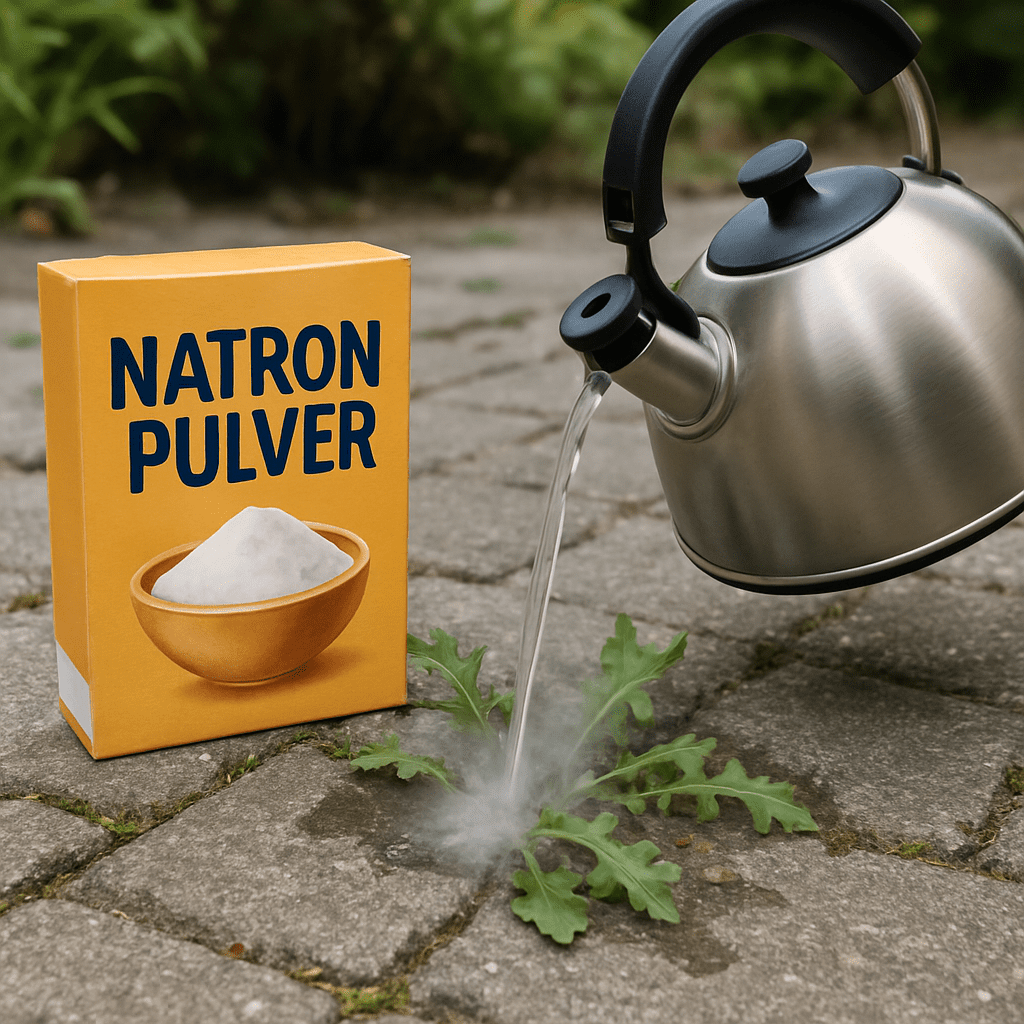
2. Baking soda as an inexpensive weed killer for cracks
Another popular Home remedies for weeds is baking soda (sodium bicarbonate). It is gentler than salt, but should still be used sparingly and precisely.
- Application Mix 1 to 2 tablespoons of baking soda with a liter of boiling water. Spray or pour the cooled mixture onto the weeds on a sunny, dry day.
- Advantage Baking soda as an inexpensive weed killer for joints dries out the leaves of unloved plants quickly.
3. Mechanical Joint Cleaning: Manual Labor
If you are wondering: Boiling water or vinegar can help kill deep-rooted weeds., the honest answer is often: pure muscle power. Deep-rooted plants like dandelions or thistles often survive superficial treatments. Here you have to get to the root. This often raises the question: Joint scraper vs. electric weed killer?
- The grout rake Ideal for narrow joints. It digs deep and pulls out the root. A bit tough on the knees, but highly effective.
- Electric Grout Brushes: These devices rotate with a wire brush. They are easy on the back and knees, but mostly only remove the superficial part of the plant, so deep-rooted plants grow back faster.
4. Thermal Weed Control with a Flame Weeder
He who does not wish to scratch takes to fire. The Thermal weed control with flame weeding equipment (powered by gas or electric heat) is particularly popular for large areas.
- Tip: You don't need to burn the weeds to ashes! It's enough to heat the plants to about 70 to 100 degrees for a few seconds. The protein in the plant cells coagulates, the cells burst, and the plant dies.
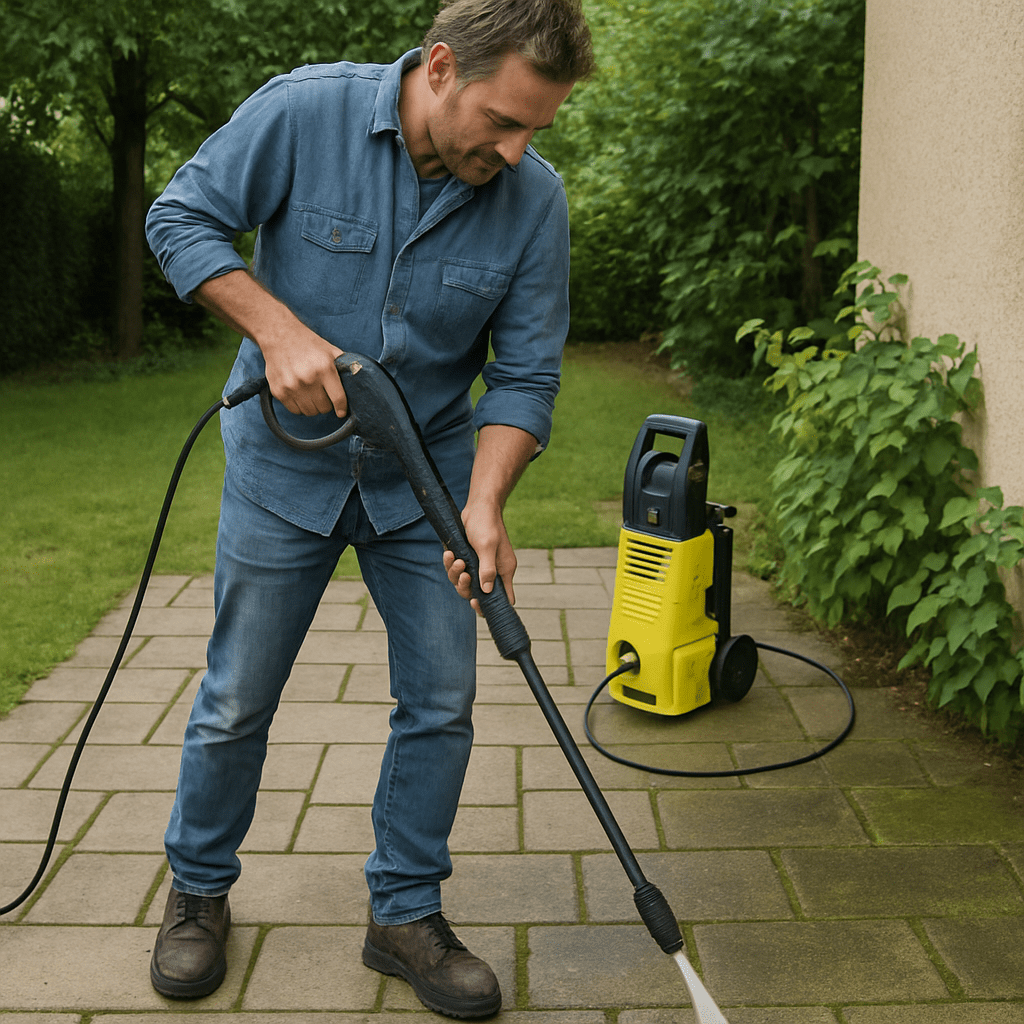
5. High-pressure cleaner for joint cleaning – advantages and disadvantages
A water jet with good pressure gets the dirt out of every crevice. But what about the Pressure washer for joint cleaning: Pros and cons?
- Advantages: It cleans the stones excellently visually and rinses out soil, seeds, and shallow roots completely. It is one of the best methods to Permanently remove moss from paving stones to be able.
- Disadvantages: The strong jet also washes out the important joint sand. If you don't refill the joint afterward, the empty joint offers the perfect new bed for flying weed seeds.
6. The wire brush for rough surfaces
A stiff street broom or a specialized joint wire brush with a long handle is an excellent Weed removal home remedies. Regular, vigorous sweeping (about every two weeks) directly removes young shoots and mosses before they can establish themselves. It is both a preventative and active measure.
7. Ecological Sprays: Make Your Own Weed Killer
If you have a liquid DIY weed killer (of course without vinegar and salt!), a mixture of strong nettle broth is recommended. Let the nettles ferment in water for about two weeks. This slurry is actually a fertilizer, but undiluted and poured directly into the cracks, its concentration and potency inhibit the growth of many weeds. Such homemade extracts are the perfect Home remedies for weeds, that does not harm the environment.
8. Joint sand to prevent renewed weed growth
One of the best remedies against weeds is to give them no space to grow at all. Once you have cleaned the joints, you should refill them immediately. Joint sand to prevent regrowth (such as special weed-inhibiting quartz sand or basalt meal) compacts the joints. It deprives airborne seeds of their nutrient base and makes it extremely difficult for roots to penetrate deeply.
9. Weed fabric: The home remedy before laying
Strictly speaking a preventative measure, but indispensable: When you are creating a new patio or re-laying stones, you must Laying weed barrier fabric under paving stones correctly.
- The fleece is spread out under the sand layer.
- It allows water to drain away, but completely prevents weeds or roots from growing upward through the stones.
- Attention: Against weed seeds that are from above If it gets into the cracks, the fleece won't help, of course.
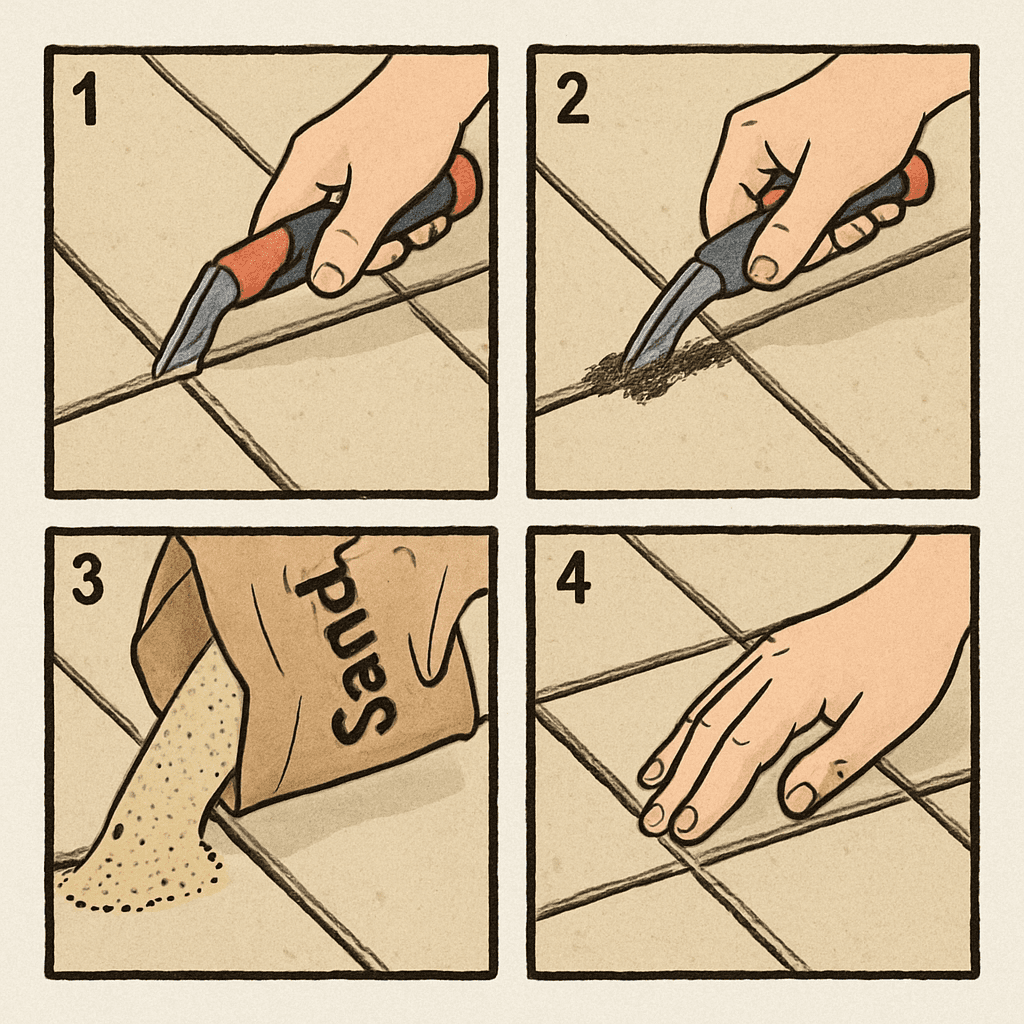
Step-by-step: Grout Cleaning Paving Stones Guide
So that you Clean mossy patio joints sustainably Here, we've summarized a proven process for you. Stick to it Joint cleaning paving stones instructions, to save yourself the rest of the summer's work.
- Preparation (Rough Cleaning): Thoroughly sweep the area with a stiff bristled broom. This will remove loose soil, seeds, and surface moss.
- Heat Treatment (Boiling Water): Pour hot water specifically on stubborn plants like dandelions. Let it sit for one to two days to kill the root.
- Mechanical removal: Now use a joint scraper to pull out the dead plants, including root remnants, from the joints.
- Fine cleaning (Optional): Now you can remove the residue with a high-pressure cleaner or a stiff wire brush.
- Retiling The most important step! On a dry day, sweep weed-inhibiting jointing sand or rock dust diagonally into the cleaned joints until they are completely filled.
The Big Check: Household Remedies vs. Chemical Weed Killers Comparison
Why all the fuss with scratches, water, and baking soda? A look at the Home remedies versus chemical weed killer comparison makes it clear.
Chemical weapons (herbicides), which often contain the controversial active ingredient glyphosate, promise a quick solution, but come with serious disadvantages:
- Bless you You are potentially harmful to human health, pets (dogs and cats that walk on the patio), and wildlife.
- Ecology: You are destroying the biodiversity in the garden and killing important insects like bees and butterflies.
- Groundwater The chemicals wash out and contaminate our drinking water.
In contrast, there are home remedies. While they sometimes require a bit more physical effort, they are completely harmless. Those who treat their patio with hot water or a blowtorch can immediately and safely let their children and pets play outside again.
Conclusion: Natural care for a beautiful patio
The topic Removing weeds between stones: 9 home remedies clearly shows that you don't need toxic chemicals to keep paved surfaces clean. The combination of the right acute treatment (like hot water or a joint scraper) and smart prevention (with stable joint sand or weed fabric) is the key to success.
Say goodbye to illegal methods like salt and vinegar. By following our tips, you'll not only save your wallet from fines but also make a valuable contribution to protecting our environment and groundwater. With a little regularity and the right tools, your terrace will remain an inviting, well-maintained oasis of well-being all summer long!
